Briefe an Milena vs Conversations of Goethe with Eckermann and Soret: Which Should You Read?
Both live on shelves: Germanic literature, German Authors, Biography & Memoir
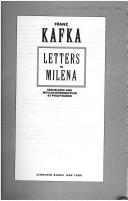 Briefe an Milena
More
Letters to Milena is a book collecting some of Franz Kafka's letters to Milena Jesenská from 1920 to 1923. Publication history ----------------------- The letters were originally published in German in 1952 as Briefe…
Side by side
The verdict
- Readers rate Conversations of Goethe with Eckermann and Soret highest: Conversations of Goethe with Eckermann and Soret 4.2 · Briefe an Milena 3.9.
- Briefe an Milena has the widest readership — 28185 ratings behind its score.
- Briefe an Milena runs the darker storyline; Conversations of Goethe with Eckermann and Soret stays the lighter read.
Affiliate links: we may earn a commission on purchases.
How to choose
Scores by source
| Briefe an Milena | Conversations of Goethe with Eckermann and Soret | |
|---|---|---|
| Goodreads | 3.9 (28185) | 4.5 (22) |
| Check price → | Check price → |
Reception
| Briefe an Milena | Conversations of Goethe with Eckermann and Soret | |
|---|---|---|
| Ratings | 28185 | 22 |
| Editions | 84 | 86 |
| Want to read | 108141 | 147 |
| Reading it now | 10039 | 9 |
| Written reviews | 3899 | 6 |
| Pages | 360 | 397 |
| Check price → | Check price → |
Questions readers ask
Which is rated higher: Briefe an Milena or Conversations of Goethe with Eckermann and Soret?
Conversations of Goethe with Eckermann and Soret has the higher combined reader rating across sources (Conversations of Goethe with Eckermann and Soret 4.2/5, Briefe an Milena 3.9/5).
Which is shorter to read: Briefe an Milena or Conversations of Goethe with Eckermann and Soret?
Briefe an Milena is the quickest read. Estimated at 225 words per minute: Briefe an Milena (360 pages, ≈ 6 h 40 m); Conversations of Goethe with Eckermann and Soret (397 pages, ≈ 7 h 21 m).
Which is harder to read: Briefe an Milena or Conversations of Goethe with Eckermann and Soret?
Estimated difficulty, based on era, reader shelves and length — Briefe an Milena: Moderate; Conversations of Goethe with Eckermann and Soret: Demanding.