Classical and Christian ideas in English Renaissance poetry vs Piers Plowman: Which Should You Read?
Both live on shelves: Christianity and literature, Sources, English poetry
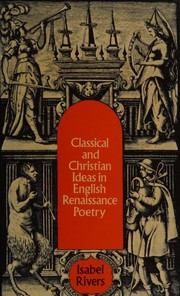 Classical and Christian ideas in English Renaissance poetry
More
Since publication in 1979 Isabel Rivers' sourcebook has established itself as the essential guide to English Renaissance poetry. It: provides an account of the main classical and Christian ideas, outlining their…
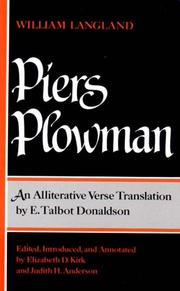 Piers Plowman
“In a somer seson, whan softe was the sonne,”
More
A translation of the 14th century poem, which offers a picture of society in the late Middle Ages on the threshold of the early modern world.
Side by side
The verdict
- Classical and Christian ideas in English Renaissance poetry reaches further in scholarship and criticism — cited 17 times.
Affiliate links: we may earn a commission on purchases.
Scores by source
| Classical and Christian ideas in English Renaissance poetry | Piers Plowman | |
|---|---|---|
| Goodreads | — | 3.5 (3148) |
| Hardcover | — | 3.0 (3) |
| Check price → | Check price → |
Reception
| Classical and Christian ideas in English Renaissance poetry | Piers Plowman | |
|---|---|---|
| Ratings | — | 3148 |
| Editions | 11 | 47 |
| Citations | 17 | 4 |
| Film adaptations | — | 1 |
| Want to read | — | 3656 |
| Reading it now | — | 144 |
| Written reviews | — | 181 |
| Wikipedia attention | — | 5328 |
| Pages | 246 | 208 |
| Check price → | Check price → |
Questions readers ask
Which is shorter to read: Classical and Christian ideas in English Renaissance poetry or Piers Plowman?
Piers Plowman is the quickest read. Estimated at 225 words per minute: Piers Plowman (208 pages, ≈ 3 h 51 m); Classical and Christian ideas in English Renaissance poetry (246 pages, ≈ 4 h 33 m).
Which is harder to read: Classical and Christian ideas in English Renaissance poetry or Piers Plowman?
Estimated difficulty, based on era, reader shelves and length — Classical and Christian ideas in English Renaissance poetry: Demanding; Piers Plowman: Demanding.