Computational Science and Technology vs Representation Learning for Natural Language Processing: Which Should You Read?
Both live on shelves: Data mining, Artificial Intelligence
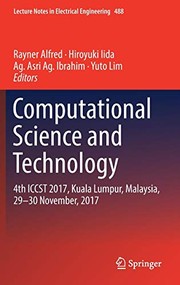 Computational Science and Technology
More
This book gathers the proceedings of the Fourth International Conference on Computational Science and Technology 2017 (ICCST2017), held in Kuala Lumpur, Malaysia, on 29–30 November 2017. These proceedings offer…
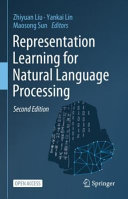 Representation Learning for Natural Language Processing
More
This open access book provides an overview of the recent advances in representation learning theory, algorithms and applications for natural language processing (NLP). It is divided into three parts. Part I presents the…
Side by side
The verdict
- Representation Learning for Natural Language Processing is the quickest read — about 6 hours vs 13 for Computational Science and Technology.
- Representation Learning for Natural Language Processing reaches further in scholarship and criticism — cited 82 times.
Affiliate links: we may earn a commission on purchases.
Scores by source
| Computational Science and Technology | Representation Learning for Natural Language Processing | |
|---|---|---|
| Goodreads | 5.0 (1) | — |
| Google Books | 1.0 (1) | — |
| Check price → | Check price → |
Reception
| Computational Science and Technology | Representation Learning for Natural Language Processing | |
|---|---|---|
| Ratings | 1 | — |
| Editions | 8 | 5 |
| Citations | 50 | 82 |
| Want to read | 2 | — |
| Pages | 749 | 334 |
| Check price → | Check price → |
Questions readers ask
Which is shorter to read: Computational Science and Technology or Representation Learning for Natural Language Processing?
Representation Learning for Natural Language Processing is the quickest read. Estimated at 225 words per minute: Representation Learning for Natural Language Processing (334 pages, ≈ 6 h 11 m); Computational Science and Technology (749 pages, ≈ 13 h 52 m).
Which is harder to read: Computational Science and Technology or Representation Learning for Natural Language Processing?
Estimated difficulty, based on era, reader shelves and length — Computational Science and Technology: Moderate; Representation Learning for Natural Language Processing: Moderate.