Knowledge spaces vs Theory and Practice of Natural Computing: Which Should You Read?
Both live on shelves: Natural language processing, Artificial Intelligence
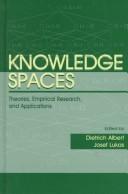 Knowledge spaces
More
Based on the formal concept of "knowledge structures" originally proposed by Jean-Claude Falmagne and Jean-Paul Doignon, this book contains descriptions of methodological developments and experimental investigations as…
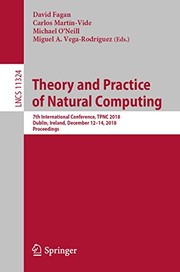 Theory and Practice of Natural Computing
More
This book constitutes the refereed proceedings of the 7th International Conference on Theory and Practice of Natural Computing, TPNC 2017, held in Dublin, Ireland, in December 2018. The 35 full papers presented in this…
Side by side
The verdict
- Very close on paper — pick by the themes that pull you more.
Affiliate links: we may earn a commission on purchases.
Scores by source
| Knowledge spaces | Theory and Practice of Natural Computing | |
|---|---|---|
| Goodreads | — | 4.0 (1) |
| Check price → | Check price → |
Reception
| Knowledge spaces | Theory and Practice of Natural Computing | |
|---|---|---|
| Ratings | — | 1 |
| Editions | 8 | 8 |
| Pages | 240 | 238 |
| Check price → | Check price → |
Questions readers ask
Which is shorter to read: Knowledge spaces or Theory and Practice of Natural Computing?
Theory and Practice of Natural Computing is the quickest read. Estimated at 225 words per minute: Theory and Practice of Natural Computing (238 pages, ≈ 4 h 24 m); Knowledge spaces (240 pages, ≈ 4 h 27 m).
Which is harder to read: Knowledge spaces or Theory and Practice of Natural Computing?
Estimated difficulty, based on era, reader shelves and length — Knowledge spaces: Moderate; Theory and Practice of Natural Computing: Moderate.