Language and Automata Theory and Applications vs Programming in Prolog: Which Should You Read?
Both live on shelves: Logic design, Computer science, Artificial Intelligence
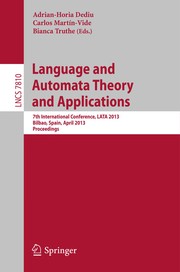 Language and Automata Theory and Applications
More
This book constitutes the refereed proceedings of the 7th International Conference on Language and Automata Theory and Applications, LATA 2013, held in Bilbao, Spain in April 2013. The 45 revised full papers presented…
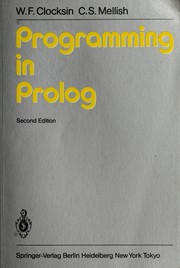 Programming in Prolog
More
Since the first edition of this book in 1981, Prolog has continued to attract an unexpectedly great deal of interest in the computer science community and has turned out to be a basis for an important new family of…
Side by side
The verdict
- Ratings are close across the board — any is a safe pick by score.
- Programming in Prolog is the quickest read — about 5 hours vs 10 for Language and Automata Theory and Applications.
- Programming in Prolog has the widest readership — 3 ratings behind its score.
Affiliate links: we may earn a commission on purchases.
How to choose
Scores by source
| Language and Automata Theory and Applications | Programming in Prolog | |
|---|---|---|
| Goodreads | 5.0 (1) | 4.0 (3) |
| Hardcover | — | 3.0 (1) |
| Check price → | Check price → |
Reception
| Language and Automata Theory and Applications | Programming in Prolog | |
|---|---|---|
| Ratings | 1 | 3 |
| Editions | 9 | 12 |
| Citations | — | 1760 |
| Pages | 580 | 281 |
| Check price → | Check price → |
Questions readers ask
Which is rated higher: Language and Automata Theory and Applications or Programming in Prolog?
Language and Automata Theory and Applications has the higher combined reader rating across sources (Language and Automata Theory and Applications 3.8/5, Programming in Prolog 3.8/5).
Which is shorter to read: Language and Automata Theory and Applications or Programming in Prolog?
Programming in Prolog is the quickest read. Estimated at 225 words per minute: Programming in Prolog (281 pages, ≈ 5 h 12 m); Language and Automata Theory and Applications (580 pages, ≈ 10 h 44 m).
Which is harder to read: Language and Automata Theory and Applications or Programming in Prolog?
Estimated difficulty, based on era, reader shelves and length — Language and Automata Theory and Applications: Moderate; Programming in Prolog: Moderate.