Making History vs Timeline: Which Should You Read?
Both live on shelves: Zeitreise, Historians, Time Travel, History, Fiction
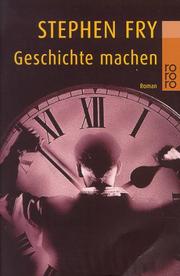 Making History
More
A history student travels back in time to prevent Hitler's birth by dropping an infertility pill into his father's beer. The scheme backfires when a more intelligent dictator comes to power, conquering more territory…
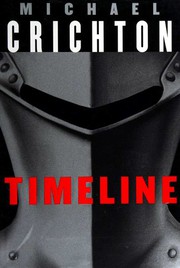 Timeline
“He should never have taken that shortcut.”
More
Timeline is a science fiction novel by American writer Michael Crichton, his twelfth under his own name and twenty-second overall, published in November 1999. It tells the story of a group of history students who travel…
Side by side
The verdict
- Ratings are close across the board — any is a safe pick by score.
- Timeline has the widest readership — 220450 ratings behind its score.
Affiliate links: we may earn a commission on purchases.
Scores by source
| Making History | Timeline | |
|---|---|---|
| Goodreads | 3.9 (12464) | 3.9 (220450) |
| Hardcover | 3.8 (42) | 3.6 (566) |
| Google Books | — | 4.0 (24) |
| Apple Books | — | 4.5 (1094) |
| Check price → | Check price → |
Reception
| Making History | Timeline | |
|---|---|---|
| Ratings | 12464 | 220450 |
| Editions | 22 | 64 |
| Citations | 8 | — |
| Film adaptations | 1 | 1 |
| Want to read | 13557 | 77085 |
| Reading it now | 596 | — |
| Written reviews | 871 | 6826 |
| Wikipedia attention | 1336 | 6249 |
| Pages | 402 | 465 |
| Check price → | Check price → |
Questions readers ask
Which is rated higher: Making History or Timeline?
Making History has the higher combined reader rating across sources (Making History 3.9/5, Timeline 3.9/5).
Which is shorter to read: Making History or Timeline?
Making History is the quickest read. Estimated at 225 words per minute: Making History (402 pages, ≈ 7 h 27 m); Timeline (465 pages, ≈ 8 h 37 m).
Which is harder to read: Making History or Timeline?
Estimated difficulty, based on era, reader shelves and length — Making History: Moderate; Timeline: Moderate.
Have both books been made into films?
Making History: no film adaptation on record; Timeline: 5 film adaptations.