9 livres semblables à Eugène Onéguine
Trouver sur Amazon
Acheter sur Bookshop.org
Liens affiliés : nous pouvons percevoir une commission sur les achats.
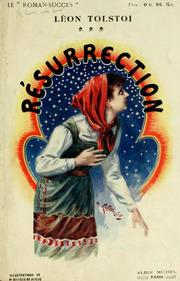
Résurrection
Resurrection, the last full-length novel written by Leo Tolstoy, was published in 1899 after ten years in the making. A humanitarian cause—the pacifist Doukhobor sect, persecuted by the Russian government, needed funds to emigrate to Canada—prompted Tolstoy to finish the novel and dedicate its ensuing revenues to alleviate their plight. Ultimately, Tolstoy’s actions were credited with helping…
Thèmes communs : Russian fiction, Russian literature, Russia, Social conditions
Voir le prix →
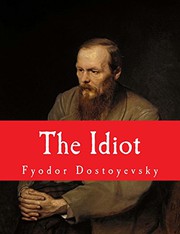
L'Idiot
Inspired by an image of Christ's suffering, Fyodor Dostoyevsky set out to portray "a truly beautiful soul" colliding with the brutal reality of contemporary society. Returning to St. Petersburg from a Swiss sanatorium, the gentle and naive Prince Myshkin—known as "the idiot"—pays a visit to his distant relative General Yepanchin and proceeds to charm the General and his circle. But after becoming…
Thèmes communs : Russian fiction, Russian literature, Russia, Social conditions
Voir le prix →
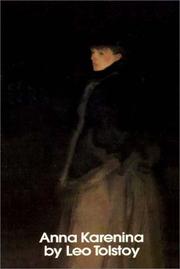
Anna Karénine
Described by William Faulkner as the best novel ever written and by Fyodor Dostoevsky as “flawless,” Anna Karenina tells of the doomed love affair between the sensuous and rebellious Anna and the dashing officer, Count Vronsky. Tragedy unfolds as Anna rejects her passionless marriage and thereby exposes herself to the hypocrisies of society. Set against a vast and richly textured canvas of…
Thèmes communs : Russian literature, Social conditions, Social life and customs, History
Voir le prix →
Les Cosaques
The Cossacks (Russian: Казаки [Kazaki]) is a short novel by Leo Tolstoy, published in 1863 in the popular literary magazine The Russian Messenger. It was originally called Young Manhood. Both Ivan Turgenev and the Nobel prize-winning Russian writer Ivan Bunin gave the work great praise, with Turgenev calling it his favourite work by Tolstoy. Tolstoy began work on the story in August 1853. In…
Thèmes communs : Russian literature, Social life and customs, History
Voir le prix →
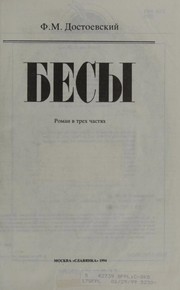
Les Possédés
Also known as Demons or The Devils, this is Dostoyevsky’s most political novel. Though critical of the left-wing revolutionaries, split as they often were into disparate factions and cells the author also tacitly rebukes the conservative elite for failing to come to terms with the high levels of disaffection in the country, a stance that would ultimately lead to their downfall.
Thèmes communs : Russian fiction, Russia, Social life and customs
Voir le prix →
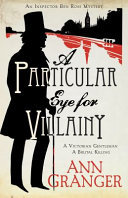
Un œil particulier pour la vilenie
From "an accomplished veteran" of crime fiction, a Victorian murder mystery featuring a female sleuth and her detective husband (Kirkus Reviews).When Mr. Thomas Tapley is found bludgeoned to death in his sitting room, his neighbor, Inspector Benjamin Ross of Scotland Yard, is immediately summoned.Little is known about the elusive gentleman until Mr. Jonathan Tapley, QC, hears of the news, and the…
Thèmes communs : Social conditions, History
Voir le prix →
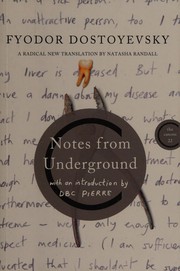
Notes du sous-sol
Its nameless hero is a profoundly alienated individual in whose brooding self-analysis there is a search for the true and the good in a world of relative values and few absolutes. Moreover, the novel introduces themes — moral, religious, political and social — that dominated Dostoyevsky's later works.
Thèmes communs : Russian fiction, Russia, Social life and customs, History
Voir le prix →
Les Misérables
In this story of the trials of the peasant Jean Valjean--a man unjustly imprisoned, baffled by destiny, and hounded by his nemesis, the magnificently realized, ambiguously malevolent police detective Javert--Hugo achieves the sort of rare imaginative resonance that allows a work of art to transcend its genre.
Thèmes communs : Poverty, Social conditions, Social life and customs, History
Voir le prix →
Eugène Onéguine
Voir le prix →