12 livres semblables à Morales
Trouver sur Amazon
Acheter sur Bookshop.org
Liens affiliés : nous pouvons percevoir une commission sur les achats.
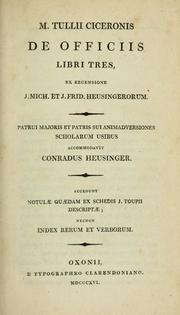
Des devoirs
The most extraordinary and influential treatise ever written on political ethics. Though composed in late 44 B.C., it is relevant and applicable even today. Cicero has outlined all the aspects which aspiring politicians need to know and follow for an honorable career. He believes that justice, intelligence, nobility of character, and decorum are characteristics which guarantee success not only in…
Thèmes communs : Ancient Ethics, Ethics, Early works to 1800, Philosophy
Voir le prix →
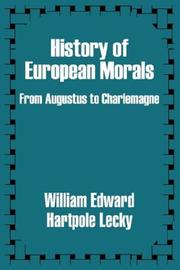
Histoire de la morale en Europe
History of ethics.
Thèmes communs : Ancient Ethics, Ethics, Philosophy
Voir le prix →
Protagoras
Protagoras was a pre-Socratic Greek philosopher and rhetorical theorist. He is numbered as one of the sophists by Plato. In his dialogue Protagoras, Plato credits him with inventing the role of the professional sophist.
Thèmes communs : Ancient Philosophy, Ethics, Early works to 1800, Philosophy
Voir le prix →
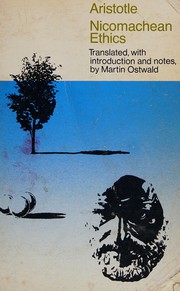
Éthique à Nicomaque
An detailed examination of what the best life might be for human beings. In order to anwer this question, Aristotle finds he also has to examine what virtue itself is and all of the various virtues that might make up the best life.
Thèmes communs : Ancient Ethics, Ethics, Early works to 1800, Philosophy
Voir le prix →
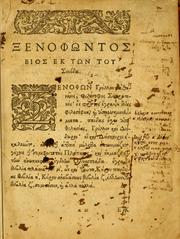
Cyropédie
Xenophon of Athens (circa 430 – 354 B.C.) was a Greek poet, historian, soldier and philosopher who lived at a time of momentous events in Ancient Greek history. Although he was recognized as a great writer and poet in his lifetime, Xenophon’s involvement with Spartan politics and fighting led to his exile from Athens, and his association with Socrates probably did not help. His short treatise on…
Thèmes communs : Greek literature, Early works to 1800, Philosophy, Poetry
Voir le prix →
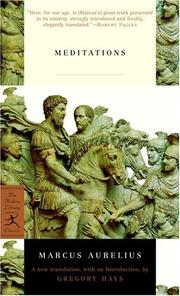
Pensées pour moi-même
Meditations is a collection of personal reflections and notes by the Roman Emperor Marcus Aurelius (reigned 161 to 180 AD), offering a profound look into the philosophy of Stoicism. It was never intended for publication, making it a raw and intimate self-help manual for the emperor during his campaigns and rule. The central theme revolves around living a good, rational, and virtuous life in…
Thèmes communs : Ancient Philosophy, Ethics, Early works to 1800, Philosophy
Voir le prix →
Gorgias
There is a well-known saying that the whole of Western Philosophy is footnotes of Plato. This is because his writings have set the schema that philosophy can be said to have followed ever since. Following under the teachings of Socrates, Plato's works are among the world's greatest literature. In the Gorgias, as in nearly all the other dialogues of Plato, we are made aware that formal logic has…
Thèmes communs : Ancient Philosophy, Ethics, Early works to 1800, Philosophy
Voir le prix →
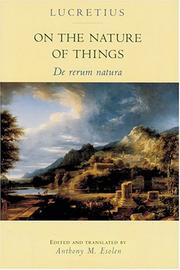
De la nature des choses
This is regarded as a seminal text of Epicurean science and philosophy. Epicurians discarded both the idea of immortality and the superstitious worship of wilful gods for a life of serene contentment in the available pleasures of nature. Lucretius (c100-c55BC), in elucidating this belief, steers the reader through an extraordinary breadth of subject matter, ranging from the indestructibility of…
Thèmes communs : Ancient Philosophy, Early works to 1800, Philosophy, Poetry
Voir le prix →
Phédon
After an interval of some months or years, and at Phlius, a town of Peloponnesus, the tale of the last hours of Socrates is narrated to Echecrates and other Phliasians by Phaedo the 'beloved disciple.' The Dialogue necessarily takes the form of a narrative, because Socrates has to be described acting as well as speaking. The minutest particulars of the event are interesting to distant friends,…
Thèmes communs : Ancient Philosophy, Early works to 1800, Philosophy
Voir le prix →
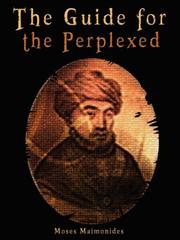
Le Guide des égarés
The Guide for the Perplexed (Hebrew:מורה נבוכים, translit. Moreh Nevukhim, Arabic: dalālatul ḥā’irīn דלאל̈ה אלחאירין دلالة الحائرين) is one of the major works of Rabbi Moshe ben Maimon, better known as Maimonides or "the Rambam". It was written in the 12th century in the form of a three-volume letter to his student, Rabbi Joseph ben Judah of Ceuta, the son of Rabbi Judah, and is the main source…
Thèmes communs : Ancient Philosophy, Early works to 1800, Philosophy
Voir le prix →
Morales
Voir le prix →