18 books like A reader's guide to contemporary literary theory
Principles of literary criticism
please,
I can not open this book online .
Thank you ,I hope to hear from you soon.
alaa
Shares: Critique, Criticism, Histoire, Literary Criticism
Keywords in Western Literary Criticism and Contemporary China
Since the reform and opening up of China in 1978, Western literary criticism has begun to flourish and gain in popularity within the country’s academic literature community. These two volumes meticulously select and examine nine of the most influential keywords from Western literary theory while identifying the intricate historical sources of these terms and analyzing their relevance to other…
Shares: Critique, Theory, Criticism, Literary Criticism
Confessions of the Critics
The Confessions of the Critics shatters a certain silence. Autobiographical criticism has until now skated relatively free from the challenges that usually assail a new literary critical method. It has had this immunity from critique largely because feminists and third-world liberation fighters--such as Alice Walker, Adrienne Rich and Jane Gallop--ushered it to the North American academic…
Shares: Critique, Criticism, Literary Criticism
Modern rhetorical criticism
"A comprehensive and up-to-date introduction to the analysis of public rhetoric, Modern Rhetorical Criticism teaches readers how to examine and interpret rhetorical situations, ideas, arguments, structure, and style. The text covers a wide range of critical techniques, from cultural and dramatistic analysis to feminist and Marxist approaches. A wealth of original criticism demonstrates how to…
Shares: Critique, Theory, Criticism, Literary Criticism
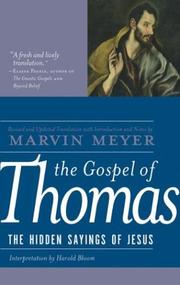
The Gospel of Thomas
"In this fresh and masterful translation, Marvin Meyer presents one of the world's best-loved sacred texts. Honed over the last twenty years through a dozen versions, Meyer's Thomas promises to remain the definitive translation for decades to come." "Widely regarded by scholars as containing many of the original sayings of Jesus, The Gospel of Thomas was discovered in 1945 among the gnostic texts…
Shares: Critique, Criticism
The tenth muse
This book, first published in 1957, is a collection of Herbert Read’s essays on various topics. The essays explore many different subjects and themes, including art, literature, religion and philosophy. This title will be of interest to a variety of readers.
Shares: Critique, Criticism, Literary Criticism
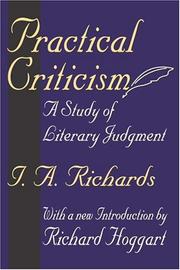
Practical criticism
Practical Criticism, as conceived by Richards, pays attention to very small units of language in short lyric poems in a way that leads directly to the New Critics' emphasis on 'the poem in itself', and their associated rejection of the analysis of any kind of historical or political context.
Shares: Critique, Criticism, Literary Criticism, History and criticism
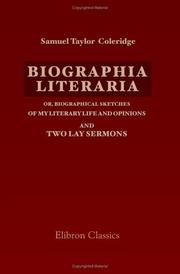
Biographia literaria
Samuel Taylor Coleridge's 1817 work Biographia Literaria is an autobiography in discourse; loosely structured and non-linear, the work is meditative and contains numerous philosophical essays. Initially criticized as the product of Coleridge's opiate-driven descent into illness, more recent critics have given the work far more credit and recognition. The book is the origin of the well-known…
Shares: Theory, Criticism, History and criticism, Philosophy
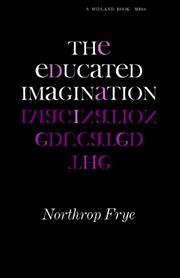
The educated imagination
In the 1962 Massey Lectures, Northrop Frye writes:
"What good is the study of literature? Does it help us to think more clearly or feel more sensitively or live a better life than we would without it? What is the function of the teacher and scholar or the person who calls himself, as I do, a literary critic? What difference does the study of literature make in our social or political or…
Shares: Criticism, Literary Criticism, History and criticism, Philosophy
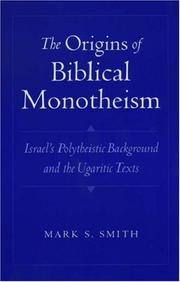
The Origins of Biblical Monotheism
One of the leading scholars of ancient West Semitic religion discusses polytheism vs. monotheism by covering the fluidity of those categories in the ancient Near East. He argues that Israel's social history is key to the development of monotheism.
Shares: Critique, Criticism
Textual practice
'Textual Practice contains some of the most path-breaking, adventurous critical writing currently to be found in Britain' - Terry Eagleton, Linacre College, Oxford
Shares: Critique, Criticism, Literary Criticism, History and criticism
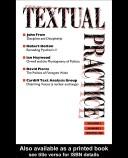
Textual Practice
'Textual Practice contains some of the most path-breaking, adventurous critical writing currently to be found in Britain' - Terry Eagleton, Linacre College, Oxford
Shares: Critique, Criticism, Literary Criticism, History and criticism
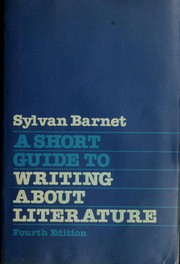
A short guide to writing about literature
Part of Longman's successful Short Guide Series, A Short Guide to Writing about Literature emphasizes writing as a process and incorporates new critical approaches to writing about literature. The twelfth edition continues to offer students sound advice on how to become critical thinkers and enrich their reading response through accessible, step-by-step instruction. This highly respected text is…
Shares: Theory, Criticism, History and criticism
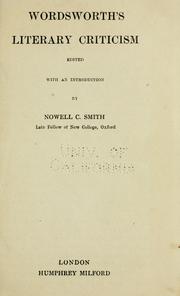
Literary criticism
William Wordsworth, 1770 – 1850, was an English poet most commonly associated with being, along with Samuel Taylor Coleridge, one of the early figures of British romanticism. Their publication of the volume LYRICAL BALLADS in 1798 often serves as a marker of sorts for when that movement publicly began. As a young artist—already showing signs of being a gifted writer and thinker at St. John’s…
Shares: Criticism, Literary Criticism, History and criticism, Philosophy
Essays
The Victorian English poet and essayist Matthew Arnold was the archetypal sage writer, noted for his classical attacks on the tastes and manners of his time. His poetry is characterised by its classically poised, serene and grand style, which is often intimate, personal, full of romantic regret and nostalgic in tone. Arnold’s incisive essays chastised and instructed the reader on contemporary…
Shares: Criticism, History and criticism
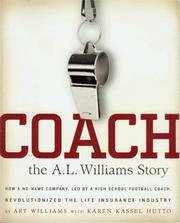
Coach
Now, for the first time, the complete story of A.L. Williams, told by the Coach himself!
Art Williams shares the inspirational story of what it took to build a tiny "peanut" of a company into an industry giant. Full of heroes and villains, amazing victories and dashing defeats, this book is a must-read for anyone who's ever dreamed of building a team, of winning big, of doing what others said…
Shares: Histoire, History
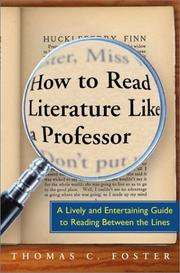
How to read literature like a professor
What does it mean when a fictional hero takes a journey?. Shares a meal? Gets drenched in a sudden rain shower? Often, there is much more going on in a novel or poem than is readily visible on the surface—a symbol, maybe, that remains elusive, or an unexpected twist on a character—and there's that sneaking suspicion that the deeper meaning of a literary text keeps escaping you.In this practical…
Shares: Criticism, Literary Criticism, History and criticism
An Experiment in Criticism
"Professor Lewis believed that literature exists above all for the joy of the reader and that books should be judged by the kind of reading they invite. He doubted the use of strictly evaluative criticism, especially its condemnations. Literary criticism is traditionally employed in judging books, and 'bad taste' is thought of as a taste for bad books. Professor Lewis' experiment consists in…
Shares: Criticism, Literary Criticism
About the book A reader's guide to contemporary literary theory →