18 books like Aeschyli septem quae supersunt tragoediae
Tragoediae
Shares: Greek language materials, Greek Mythology, Drama
Sophoclis tragoediae
Shares: Greek Mythology, Drama
Sophocle
This comprehensive eBook presents significant works of this famous and brilliant writer in one ebook - easy-to-read and easy-to-navigate: • Plays of Sophocles: Oedipus the King; Oedipus at Colonus; Antigone• Oedipus King of Thebes• The Seven Plays in English Verse• Antigone• Aias• King Oedipus• Electra• The Trachinian Maidens• Philoctetes• Specimens of Greek Tragedy — Aeschylus and Sophocles,…
Shares: Greek Mythology, Drama
Eschyle
Shares: Greek Mythology, Drama
The lyrical dramas of Aeschylus
Aeschylus was one of the most famous ancient Greek tragedians He is often called "the father of tragedy”, since this genre really begins with his works. This edition includes the following dramas:
Agamemnon
Choephoræ Or, The Libation-Bearers
The Eumenides
Prometheus Bound
The Suppliants
The Seven Against Thebes
The Persians
Shares: Greek Mythology, Drama
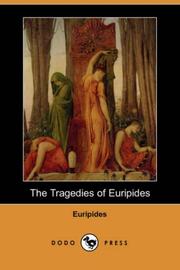
The tragedies of Euripides
Ten tragedies by one of the three great tragedians of classical Athens, namely Hecuba, Orestes, The Phœnician Virgins, Medea, Hippolytus, Alcestis, The Bacchæ, The Heraclidæ, Iphigenia in Aulis, and Iphigenia in Tauris.
Shares: Greek Mythology, Drama
Euripidis Fabulae
Greek text with critical apparatus of plays by Euripides: Cyclops, Alcestis, Medea, Children of Herakles, Hippolytus, Andromache, Hecuba.
Shares: Greek language materials, Greek Mythology, Drama
Euripidis Tragoediae
Shares: Greek Mythology, Drama
Aeschyli Tragoediae
Introduction in English
Shares: Greek Mythology, Drama
Ten plays
The first playwright of democracy, Euripides wrote with enduring insight and biting satire about social and political problems of Athenian life.  In contrast to his contemporaries, he brought an exciting--and, to the Greeks, a stunning--realism to the "pure and noble form" of tragedy.  For the first time in history, heroes and heroines on the stage were not…
Shares: Greek Mythology, Drama
Sophocles
Sophocles' Philoctetes is one of the most widely read Greek tragedies today but is a complex and challenging play to interpret. Its representation of Philoctetes as a sufferer of physical and emotional pain gives it remarkable power and intensity. It juxtaposes Homeric and fifth-century institutions and values, explores honor, power and expediency as principles of personal and political life, and…
Shares: Greek language materials, Greek Mythology, Drama
Oresteia
The Oresteia -- Agamemnon, Choephori, and The Eumenides -- depicts the downfall of the house of Atreus: after King Agamemnon is murdered by Clytemnestra, their son, Orestes, is commanded by Apollo to avenge the crime by killing his mother, and he does so, bringing on himself the wrath of the Furies and the judgment of Athens. Together, the three plays are one of the major achievements of Greek…
Shares: Greek language materials, Greek Mythology, Drama
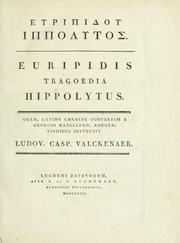
Hippolytus
Euripides wrote two plays called Hippolytus. In this, the second, he dramatized the tragic failure of perfection. This translation comes in two forms; the first presents a simulacrum of the text as it might have appeared in unprocessed form to a reader sometime shortly after Euripides? death. The second processes the drama into the reduced but much more distinct form of modern print translations.
Shares: Greek language materials, Greek Mythology, Drama

Cyrano de Bergerac
A Representation at the Hotel de Bourgogne. The hall of the Hotel de Bourgogne, in 1640. A sort of tennis-court arranged and decorated for a theatrical performance. The hall is oblong and seen obliquely, so that one of its sides forms the back of the right foreground, and meeting the left background makes an angle with the stage, which is partly visible. On both sides of the stage are benches.…
Shares: Drama
Aeschylus
““A world of wealth is trash if men are wanting…"
As Charles Isherwood noted in The New York Times, “the ruler of a rich and powerful empire leads his countrymen into a disastrous war on foreign soil in “The Persians,” a play Aeschylus wrote in the fifth century B.C. It seems the guy was acting on advice from bad counselors. And trying to finish some business started by papa, who ruled before…
Shares: Greek language materials, Greek Mythology, Drama
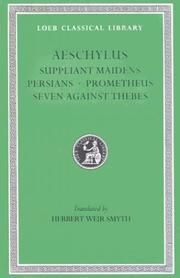
Plays
"Four Plays" by Aeschylus is a collection that typically includes some of the most significant works by this ancient Greek playwright, who is often referred to as the father of tragedy. Aeschylus' plays are known for their profound exploration of justice, power, and the divine. While different collections might include various selections, four of his most famous plays are:
"Agamemnon": The first…
Shares: Greek Mythology, Drama
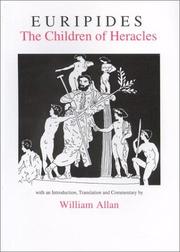
Children of Heracles
This edition and commentary provides an introduction to one of Euripides' less well-known plays, and describes the enormous value of the text for our understanding of Athenian drama, religion, and society. Despite the excellent commentaries of Elmsley (1821) and Pearson (1907), and powerful articles by Wilamowitz, the play has not been given the notice it deserves.
This edition interprets the…
Shares: Greek language materials, Greek Mythology, Drama
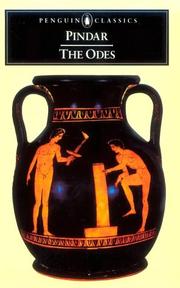
The odes of Pindar
The odes of Pindar (518-438 B.C.), the most renowned of the ancient Greek poets, were choral songs extolling victories at the Games at Olympia, Delphi, Nemea, and Corinth, that covered the specturm of Greek mythological and moral belief.
Shares: Greek language materials, Greek Mythology