18 books like Brave New World
Nineteen Eighty-Four
Nineteen Eighty-Four: A Novel, often referred to as 1984, is a dystopian social science fiction novel by the English novelist George Orwell (the pen name of Eric Arthur Blair). It was published on 8 June 1949 by Secker & Warburg as Orwell's ninth and final book completed in his lifetime. Thematically, Nineteen Eighty-Four centres on the consequences of totalitarianism, mass surveillance, and…
Shares: Classics, Science Fiction
The Great Gatsby
Here is a novel, glamorous, ironical, compassionate – a marvelous fusion into unity of the curious incongruities of the life of the period – which reveals a hero like no other – one who could live at no other time and in no other place. But he will live as a character, we surmise, as long as the memory of any reader lasts.
"There was something gorgeous about him, some heightened sensitivity to…
Shares: Classics
Brave New World Revisited
In 1958, Aldous Huxley wrote what might be called a sequel to his novel Brave New World, published in 1932, but it was a sequel that did not revisit the story or the characters, or re-enter the world of the novel. Instead, he revisited that world in a set of 12 essays. Taking a second look at specific aspects of the future Huxley imagined in Brave New World, Huxley meditated on how his fantasy…
Shares: Propaganda, Brainwashing, Culture
The man who ended war
The Secretary of War of the United States receives a letter sent to his and all other nations, declaring that war has too long devastated the earth and the time has come for peace. It orders them to destroy their weapons of warfare and disband their militaries. The letter ends: "One year from this date will I allow for disarmament and no more. At the end of that time, if no heed has been paid to…
Shares: Utopias, Science Fiction
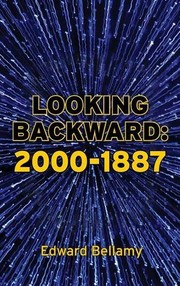
Looking Backward
The book tells the story of Julian West, a young American who, towards the end of the 19th century, falls into a deep, hypnosis-induced sleep and wakes up one hundred and thirteen years later. He finds himself in the same location (Boston, Massachusetts), but in a totally changed world: It is the year 2000 and, while he was sleeping, the United States has been transformed into…
Shares: Social problems, Utopias, Science Fiction

Мы
Wikipedia
We is set in the future. D-503, a spacecraft engineer, lives in the One State, an urban nation constructed almost entirely of glass, which assists mass surveillance. The structure of the state is Panopticon-like, and life is scientifically managed F. W. Taylor-style. People march in step with each other and are uniformed. There is no way of referring to people except by their given…
Shares: Totalitarianism, Dystopias, Science Fiction
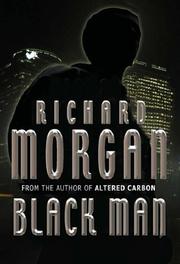
Black Man
Winner of the 2008 Arthur C. Clarke Award
Published as Black Man in the UK and Thirteen in North America
Carl Marsalis is a traitor, a bringer of death, a genetic freak and an unwelcome reminder of all that is dark in the human psyche – he in every sense of the word a Black Man. And right at the moment he’s beyond the UN’s jurisdiction, banged up in a Florida jail for financing an illegal…
Shares: Genetic Engineering, Science Fiction
After James
A neuroscientist walks out of her life and isolates herself in the woods, intending to blow the whistle on a pharmaceutical company and its creativity drug gone wrong. A recently orphaned graduate school dropout is hired as a “literary detective” to decode the work of a mysterious Internet poet who writes about disappearances and murders with an inexplicably precise knowledge of private details.…
Shares: Dystopias, Science Fiction
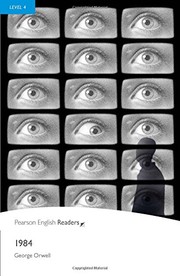
1984
Winston Smith lives in a society where the government controls people every second of the day. He fights this world with love. But it's dangerous: love for another person can be punished by death - and Big Brother is always watching.
Orwell's classic story shows that there is no freedom unless ideas and beliefs can be questioned. This is as true today as when it was written, more than fifty…
Shares: Totalitarianism, Dystopias
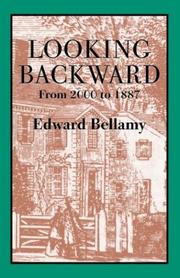
Looking Backward from 2000 to 1887
This book is a utopian science fiction novel by Edward Bellamy, a lawyer and writer from Chicopee Falls, Massachusetts; it was first published in 1888. According to Erich Fromm, Looking Backward is "one of the most remarkable books ever published in America".
Shares: Utopias, Science Fiction
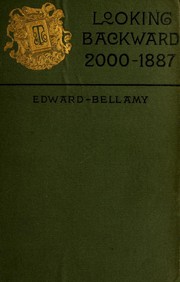
Looking Backward, 2000-1887
A man being put into a hypnotic sleep, is awakened 113 years later to an entirely new social structure.
Shares: Social problems, Utopias, Science Fiction
In the days of the comet
H. G. Wells, in his 1906 In the Days of the Comet uses the vapors of a comet to trigger a deep and lasting change in humanity's perspective on themselves and the world. In the build-up to a great war, poor student William Leadford struggles against the harsh conditions the lower-class live under. He also falls in love with a middle-class girl named Nettie. But when he discovers that Nettie has…
Shares: Utopias, Science Fiction
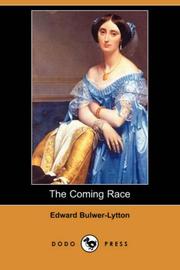
The Coming Race
The Coming Race, an early science-fiction work, with its superman race the Vril-ya descended from the same ancestors as the great Aryan family, from which in varied streams has flowed the dominant civilization of the world spawned a occult secret society known as the Vril Society or Luminous Lodge - its philosphy and swastika symbol profoundly influenced the Nazis. Please Note: This book has…
Shares: Utopias, Science Fiction
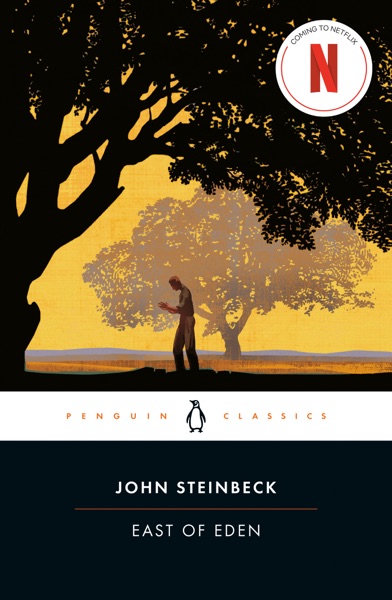
East of Eden
Set in the rich farmland of the Salinas Valley, California, this powerful, often brutal novel, follows the interwined destinies of two families - the Trasks and the Hamiltons - whose generations hopelessly re-enact the fall of Adam and Eve and the poisonous rivalry of Cain and Abel. Here Steinbeck created some of his most memorable characters and explored his most enduring themes: the mystery of…
Shares: Classics
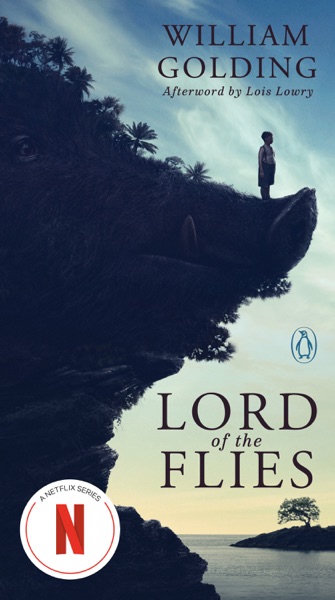
Lord of the Flies
Lord of the Flies is the 1954 debut novel of British author William Golding. The plot concerns a group of prepubescent British boys who are stranded on an uninhabited island and their disastrous attempts to govern themselves that lead to a descent into savagery. The novels themes include morality, leadership, and the tension between civility and chaos.
Shares: Classics
The Count of Monte Cristo
Thrown in prison for a crime he has not committed, Edmond Dantès is confined to the grim fortress of If. There he learns of a great hoard of treasure hidden on the Isle of Monte Cristo and he becomes determined not only to escape, but also to use the treasure to plot the destruction of the three men responsible for his incarceration.
Shares: Classics
The Master and Margarita
The Master and Margarita () is a novel by Mikhail Bulgakov, written in the Soviet Union between 1928 and 1940. A censored version, with several chapters cut by editors, was published posthumously in Moscow magazine in 1966–1967 by his widow Elena Bulgakova. The manuscript was first published as a book in 1967, in Paris, France. A samizdat version circulated that included parts cut out by official…
Shares: Classics
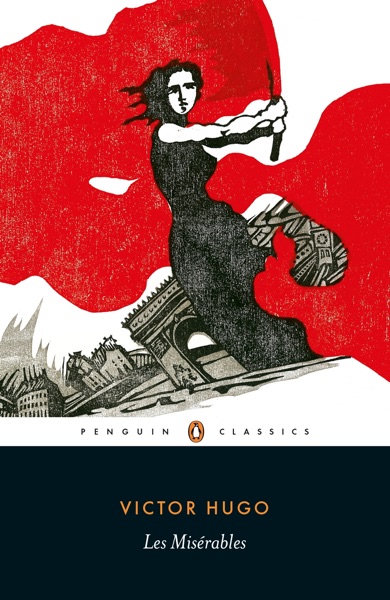
Les Misérables
Les Misérables (, ) is a French epic historical novel by Victor Hugo, first published on 31 March 1862, that is considered one of the greatest novels of the 19th century. Les Misérables has been popularized through numerous adaptations for film, television, and the stage, including a musical.
Shares: Classics