18 books like Colloquia
1601
"1601" was written by Samuel Clemens (Mark Twain) originally published privately for a small group of friends. This book is a humorous satire of Elizabethan England, probably scandalous at the time of its release it is almost pornographic in nature.Please Note: This book is easy to read in true text, not scanned images that can sometimes be difficult to decipher. The Microsoft eBook has a…
Shares: Imaginary conversations, Humor
Apocolocyntosis
13 works of Seneca the Younger
Roman Stoic philosopher, statesman and dramatist (4 BC - 65 AD)
This ebook presents a collection of 13 works of Seneca the Younger. A dynamic table of contents allows you to jump directly to the work selected.
Table of Contents:
Apocolocyntosis
L. Annaeus Seneca On Benefits
Of a Happy Life
Of Anger
Of Clemency
Of Consolation to Helvia
Of Consolation To Marcia
Of…
Shares: Latin language materials, Latin language, Humor
Actes and monuments
"Acts and monuments of matters most special and memorable, happening in the church with an universal history of the same. Wherein is set forth at large, the whole race and course of the church, from the primitive age to these later times of ours, with the bloody times, horrible troubled, and great persecutions against the true martyrs of Christ ... Whereunto are annexed certain additions of like…
Shares: Reformation, Catholic Church, Early works to 1800
Satyricon
An incomplete Roman novel believed to have been written by Gaius Petronius Arbiter. What remains of the novel is a picaresque story concerning the narrator’s battle to keep his lover, a handsome sixteen year old boy, away from his many rivals.
Shares: Latin language materials, Latin language, Humor
Exercitia spiritualia
This new edition, with its accompanying introduction and commentary, is intended for use as a manual by those making, directing or studying the "Exercises". In the case of retreatants, their chief aim is to foster the experience of prayer, prayerful deliberation and cooperation with God's graces which St. Ignatius intended his Exercises to induce in those who are making them. A retreat,…
Shares: Catholic Church, Christian Life, Early works to 1800
The counter-scuffle
Shares: Early works to 1800, Humor
Petronius
7 works of Petronius
Roman courtier during the reign of Nero (22-66)
Translated by W. C. Firebaugh
This ebook presents a collection of 7 works of Petronius. A dynamic table of contents allows you to jump directly to the work selected.
Table of Contents:
The Satyricon Volume I
The Satyricon Volume II
The Satyricon Volume III
The Satyricon Volume IV
The Satyricon Volume V
The Satyricon Volume…
Shares: Latin language materials, Humor
Vitae excellentium imperatorum
Shares: Latin language materials, Latin language, Early works to 1800
Perfect Behavior
With centuries of literature, it's inevitable that some will fall through the cracks. We hunt down public domain works and restore them so they're not lost to the world.
Who are we? We're Cairn Press. Our background is in design, publishing, typography, and technology. These skills fuel our mission to create the highest quality Public Domain eBooks available online, at an affordable price. We…
Shares: Etiquette, Humor
Catullus
Includes an introduction to this Roman poet, selections from his poetry, vocabulary and grammatical notes, and glossaries on meters and figures of speech.
Shares: Latin language materials, Latin language, Early works to 1800
Ignoramus
''Ignoramus'', a college farce written in 1615 in Latin by George Ruggle
Shares: Early works to 1800, Humor
Gentle craft
The history of sampler-maki9ng is as colorful and varied as the craft itself. In this lavishly illustrated book, Anne Sebba charts the rise of the sampler in Great Britain and America from its sixteenth-century origins to its present day popularity among collectors of antiques.
Shares: Early works to 1800, Humor
Odes
This groundbreaking new translation of Horace's most widely read collection of poetry is rendered in modern, metrical English verse rather than the more common free verse found in many other translations. Jeffrey H. Kaimowitz adapts the Roman poet's rich and metrically varied poetry to English formal verse, reproducing the works in a way that maintains fidelity to the tone, timbre, and style of…
Shares: Latin language materials, Latin language
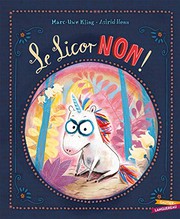
Das NEINhorn
Im Herzwald kommt ein kleines, schnickeldischnuckeliges Einhorn zur Welt. Aber obwohl alle ganz lilalieb zu ihm sind und es ständig mit gezuckertem Glücksklee füttern, benimmt sich das Tierchen ganz und gar nicht einhornmäßig. Es sagt einfach immer Nein, sodass seine Familie es bald nur noch NEINhorn nennt.
Eines Tages bricht das NEINhorn aus seiner Zuckerwattewelt aus. Es trifft einen…
Shares: Humor
Letters from the Earth
The eponymous story, “Letters from the Earth,” is a set of eleven letters written by Satan to the archangels Gabriel and Michael about his travels. Satan finds human beliefs about themselves almost insane, pointing out that their conception of heaven leaves out everything humans find most pleasurable in life (particularly sex). He also considers God’s hypocrisies: not forgiving Adam and Eve even…
Shares: Etiquette, Humor
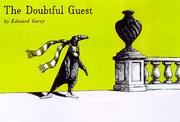
The Doubtful Guest
"When they answered the bell on that wild winter night, there was no one expected -- and no one in sight. Then they saw something standing on top of an urn, whose peculiar appearance gave them quite a turn..." Thus begins one of Edward Gorey's most popular illustrated books, The Doubtful Guest, a deliciously twisted comedy of manners, where a scarf and sneaker clad creature overstays its welcome…
Shares: Etiquette, Humor
Satirae
The Roman philosopher and dramatic critic Quintus Horatius Flaccus (65-3 B.C.), known in English as Horace, was also the most famous lyric poet of his age. Written in the troubled decade ending with the establishment of Augustus's regime, his Satires provide trenchant social commentary on men's perennial enslavement to money, power, fame, and sex. Not as frequently translated as his Odes, in…
Shares: Latin language materials, Latin language
Agricola
"Cornelius Tacitus, Rome's greatest historian and the last major writer of classical Latin prose, produced his first two books in AD 98. He was inspired to take up his pen when the assassination of Domitian ended 'fifteen years of enforced silence'. These first products were brief: the biography of his late father-in-law Julius Agricola and an account of Rome's most dangerous enemies, the…
Shares: Latin language, Early works to 1800