18 books like Conceptual coordination
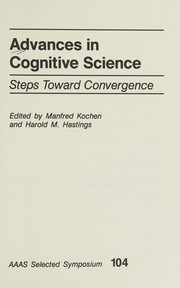
Advances in Cognitive Science
This book includes a collection of papers on both natural (biological) and artificial (computer) approaches to several facets of intelligent behavior from the primary viewpoint of the convergence of computer science and biology in the theory of cognitive science. .
Shares: Cognition, Cognitive Science, Artificial Intelligence
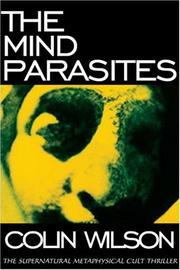
The mind parasites
Wilson has blended H.P. Lovecraft's dark vision with his own revolutionary philosophy and unique narrative powers to produce a stunning, high-tension story of vaulting imagination. A professor makes a horrifying discovery while excavating a sinister archaeological site. For over 200 years, mind parasites have been lurking in the deepest layers of human consciousness, feeding on human life force…
Shares: Mind and body, Thought and thinking
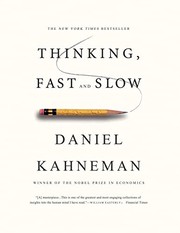
Thinking, fast and slow
In his mega bestseller, Thinking, Fast and Slow, Daniel Kahneman, world-famous psychologist and winner of the Nobel Prize in Economics, takes us on a groundbreaking tour of the mind and explains the two systems that drive the way we think.
System 1 is fast, intuitive, and emotional; System 2 is slower, more deliberative, and more logical. The impact of overconfidence on corporate strategies, the…
Shares: Cognition, Thinking, Thought and thinking, Psychology
Artificial inteligence and natural man
Artificial Intelligence is the study of how to build or program computers to enable them to do what minds can do. This volume discusses the ways in which computational ideas and computer modeling can aid our understanding of human and animal minds. Major theoretical approaches are outlined, as well as some promising recent developments. Fundamental philosophical questions are discussed along with…
Shares: Thinking, Thought and thinking, Artificial Intelligence
Foundations of Augmented Cognition
Bringing together a comprehensive and diverse collection of research, theory, and thought, this volume builds a foundation for the new field of Augmented Cognition research and development. The first section introduces general Augmented Cognition methods and techniques, including physiological and neurophysiological measures such as EEG and fNIR; adaptive techniques; and sensors and algorithms…
Shares: Cognition, Artificial Intelligence
Superintelligence
The human brain has some capabilities that the brains of other animals lack. It is to these distinctive capabilities that our species owes its dominant position. Other animals have stronger muscles or sharper claws, but we have cleverer brains. If machine brains one day come to surpass human brains in general intelligence, then this new superintelligence could become very powerful. As the fate of…
Shares: Sciences cognitives, Cognitive Science, Artificial Intelligence
Handbook of learning and cognitive processes
Shares: Cognition, Memory, Science, Psychology
Consciousness
Consciousness', 'the last great mystery for science', remains a hot topic. How can a physical brain create our experience of the world? What creates our identity? Do we really have free will? Could consciousness itself be an illusion? Exciting new developments in brain science are continuing the debates on these issues, and the field has now expanded to include biologists, neuroscientists,…
Shares: Cognitive Science, Science, Psychology
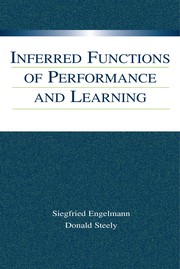
Inferred functions of performance and learning
This ambitious, highly theoretical book provides a capstone for the careers of two very distinguished scholars. It begins with an analysis of what functions and systems must exist for any organism or machine to perform an unlearned act, that is, with an analysis of what must be "wired into" the organism or machine. Once the basics of unlearned responding have been established, the authors then…
Shares: Sciences cognitives, Cognitive Science, Artificial Intelligence

How we think
The legendary American philosopher, educator, and psychologist John Dewey describes a program for thinking well – that is, using the capacity for thought to enrich one’s life and improve one’s understanding.
Shares: Thinking, Thought and thinking
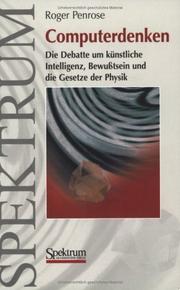
Computerdenken
Advances the theory that despite burgeoning computer technologies, there will remain facets of human thinking that cannot be emulated by a machine.
Shares: Thinking, Thought and thinking, Artificial Intelligence, Science

Inquiries concerning the intellectual powers, and the investigation of truth
Book digitized by Google from the library of Harvard University and uploaded to the Internet Archive by user tpb.
Shares: Mind and body, Theory of Knowledge, Psychology
Knowledge spaces
Based on the formal concept of "knowledge structures" originally proposed by Jean-Claude Falmagne and Jean-Paul Doignon, this book contains descriptions of methodological developments and experimental investigations as well as applications for various knowledge domains. The authors address three main topics: theoretical issues and extensions of Doignon & Falmagne's theory of knowledge…
Shares: Cognitive Science, Theory of Knowledge, Artificial Intelligence
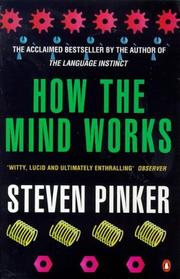
How the Mind Works
"Presented with extraordinary lucidity, cogency and panache...Powerful and gripping...To have read [the book] is to have consulted a first draft of the structural plan of the human psyche...a glittering tour de force" - Spectator "Why do memories fade? Why do we lose our tempers? Why do fools fall in love? Pinker's objective in this erudite account is to explore the nature and history of the…
Shares: Cognition, Science, Psychology
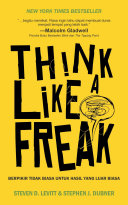
Think Like a Freak
The book that can teach anyone to think like a freak
Shares: Cognition, Psychology
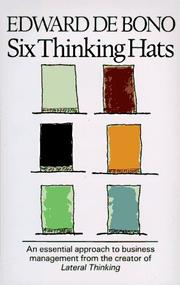
The Power of Focused Thinking
Ben shu fen wei qi ge bu fen, Fen wei bai se si kao mao, Hong se si kao mao, Hei se si kao mao, Huang se si kao mao, Lü se si kao mao he lan se si kao mao.
Shares: Thinking, Thought and thinking, Psychology
The psychology of learning and motivation
1 online resource (322 pages)
Shares: Cognitive Science, Science, Psychology
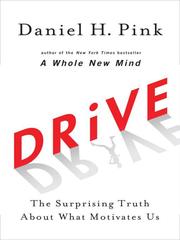
Drive
From Daniel H. Pink, the author of the groundbreaking bestseller A Whole New Mind, comes his next big idea book: a paradigm-changing examination of what truly motivates us and how to harness that knowledge to find greater satisfaction in our lives and our work.We've been conditioned to think that the best way to motivate ourselves and others is through external rewards like money—the…
Shares: Cognitive Science, Science, Psychology