18 books like De Natura deorum
Poems
It is a poetry book. Francis Thompson, a poet of high thinking, 'of celestial vision', and of imaginings that found literary images of answering splendour, died in London in the winter of 1907. His life—always a fragile one—doubtless owed its prolongation to 'man's unconquerable mind', in him so invincible through all vicissitude that he seemed to add a new significance to Wordsworth's phrase. To…
Shares: God, Theology, Religion
The Origins of Biblical Monotheism
One of the leading scholars of ancient West Semitic religion discusses polytheism vs. monotheism by covering the fluidity of those categories in the ancient Near East. He argues that Israel's social history is key to the development of monotheism.
Shares: God, Theology, Religion
Tusculanae disputationes
Cicero composed these discourses while in his villa in Tusculum as he was mourning the death of his daughter, in order to convey his philosophy of how to live wisely and well. They take the form of fictional dialogues between Cicero and his friends, with each one focusing on a particular Stoic theme. The first, “On the Contempt of Death,” reminds us that mortality is nothing to be upset about.…
Shares: Theology, Latin language materials, Early works to 1800, Philosophy
Ilium
From the author of the Hyperion Cantos -- one of the most acclaimed popular series in contemporary science fiction -- comes a powerful epic of high-tech gods, human heroes, total war, and the extraordinary transcendence of ordinary beings. The first book in a two-part epic. "I am in awe of Dan Simmons." -- Stephen King. From the towering heights of Olympos Mons on Mars, the mighty Zeus and his…
Shares: Greek Gods, Gods
Herders sämmtliche Werke
Shares: Theology, Philosophy
Ich und du
"Martin Buber, heavily influenced by the writings of Friedrich Nietzsche, unites the proto-Existentialist currents of modern German thought with the Judeo-Christian tradition, powerfully updating faith for modern times.".
"This work is the centerpiece of Buber's philosophy. It lays out a view of the world in which human beings can enter into relationships using their innermost and whole being to…
Shares: God, Theology, Religion, Philosophy
Physico-theology
With centuries of literature, it's inevitable that some will fall through the cracks. We hunt down public domain works and restore them so they're not lost to the world.
Who are we? We're Cairn Press. Our background is in design, publishing, typography, and technology. These skills fuel our mission to create the highest quality Public Domain eBooks available online, at an affordable price. We…
Shares: God, Theology, Early works to 1800, Religion
The Age of Reason
Thomas Paine who was a dynamic philosophical presence in the American Revolution of 1776 wrote his last book in 1795 on an investigation and commentary of organized religion with a focus on Christianity. Paine said that his "religious duties" included doing justice, loving benevolence, and attempting to make others happy. He called himself a deist which is a person who believes in the existence…
Shares: Controversial literature, Theology, Early works to 1800, Philosophy
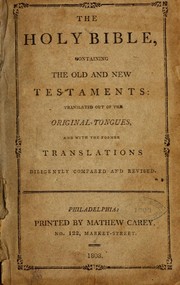
Bible
The purpose of The Original African Heritage Study Bible is to interpret the Bible as it relates specifically to persons of African descent and thereby to foster an appreciation of the multiculturalism inherent in the Bible. The Original African Heritage Study Bible offers a number of unique features which reveal the African/Edenic contribution to Judaism and Christianity, including: 1)…
Shares: Theology, Religion
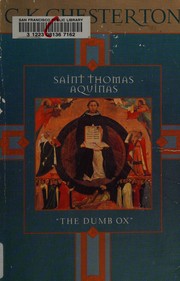
Saint Thomas Aquinas
" St. Thomas Aquinas is enriched by the author's unique ability to see the world through the saint's eyes, a fresh and animated view that shows us Aquinas as no other biography has. Acclaimed as the best book ever written on Aquinas by such outstanding Thomists as Jacques Maritain, Etienne Gilson, and Anton Pegis, this brilliant biography will completely capture the reader and leave him desirous…
Shares: Theology, Religion, Philosophy
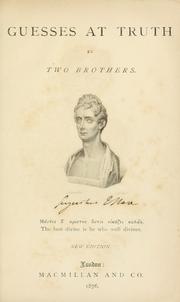
Guesses at truth
Book digitized by Google from the library of Oxford University and uploaded to the Internet Archive by user tpb.
Shares: Theology, Religion, Philosophy
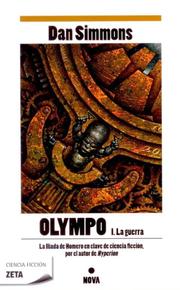
Olympos
Beneath the gaze of the gods, the mighty armies of Greece and Troy met in fierce and glorious combat, scrupulously following the text set forth in Homer's timeless narrative. But that was before one observer -- Twenty-first Century scholar Thomas Hockenberry -- stirred the bloody brew; before an enraged Achilles joined forces with his archenemy Hector; and before the fleet-footed mankiller turned…
Shares: Greek Gods, Gods
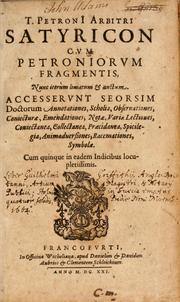
Satyricon
An incomplete Roman novel believed to have been written by Gaius Petronius Arbiter. What remains of the novel is a picaresque story concerning the narrator’s battle to keep his lover, a handsome sixteen year old boy, away from his many rivals.
Shares: Latin literature, Latin language materials
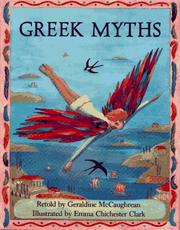
Greek myths
Presents retellings of sixteen Greek myths, including the stories of Pandora, Daedalus and Icarus, King Midas, Jason, and Odysseus.
Shares: God, Gods
How to Read the Bible and Still Be a Christian
The acclaimed Bible scholar and author of The Historical Jesus and God & Empire -- "the greatest New Testament scholar of our generation" (John Shelby Spong) -- grapples with Scripture's two conflicting visions of Jesus and God, one of a loving God, and one of a vengeful God, and explains how Christians can better understand these passages in a way that enriches their faith. Many portions of the…
Shares: Theology, Religion
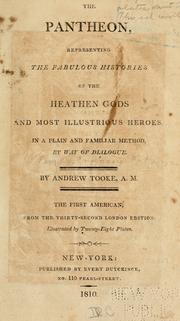
Pantheum mythicum
Shares: Gods, Early works to 1800
Short studies on great subjects
There was a time—a time which, measured by the years of our national life, was not so very long ago—when the serious thoughts of mankind were occupied exclusively by religion and politics. The small knowledge which they possessed of other things was tinctured by their speculative opinions on the relations of heaven and earth; and, down to the sixteenth century, art, science, scarcely even…
Shares: Theology, Philosophy
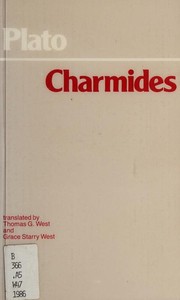
Χαρμίδης
"Crois-tu qu'une ville serait bien gouvernée, si la loi ordonnait à chacun de tisser et de laver son vêtement, de tisser ses chaussures, sa burette à huile, son étrille et le tout le reste de même, sans mettre la main aux affaires d'autrui..." L'évocation de la priorité donnée aux affaires privées n'a rien d'étonnant dans le Charmide pour qui connaît l'entêtement de Platon à souligner l'état…
Shares: Theory of Knowledge, Early works to 1800, Philosophy