18 books like Die Geburt der Tragödie
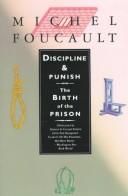
Discipline and Punish
English version of "Surveiller et punir: naissance de la prison"
Shares: Philosophy
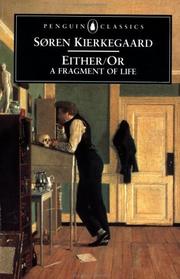
Enten-eller
Con questo volume si completa la nostra edizione di «Enten-Eller», a cura di Alessandro Cortese, la prima integrale che sia apparsa in Italia. In questa parte, che contiene «L’equilibrio fra l’estetico e l’etico nell’elaborazione della personalità», si vedranno tutti i temi dell’opera, e innanzitutto quello del contrasto fra estetico ed etico, riorchestrati e rielaborati in una nuova prospettiva,…
Shares: Philosophy and aesthetics, Aesthetics, Music, Ethics
Der Antichrist
"Here is Friedrich Nietzsche's great masterpiece The Anti-Christ, wherein Nietzsche attacks Christianity as a blight on humanity. This classic is essential reading for anyone wishing to understand Nietzsche and his place within the history of philosophy ..."--Description from www.amazon.com
Shares: Aesthetics, Music, Greek drama, Ethics
The tragedies of Sophocles
Preface signed: Theodore Alois Buckley.
Shares: Tragedy, Greek drama
The plays of Euripides
Euripides’ classic play, based on the myth of Jason and Medea, about a barbarian woman who retaliates against the husband who leaves her—here in the 1912 translation by Gilbert Murray into English rhyming verse. With explanatory notes.
Shares: Tragedy, Greek drama, History and criticism, Mythology
Werke
10 Werke von Friedrich Nietzsche
Deutscher Philosoph und klassischer Philologe (1844-1900)
Dieser Band enthält eine Sammlung von 10 Werken von Friedrich Nietzsche. Ein dynamisches Inhaltsverzeichnis ermöglicht den direkten Zugriff auf die verschiedenen Abschnitte.
Inhaltsverzeichnis:
Also sprach Zarathustra - Ein Buch für Alle und Keinen
Die Geburt der Tragödie - Versuch einer…
Shares: Tragedy, Greek drama, Ethics, History and criticism
An inquiry into the original of our ideas of beauty and virtue
"The Inquiry was written as a critical response to the work of Bernard Mandeville and as a defense of the ideas of Anthony Ashley Cooper, Lord Shaftesbury. It consists of two treatises exploring our aesthetic and our moral abilities. The first treatise argues that human beings possess a natural internal sense of beauty, whereas the second focuses on the "moral sense" that enables us to…
Shares: Aesthetics, Ethics, Philosophy

Euripides
TABLE OF CONTENTS: Euripides’ theater of ideas / William arrowsmith -- Euripides and the gods / G. M. A. Grube -- The virtues of Admetus / Anne Pippin Burnett -- On Euripides’ Medea / Eilhard Schlesinger -- The Hippolytus of Euripides / Bernard M. W. Knox -- Watching the Trojan women / Eric A. Havelock -- Why the Trojan women? / Jean-Paul Sartre -- Orestes / Christian Wolff -- Tragedy and…
Shares: Tragedy, Greek drama, History and criticism, Mythology
Prose
Prose is language that is natural or normal in structure: following the spontaneous flow of conversational speech, without any perfectly regular rhythm; containing ordinary grammar patterns; or, in writing, aligning to typical conventions and formatting. It thus can range in its exact medium from informal everyday speaking to formal academic writing. Prose differs most notably from poetry, which…
Shares: Philosophy and aesthetics, Music, History and criticism
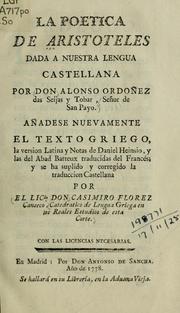
Poetics
One of the first books written on what is now called aesthetics. Although parts are lost (e.g., comedy), it has been very influential in western thought, such as the part on tragedy.
Shares: Philosophy and aesthetics, Aesthetics, Philosophy
Plays
"Four Plays" by Aeschylus is a collection that typically includes some of the most significant works by this ancient Greek playwright, who is often referred to as the father of tragedy. Aeschylus' plays are known for their profound exploration of justice, power, and the divine. While different collections might include various selections, four of his most famous plays are:
"Agamemnon": The first…
Shares: Greek drama, History and criticism
Sophokles
This comprehensive eBook presents significant works of this famous and brilliant writer in one ebook - easy-to-read and easy-to-navigate: • Plays of Sophocles: Oedipus the King; Oedipus at Colonus; Antigone• Oedipus King of Thebes• The Seven Plays in English Verse• Antigone• Aias• King Oedipus• Electra• The Trachinian Maidens• Philoctetes• Specimens of Greek Tragedy — Aeschylus and Sophocles,…
Shares: Tragedy, Mythology
Herders sämmtliche Werke
Shares: Aesthetics, Philosophy
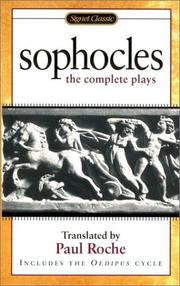
Sophocles
Sophocles' Philoctetes is one of the most widely read Greek tragedies today but is a complex and challenging play to interpret. Its representation of Philoctetes as a sufferer of physical and emotional pain gives it remarkable power and intensity. It juxtaposes Homeric and fifth-century institutions and values, explores honor, power and expediency as principles of personal and political life, and…
Shares: Tragedy, Greek drama, Philosophy, Mythology
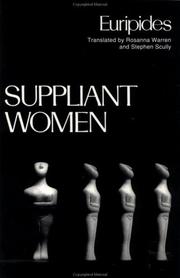
Supplices
Centering on the right of proper burial for those fallen in battle, Suppliant Women reflects on war and on the rule of law. In Electra Euripides gives us his version of the famous legend of the murder of Clytaemestra by her children in revenge for her killing their father, a portrayal interestingly different from that in Sophocles' Electra. Narrating sudden reversals in the hero's fortunes,…
Shares: Tragedy, Greek drama, Mythology
Οἰδίπους Τύραννος (Oidípous Týrannos)
Oedipus Rex chronicles the story of Oedipus, a man that becomes the king of Thebes and was always destined from birth to murder his father Laius and marry his mother Jocasta. The play is an example of a classic tragedy, noticeably containing an emphasis on how Oedipus's own faults contribute to the tragic hero's downfall, as opposed to having fate be the sole cause. Over the centuries, Oedipus…
Shares: Tragedy, Greek drama

Meditaciones del Quijote
247 pages ; 18 cm
Shares: Aesthetics, History and criticism, Philosophy
Tragedy
Tarentum (Modern Day Taranto) believed to depict scenes from Greek tragedy: at left Electra and Orestes, who murder their mother Clytemnestra in order to avenge their father, Agamemnon; Clytemnestra was motivated by Agamemnon taking the princess Cassandra as concubine, and by Agamemnon sacrificing their daughter Iphigenia.At right is Oedipus and Antigone; Oedipus was abandoned as an infant and…
Shares: Tragedy, History and criticism