18 books like Die Welt als Wille und Vorstellung

Χαρμίδης
"Crois-tu qu'une ville serait bien gouvernée, si la loi ordonnait à chacun de tisser et de laver son vêtement, de tisser ses chaussures, sa burette à huile, son étrille et le tout le reste de même, sans mettre la main aux affaires d'autrui..." L'évocation de la priorité donnée aux affaires privées n'a rien d'étonnant dans le Charmide pour qui connaît l'entêtement de Platon à souligner l'état…
Shares: Theory of Knowledge, Knowledge, Philosophy
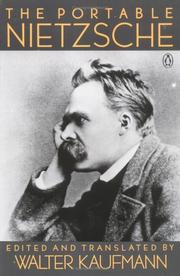
The portable Nietzsche
Selections from the books, notes, and letters of this 19th century philosopher.
Shares: German Philosophy, Philosophy
Essays on the intellectual powers of man
Shares: Theory of Knowledge, Knowledge

Phänomenologie des Geistes
At head of title: Hegel.Translations by Josiah Royce, J.B. Baillie, W. Wallace and others. "Short bibliography": [1] p. following p. xliii.
Shares: German Philosophy, Theory of Knowledge, Philosophy
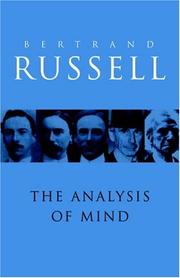
The analysis of mind
The book is mind blowing. It gives you insight of how mind works. You will know the more about how we understand, remember, dream, recollect and worry. You can't read fast as it is a mind stretching subject !!!.
Shares: Theory of Knowledge, Knowledge, Philosophy

A Treatise Concerning the Principles of Human Knowledge
In this exceptional work, Berkeley makes the striking claim that physical things consist of nothing but ideas and therefore do not exist outside the mind. This claim establishes him as the founder of the idealist tradition in philosophy. The text printed in the volume is the 1734 edition of the Principles, which represents Berkeley's mature thought. Also included are four important letters…
Shares: Theory of Knowledge, Knowledge, Philosophy

Θεαίτητος
Some dialogues of Plato are of so various a character that their relation to the other dialogues cannot be determined with any degree of certainty. The Theaetetus, like the Parmenides, has points of similarity both with his earlier and his later writings. The perfection of style, the humour, the dramatic interest, the complexity of structure, the fertility of illustration, the shifting of the…
Shares: Theory of Knowledge, Knowledge, Philosophy

Μένων
Text and essays edited by Malcom Brown: St. Augustine / From On the teacher; G.W. Leibniz / From Discourse on metaphysics; Friedrich Nietzsche / From Introduction to the study of the Platonic dialogues; F.M. Cornford / Anamnesis; Karl Popper / The nature of philosophical problems and their roots in science; H.-P. Stahl / beginnings of propositional logic in Plato; Malcolm Brown / Plato…
Shares: Idea, Philosophy

The Knowledge Landscapes of Cyberspace
How is knowledge produced and used in cyberspace? David Hakken - a key figure in the anthropology of science and technology studies - approaches the study of cyberculture through the venue of knowledge production, drawing on critical theory from anthropology, philosophy and informatics (computer science) to examine how the character and social functions of knowledge change profoundly in…
Shares: Theory of Knowledge, Knowledge, Philosophy

Critiques of knowing
Critiques of Knowing explores what happens to science and computing when we think of them as texts. Lynette Hunter elegantly weaves together vast areas of thought: rhetoric, politics, AI, computing, feminism, science studies, aesthetics and epistemology. Critiques of Knowing shows us that what we need is a radical shake-up of approaches to the arts if the critiques of science and computing are to…
Shares: Theory of Knowledge, Knowledge, Philosophy
The concept of nature
Originally published in 1920 and based on the Tarner Lectures in the philosophy of science, this early work by Alfred North Whitehead made an important contribution to the development of philosophic naturalism. It also featured his assessment of the impact of Einstein's theories and the new findings of modern physics on the concept of nature. Whitehead begins with a critique of generally accepted…
Shares: Theory of Knowledge, Knowledge, Philosophy

Conjectures and refutations
Conjectures and Refutations is one of Karl Popper's most comprehensive and well-known books, distinguished not only for its sharp analysis of the development of scientific knowledge but also for extending those insights to politics and history. It offers a clear and accessible explanation of the core principle that shaped his work: both our knowledge and our objectives and standards evolve…
Shares: Theory of Knowledge, Knowledge, Philosophy

Inquiries concerning the intellectual powers, and the investigation of truth
Book digitized by Google from the library of Harvard University and uploaded to the Internet Archive by user tpb.
Shares: Theory of Knowledge, Knowledge, Philosophy

Some thoughts concerning education
This volume offers two complementary works by John Locke, unabridged, in modernized, annotated texts - the only available edition priced for classroom use. Of interest to students and instructors of philosophy, political theory, and education, these important works shed light on conceptions of reason and freedom essential for understanding Locke's philosophy. With renewed interest in the…
Shares: Theory of Knowledge, Knowledge, Philosophy
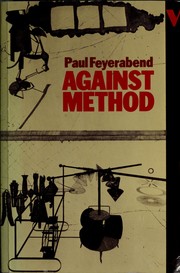
Against Method
Against Method: Outline of an Anarchistic Theory of Knowledge is a 1975 book about the philosophy of science by Paul Feyerabend, in which the author argues that science is an anarchic enterprise, not a nomic (customary) one. In the context of this work, the term anarchy refers to epistemological anarchy.
(Source: Wikipedia)
Shares: Theory of Knowledge, Knowledge, Philosophy

Θεαίτητος / Σοφιστής
"Plato's Theaetetus and Sophist are two of his most important dialogues, and are widely read and discussed by philosophers for what they reveal about his epistemology and particularly his accounts of belief and knowledge. Although they form part of a single Platonic project, these dialogues are not usually presented as a pair, as they are in this new and lively translation. Offering a high…
Shares: Theory of Knowledge, Knowledge, Philosophy
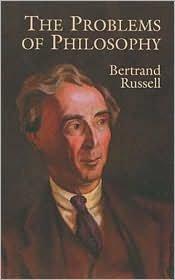
The Problems of Philosophy
In the following pages I have confined myself in the main to those problems of philosophy in regard to which I thought it possible to say something positive and constructive, since merely negative criticism seemed out of place. For this reason, theory of knowledge occupies a larger space than metaphysics in the present volume, and some topics much discussed by philosophers are treated very…
Shares: Theory of Knowledge, Knowledge, Philosophy

Also sprach Zarathustra
A landmark work of philosophy and of literature, Thus Spoke Zarathustra is the fullest expression of Nietzche's belief that "the object of mankind should lie in its highest individuals." In his thirtieth year Zarathustra - the archetypal Ubermensch representative of supreme passion and creativity - abandons his home for the mountains, where he lives, literally and figuratively, on a level of…
Shares: German Philosophy, Philosophy