18 books like Intelligence and the National Security Strategist
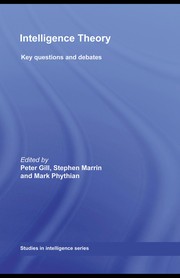
Intelligence Theory
Containing essays by some of the key theorists in the field from the US, UK and Canada, this volume assesses the role and utility of theory in intelligence studies.
Shares: Military intelligence, National Security, Political Freedom & Security, Intelligence
Exploring intelligence archives
This edited volume brings together many of the world’s leading scholars of intelligence with a number of former senior practitioners to facilitate a wide-ranging dialogue on the central challenges confronting students of intelligence. The book presents a series of documents, nearly all of which are published here for the first time, accompanied by both overview and commentary sections. The…
Shares: Military intelligence, Political Freedom & Security, Intelligence, Espionage
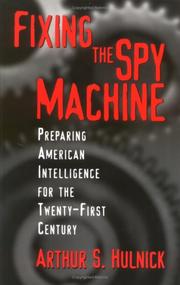
Fixing the Spy Machine
With the end of the Cold War and the dawning of a new century, the U.S. intelligence system faces new challenges and threats. The system has suffered from penetration by foreign agents, cutbacks in resources, serious errors in judgment, and what appears to be bad management; nonetheless, it remains one of the key elements of America's strategic defense. Hulnick suggests that things are not as bad…
Shares: Political Freedom & Security, Intelligence, Espionage, Political science
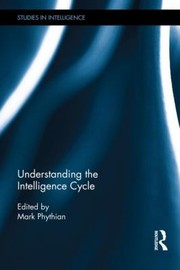
Understanding The Intelligence Cycle
This book critically analyses the concept of the intelligence cycle, highlighting the nature and extent of its limitations and proposing alternative ways of conceptualising the intelligence process. The concept of the intelligence cycle has been central to the study of intelligence. As Intelligence Studies has established itself as a distinctive branch of Political Science, it has generated its…
Shares: National Security, Political Freedom & Security, Intelligence, Espionage
Intelligence and intelligence analysis
This volume examines the ethical issues that arise as a result of national security intelligence collection and analysis.Powerful new technologies enable the collection, communication and analysis of national security data on an unprecedented scale. Data collection now plays a central role in intelligence practice, yet this development raises a host of ethical and national security problems, such…
Shares: National Security, Political Freedom & Security, Intelligence, Espionage
US covert operations and Cold War strategy
"Based on recently declassified documents, this book provides the first examination of the Truman Administration's decision to employ covert operations in the Cold War...In this volume, the author looks at three central questions: Why were these types of operations adopted? Why were they conducted in such as haphazard manner? And, why, once it became clear that they were not working, did the…
Shares: National Security, Political Freedom & Security, Espionage, Political science
East German foreign intelligence
"We have assembled an international group of scholars to examine East German foreign intelligence as a historical problem in the intelligence areas of: politics, scientific-technical and military intelligence and counter-intelligence. Themes and topics that run through the volume include the espionage wars; the relationship to the KGB; the successes and failures of the BND…
Shares: Political Freedom & Security, Intelligence, Espionage, Political science
Improving Intelligence Analysis
This book on intelligence analysis written by intelligence expert Dr. Stephen Marrin argues that scholarship can play a valuable role in improving intelligence analysis. Improving intelligence analysis requires bridging the gap between scholarship and practice. Compared to the more established academic disciplines of political science and international relations, intelligence studies scholarship…
Shares: Political Freedom & Security, Intelligence, Espionage, Political science
Knowing your friends
Little attention has been paid to the murky, ultra-business of gathering intelligence among and forming estimates about friendly powers, and friendly or allied military forces. How rarely have scholars troubled to discover when states entered into coalitions or alliances mainly and explicitly because their intelligence evaluation of the potential partner concluded that making the alliance was,…
Shares: Political Freedom & Security, Intelligence, Espionage, Political science
Terrorist-Criminal Nexus
"We are currently faced with a new national security challenge that is both vexing and complex. The once clear lines between the international drug trade, terrorism, organized crime, domestic terror, and Mexican drug cartels are blurring as groups increasingly join forces to further individual interests and goals. The synergistic potential of the alliance between nonstate actors and terrorists is…
Shares: National Security, Political Freedom & Security, Political science, United States
Missing
It is every person's - particularly every parent's - worst nightmare. For a loved one to walk out through the front door and never to return is one of the most heartbreaking, terrifying and harrowing experiences someone can go through. Not to know the fate of a person close to you is simply agonising - did they choose to disappear? Were they involved in an accident or did something even worse…
Shares: Political Freedom & Security, Political science, True Crime
Russians Among Us
With intrigue that rivals the best le Carré novels, Russians Among Us tells the explosive story of Russian espionage efforts against the United States and the West—from the end of the Cold War to the present and the significant threat of hacking the 2020 electionSpies have long been a source of great fascination in the world of fiction, but sometimes the best true spy stories…
Shares: Espionage, Political science, True Crime
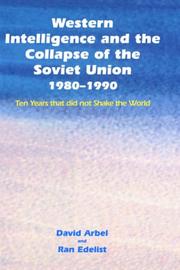
Western intelligence and the collapse of the Soviet Union, 1980-1990
"When the worst terrorist atrocity in American history occurred on September 11, 2001, the intelligence agencies of the United States and most of the western world were taken by surprise. Ten years earlier, in 1991, those same organizations were surprised when the Soviet Empire collapsed. In both cases the intelligence establishment has invested enormous resources, compiled information, wrote…
Shares: Political Freedom & Security, Espionage, Political science, True Crime
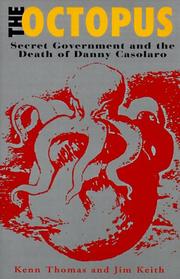
The octopus
Writer Danny Casolaro was on the trail of the Octopus when he was found dead in a West Virginia hotel in 1991, becoming part of the most extraordinary political tale of the '90s. The slashes in his wrists were too deep to be self-inflicted. The accordion file with his recent research was missing. He had told his family to be gravely suspicious if an accident befell him. Casolaro had been…
Shares: Military intelligence, United States, True Crime
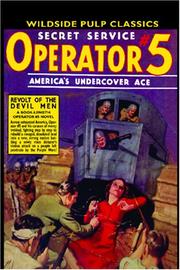
Operator #5
ZOMBIES MARCHED . . . soulless storm troops of a sinister madman's plot. Freedom was in mortal peril - as was Jimmy Christopher, Operator 5 of the nation's spy service, battling the bloody tide that swirled on land and sea. Into Death's Temple Jimmy rushed headlong . . . where the archfiend awaited, eager to sacrifice him on the bloody altar of tyranny . . . and resurrect him as a mindless…
Shares: National Security, United States
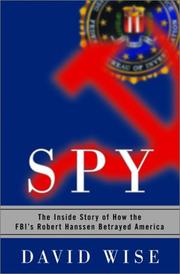
Spy
Spy tells, for the first time, the full, authoritative story of how FBI agent Robert Hanssen, code name grayday, spied for Russia for twenty-two years in what has been called the "worst intelligence disaster in U.S. history"--and how he was finally caught in an incredible gambit by U.S. intelligence.David Wise, the nation's leading espionage writer, has called on his unique knowledge and…
Shares: Espionage, United States, True Crime
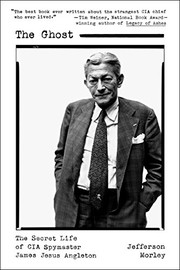
The ghost
CIA spymaster James Jesus Angleton was one of the most powerful unelected officials in the United States government in the mid-20th century, a ghost of American power. From World War II to the Cold War, Angleton operated beyond the view of the public, Congress, and even the president. In The Ghost, investigative reporter Jefferson Morley tells Angleton's dramatic story. From the agency's MKULTRA…
Shares: Espionage, Political science, United States, True Crime
Farm Animals
A dictatorship isn’t evil. It is the evolution of democracy.
The people have the right to defend themselves from the evils of oligarchy and the destruction of their culture.
Orwell was wrong. Power doesn’t corrupt people.
People corrupt power.
On an oat farm, one man and his forefathers made a living. There were animals on his farm too. He wasn’t very good at caring for them and they were…
Shares: Political Freedom & Security, Political science
About the book Intelligence and the National Security Strategist →