18 books like Iphigenia in Aulis
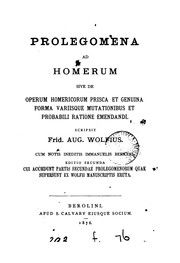
Prolegomena ad Homerum, sive, De operum Homericorum prisca et genuina forma variisque mutationibus et probabili ratione emendandi
Shares: Other prose: classical, Ancient, Greek literature, Literary Criticism

Walter Hawkesworth's Labyrinthus
Originally compiled and published in 1988, this vole contains the full text and translation of Walter Hawkesworth's Labyrinthus, alongside textual and critical notes, including essays on the author, the staging and the style and language. This is the first of two volumes.
Shares: Ancient, Literary Criticism, Drama
Euripide
Ten tragedies by one of the three great tragedians of classical Athens, namely Hecuba, Orestes, The Phœnician Virgins, Medea, Hippolytus, Alcestis, The Bacchæ, The Heraclidæ, Iphigenia in Aulis, and Iphigenia in Tauris.
Shares: Greek drama, Continental european drama, Drama
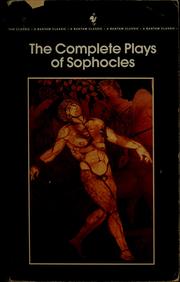
The complete plays of Sophocles
Oedipus the King - Antigone - Electra - AjaxTrachinian Women - Philoctetes - Oedipus at ColonusThe greatest of the Greek tragedians, Sophocles wrote over 120 plays, surpassing his older contemporary Aeschylus and the younger Euripides in literary output as well as in the number of prizes awarded his works. Only the seven plays in this volume have survived intact. From…
Shares: Greek drama, Continental european drama, Drama
Phoenician women
The Ancient Classics series provides eReaders with the wisdom of the Classical world, with both English translations and the original Latin and Greek texts. This comprehensive eBook presents the complete works of the Athenian playwright Euripides, with beautiful illustrations, informative introductions and the usual Delphi bonus material. (Version 1)
Beautifully illustrated with images relating…
Shares: Ancient, Greek drama, Continental european drama, Drama
Prometheus Bound
An ancient Greek tragedy attributed to Aeschylus. The play follows the sufferings of the Titan Prometheus who has been fastened to a rock by Zeus as punishment for giving the knowledge of fire to mankind.
Shares: Greek literature, Greek drama, Continental european drama, Drama

Electra
Electra is a Greek tragedy by Sophocles.
Set in the city of Argos a few years after the Trojan War, it recounts the tale of Electra and the vengeance that she and her brother Orestes take on their mother Clytemnestra and step father Aegisthus for the murder of their father, Agamemnon.
Shares: Ancient, Greek drama, Continental european drama, Drama
Euripidis Fabulae
Greek text with critical apparatus of plays by Euripides: Cyclops, Alcestis, Medea, Children of Herakles, Hippolytus, Andromache, Hecuba.
Shares: Greek drama, Continental european drama, Mythology, Drama
Seven against Thebes
The third play in an Oedipus-themed trilogy produced by Aeschylus in 467 BC. The trilogy is sometimes referred to as the Oedipodea. It concerns the battle between an Argive army led by Polynices and the army of Thebes led by Eteocles and his supporters.
Shares: Greek drama, Continental european drama, Drama
Aeschyli Tragoediae
Introduction in English
Shares: Greek drama, Drama
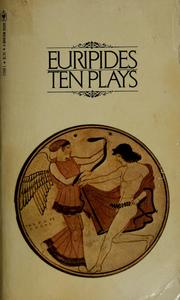
Ten plays
The first playwright of democracy, Euripides wrote with enduring insight and biting satire about social and political problems of Athenian life.  In contrast to his contemporaries, he brought an exciting--and, to the Greeks, a stunning--realism to the "pure and noble form" of tragedy.  For the first time in history, heroes and heroines on the stage were not…
Shares: Greek drama, Drama
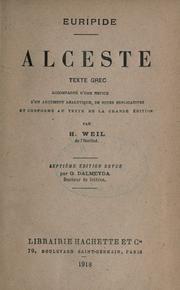
Alcestis
"Euripides' Alcestic - perhaps the most anthologized Attic drama - is an ideal test for students reading their first play in the original Greek. Literary commentaries and language aids in most editions are too advanced or too elementary for intermediate students of the language, but in this new student edition, C. A. E. Luschnig and H. M. Roisman remedy such deficiencies." "The introductory…
Shares: Greek drama, Continental european drama, Drama
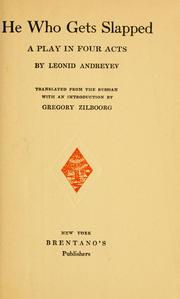
He, the one who gets slapped
Paul Beaumont is a scientist who labored for years alone to prove his radical theories on the origin of mankind. Baron Regnard becomes his patron, enabling him to do research while living in his mansion. One day, Beaumont announces to his beloved wife Marie and the baron that he has proved all his theories and is ready to present them before the Academy of the Sciences. He leaves the arrangements…
Shares: Continental european drama, Literary Criticism, Drama

Iphigenia in Tauris
This is the translation of the Euripides play about the princess Iphigeneia who narrowly avoided death by sacrifice at the hands of her father, Agamemnon. She was saved by the goddess Artemis, to whom the sacrifice was to be made, and swept off to Tauris. As a priestess at the goddess' temple, she has the gruesome task of ritually sacrificing foreigners who land on King Thoas's shores. It has…
Shares: Iphigenia, Greek drama, Mythology, Drama
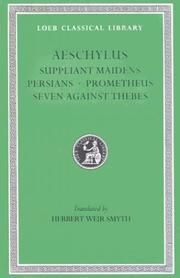
Plays
"Four Plays" by Aeschylus is a collection that typically includes some of the most significant works by this ancient Greek playwright, who is often referred to as the father of tragedy. Aeschylus' plays are known for their profound exploration of justice, power, and the divine. While different collections might include various selections, four of his most famous plays are:
"Agamemnon": The first…
Shares: Greek drama, Drama
The Bacchae, and other plays
Ion, The women of Troy, Helen, The Bacchae.
Shares: Iphigenia, Greek drama, Continental european drama, Drama

Supplices
Centering on the right of proper burial for those fallen in battle, Suppliant Women reflects on war and on the rule of law. In Electra Euripides gives us his version of the famous legend of the murder of Clytaemestra by her children in revenge for her killing their father, a portrayal interestingly different from that in Sophocles' Electra. Narrating sudden reversals in the hero's fortunes,…
Shares: Greek drama, Continental european drama, Mythology, Drama
Iphigenie auf Tauris
"Iphigenie auf Tauris" ist ein Bühnenstück von Johann Wolfgang Goethe nach der Vorlage von Euripides' Iphigenie bei den Taurern. 1779 schrieb der Dichter eine Prosafassung, die er während seiner Italienreise ab 1786 in ein Versdrama umformte. Den Titel wählte Goethe in falscher Analogie zur latinisierten Version des Titels der Euripidestragödie Iphigenia in Tauris. Der griechische…
Shares: Iphigenia, Drama