18 books like Kinder- und Hausmärchen
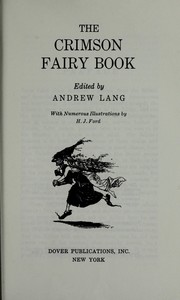
The Crimson Fairy Book
Twenty four fairy tales from the folklore of Hungary, Russia, Rumania, Serbia, Tunis, Finland, Iceland, Japan, and Sicily.
Shares: Tales, Folklore, Fairy Tales, Fantasy fiction
The Pink Fairy Book
A collection of more than thirty fairy tales gathered from all over the world.
Shares: Tales, Folklore, Fairy Tales, Fantasy fiction
The Orange Fairy Book
A collection of fairy tales brought and translated from Rhodesia, Uganda, and Punjaub.
Shares: Folklore, Fairy Tales, Fantasy fiction, Children's fiction
The Grey Fairy Book
A collection of thirty-five fairy tales from the folklore of Lithuania, Africa, Germany, Greece, and France, and other parts of the world.
Shares: Folklore, Fairy Tales, Fantasy fiction, Children's fiction
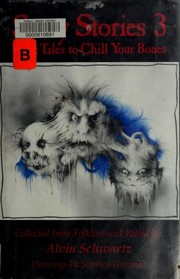
Scary Stories 3
Shares: Folk literature, Tales, Folklore, Children's fiction
Shares: Folk literature, Tales, Folklore, Children's fiction
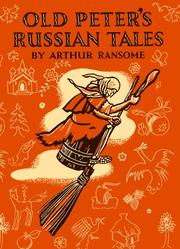
Old Peter's Russian tales
Includes twenty traditional tales told by Old Peter to his two grandchildren.
Shares: Folk literature, Tales, Folklore, Fairy Tales
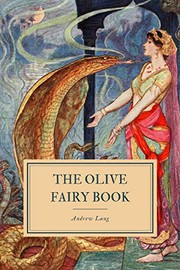
The Olive Fairy Book (Complete & Unabridged)
Twenty-nine tales from the folklore of Turkey, India, Denmark, Armenia, and the Sudan.
Shares: Folklore, Fairy Tales, Fantasy fiction, Children's fiction
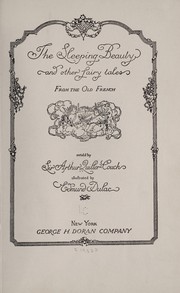
The Sleeping Beauty
The Sleeping Beauty told at length, with the hundred years of sleep and the family the prince has to leave, and other tales retold by a scholar-novelist for children. Quiller-Couch edited the Oxford Book of English Verse and wrote as a professor who never lost the storyteller's ear. The additions to Perrault are made with an obvious relish for the parts he thought too short.
Shares: Folklore, Fairy Tales, Children's fiction
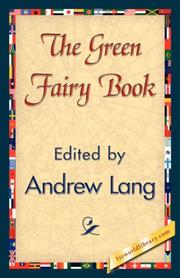
The Green Fairy Book
Fairy tales gathered from the folklore of Russia, Germany, Italy, France, China, Scotland, and England.
Shares: Folklore, Fairy Tales, Children's fiction
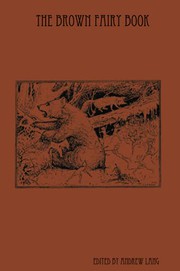
The Brown Fairy Book
Thirty-two fairy tales from the folklore of Africa, Australia, Brazil, India, New Caledonia, and Persia.
Shares: Folklore, Fairy Tales, Children's fiction
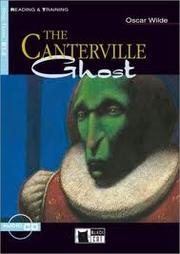
The Canterville Ghost
This is Oscar Wilde's tale of the American family moved into a British mansion, Canterville Chase, much to the annoyance of its tired ghost. The family -- which refuses to believe in him -- is in Wilde's way a commentary on the British nobility of the day -- and on the Americans, too. The tale, like many of Wilde's, is rich with allusion, but ends as sentimental romance.
Shares: German language, Fairy Tales, Children's fiction

Die Bremer Stadtmusikanten
No longer wanted by their masters, a donkey, dog, cat, and rooster set out for Bremen to become musicians
Shares: Germany, Tales, Folklore, Fairy Tales
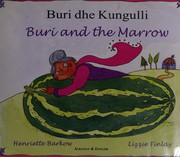
Buri and the Marrow
An old woman and her daughter foil the attempts of several hungry animals to eat her while journeying across the forest.
Shares: Tales, Folklore, Fairy Tales, Fantasy fiction
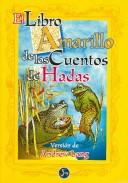
The Yellow Fairy Book
First published in 1894, this extensive fairy tale anthology was edited by Andrew Lang, a pioneering author and critic. By bringing together folk tales from all over the world and having them translated into English, many for the first time, he was able to create rich and varied collections of stories, opening readers' eyes to a whole world of magical possibility overseas.
Shares: Contes de fées, Folklore, Fairy Tales, Children's fiction
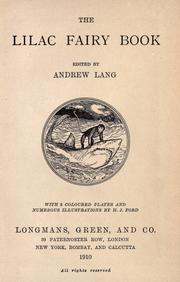
The Lilac Fairy Book
Thirty-three fairy tales including The one-handed girl and The raspberry worm.
Shares: Fairy Tales, Fantasy fiction, Children's fiction
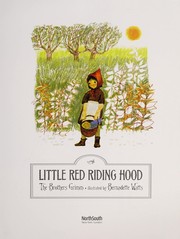
Rotkäppchen
Charles Perrault’s version of the folk tale _Petite chaperon rouge_ was retold in German by the Grimm Brothers as _Rotkäppchen_, and retold in many English translations as _Little Red Riding Hood_.
A little girl on her way to visit her grandmother meets a hungry wolf in the forest.
Shares: Germany, Tales, Folklore, Fairy Tales
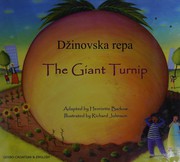
The Giant Turnip
"The Gigantic Turnip" or "The Enormous Turnip" (, , , ; ATU 2044, ‘Pulling up the turnip') is a cumulative Russian fairy tale, collected in Arkhangelsk Governorate and published in 1863 by folklore researcher Alexander Afanasyev in his collection Russian Fairy Tales (tale number 89), a collection not strictly Russian, but which included stories from Ukraine and Belarus alongside Russian tales.…
Shares: German language, Folklore, Fairy Tales, Children's fiction
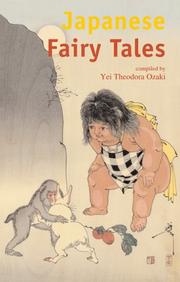
Japanese Fairy Tales
Japanese folktales are somewhat of a loaded term. In commonplace usage, it signifies a certain set of well-known classic tales, with a vague distinction of whether they fit the rigorous definition of folktale or not.
The admixed imposters are literate written pieces, dating back to the Muromachi period (14th-16th centuries) or even earlier times in the Middle Ages. These would not normally…
Shares: Folklore, Fairy Tales, Children's fiction