18 books like Literary criticism
Biographia literaria
Samuel Taylor Coleridge's 1817 work Biographia Literaria is an autobiography in discourse; loosely structured and non-linear, the work is meditative and contains numerous philosophical essays. Initially criticized as the product of Coleridge's opiate-driven descent into illness, more recent critics have given the work far more credit and recognition. The book is the origin of the well-known…
Shares: Wordsworth, Criticism, History and criticism, Philosophy
A preface to Wordsworth
Probably the most famous of the Romantic poets, William Wordsworth worked with and influenced many of the leading poets of the age. This excellent introduction to his life and works sets his writing firmly in the context of his times. John Purkis provides an outline of Wordsworth's life and cultural background and their effect on his work, and examines his verse, from the earliest school poems to…
Shares: Wordsworth, English Poets, Literary Criticism, Poetry
D.H. Lawrence
A collection of poems on themes of animals, people, celebration and condemnation, and love, by a prolific English poet, novelist, critic, travel writer, playwright, and painter.
Shares: Criticism, English Authors, Correspondence, History and criticism
Journals of Dorothy Wordsworth
Dorothy Wordsworth's Scottish tour unfolds as a living journal of weather, landscape, and human kindness, carried from Loch Katrine and Glen Coe to Edinburgh, Melrose, and the borderlands beyond. In rain, mist, and difficult crossings, she records not only mountains, sea-lochs, ferries, and ruined abbeys, but also the warmth of the people who shelter the travelers along the way. At Loch Lomond…
Shares: Wordsworth, English Authors
Cowper
In this masterful biography, Goldwin Smith presents the life and works of William Cowper (1731-1800), whom Samuel Taylor Coleridge called “the best modern poet". Tracing Cowper's life—from his beginnings in England to his death—Smith analyzes his major lyrical works and as well as his hymns. Smith also offers an examination of the writer's lasting influence on Romantic poetry.
Shares: English Poets, English Authors
Essays
The Victorian English poet and essayist Matthew Arnold was the archetypal sage writer, noted for his classical attacks on the tastes and manners of his time. His poetry is characterised by its classically poised, serene and grand style, which is often intimate, personal, full of romantic regret and nostalgic in tone. Arnold’s incisive essays chastised and instructed the reader on contemporary…
Shares: Criticism, History and criticism, Poetry
The educated imagination
In the 1962 Massey Lectures, Northrop Frye writes:
"What good is the study of literature? Does it help us to think more clearly or feel more sensitively or live a better life than we would without it? What is the function of the teacher and scholar or the person who calls himself, as I do, a literary critic? What difference does the study of literature make in our social or political or…
Shares: Criticism, Literary Criticism, History and criticism, Philosophy
Design of Biographia Literaria
First published in 1983, this book examines a work whose intricacies have baffled and infuriated generations of readers and proposes a theory of Coleridge’s writing habits that "explain(s) his explanation". The author painstakingly analyses the Biographia’s organising structure distinguishing between the daring conception and often inept execution of Coleridge’s idea of critical discourse. It is…
Shares: Wordsworth, English Poets, History and criticism, Poetry
The complete poetical works
Poetry written by the Scottish author Robert Burns.
Shares: English Poets, Correspondence, History and criticism, Poetry
Poems
Shares: English Poets, Correspondence, Poetry
Shares: English Poets, Correspondence, Poetry
Tennyson
Alfred Tennyson, 1st Baron Tennyson (; 6 August 1809 – 6 October 1892) was an English poet. He was Poet Laureate of the United Kingdom during much of Queen Victorias reign. In 1829 he was awarded the Chancellor's Gold Medal at Cambridge for one of his first pieces, "Timbuktu". He published his first solo collection of poems, Poems, Chiefly Lyrical, in 1830. "Claribel" and "Mariana", which remain…
Shares: English Poets, Literary Criticism
Poems by John Keats
Twenty-five poems by one of the English Romantic poets of the early nineteenth century.
Shares: English Poets, Correspondence, Poetry
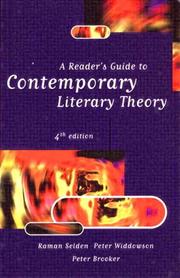
A reader's guide to contemporary literary theory
xii, 244p. : 22cm
Shares: Criticism, Literary Criticism, History and criticism, Philosophy
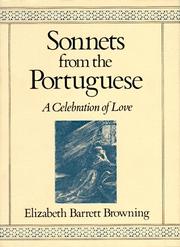
Sonnets from the Portuguese
"I love your verse with all my heart, dear Miss Barrett...and I love you too," Robert Browning wrote in January of 1845, thus initiating the most celebrated literary correspondence of the nineteenth century. For the next twenty months, he and the world-renowned poet Elizabeth Barrett exchanged letters and confidences.
During their courtship, Elizabeth privately wrote a series of forty-four…
Shares: English Poets, Correspondence, Poetry
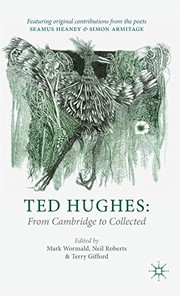
Ted Hughes
This innovative casebook introduces readers to wide-ranging critical dialogue about the work of Ted Hughes, one of the most popular and influential British poets of the twentieth century. In twelve new essays, international authorities on Hughes examine and debate his work, shedding new light on familiar texts. Split into two parts, the first half of this book examines Hughes's work through…
Shares: English Poets, Literary Criticism, Poetry
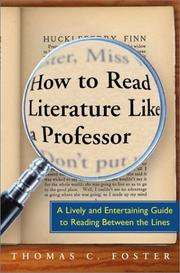
How to read literature like a professor
What does it mean when a fictional hero takes a journey?. Shares a meal? Gets drenched in a sudden rain shower? Often, there is much more going on in a novel or poem than is readily visible on the surface—a symbol, maybe, that remains elusive, or an unexpected twist on a character—and there's that sneaking suspicion that the deeper meaning of a literary text keeps escaping you.In this practical…
Shares: Criticism, Literary Criticism, History and criticism
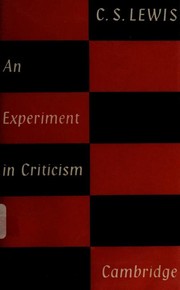
An Experiment in Criticism
"Professor Lewis believed that literature exists above all for the joy of the reader and that books should be judged by the kind of reading they invite. He doubted the use of strictly evaluative criticism, especially its condemnations. Literary criticism is traditionally employed in judging books, and 'bad taste' is thought of as a taste for bad books. Professor Lewis' experiment consists in…
Shares: Criticism, Literary Criticism
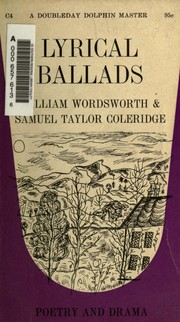
Lyrical Ballads
Twenty-three poems that transformed English poetry. Wordsworth and Coleridge composed this powerful selection of poetry during their youthful and intimate friendship. Reproducing the first edition of 1798, this edition of "Lyrical Ballads" allows modern readers to recapture the book's original impact. In these poems including Wordsworth's Lines written a few miles above Tintern Abbey and…
Shares: Wordsworth, History and criticism, Poetry