18 books like Medea and other plays
The Complete Greek Tragedies
Based on the conviction that only translators who write poetry themselves can properly re-create the celebrated and timeless tragedies of Aeschylus, Sophocles, and Euripides, the Greek Tragedy in New Translations series offers new translations that go beyond the literal meaning of the Greek in order to evoke the poetry of the originals.
This volume collects Euipides' Alcestis (translated by…
Shares: Alcestis, Medea, Hippolytus, Heracles
Medea
"Medea has been betrayed. Her husband, Jason, has left her for a younger woman. He has forgotten all the promises he made and is even prepared to abandon their two sons. But Medea is not a woman to accept such disrespect passively. Strongwilled and fiercely intelligent, she turns her formidable energies to working out the greatest, and most horrifying, revenge possible." "Euripides' devastating…
Shares: Medea, Helen of Troy, Electra, Hippolytus
Three plays
Shares: Alcestis, Electra, Hecuba, Hippolytus
Shares: Alcestis, Electra, Hecuba, Hippolytus
Children of Heracles
This edition and commentary provides an introduction to one of Euripides' less well-known plays, and describes the enormous value of the text for our understanding of Athenian drama, religion, and society. Despite the excellent commentaries of Elmsley (1821) and Pearson (1907), and powerful articles by Wilamowitz, the play has not been given the notice it deserves.
This edition interprets the…
Shares: Hecuba, Hippolytus, Heracles, Greek drama
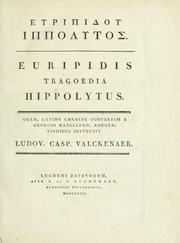
Hippolytus
Euripides wrote two plays called Hippolytus. In this, the second, he dramatized the tragic failure of perfection. This translation comes in two forms; the first presents a simulacrum of the text as it might have appeared in unprocessed form to a reader sometime shortly after Euripides? death. The second processes the drama into the reduced but much more distinct form of modern print translations.
Shares: Alcestis, Medea, Hippolytus, Greek drama
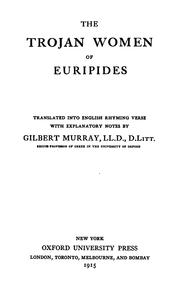
The Trojan women of Euripides
Published in 1915, this book features Gilbert Murray’s translation of Euripides’ 415 BCE tragedy. The play chronicles the aftermath of the Trojan War, specifically the suffering of the Trojan women at the hands of the Greeks.
Shares: Helen of Troy, Hecuba, Greek drama, Greek Mythology
Euripide
Ten tragedies by one of the three great tragedians of classical Athens, namely Hecuba, Orestes, The Phœnician Virgins, Medea, Hippolytus, Alcestis, The Bacchæ, The Heraclidæ, Iphigenia in Aulis, and Iphigenia in Tauris.
Shares: Greek drama, Continental european drama, Greek Mythology, Drama

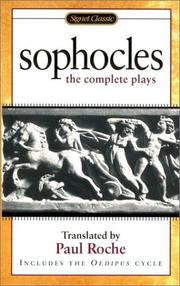
The complete plays of Sophocles
Oedipus the King - Antigone - Electra - AjaxTrachinian Women - Philoctetes - Oedipus at ColonusThe greatest of the Greek tragedians, Sophocles wrote over 120 plays, surpassing his older contemporary Aeschylus and the younger Euripides in literary output as well as in the number of prizes awarded his works. Only the seven plays in this volume have survived intact. From…
Shares: Greek drama, Continental european drama, Greek Mythology, Drama

Tragoediae
Shares: Electra, Heracles, Greek drama, Greek Mythology
Sophocles
Sophocles' Philoctetes is one of the most widely read Greek tragedies today but is a complex and challenging play to interpret. Its representation of Philoctetes as a sufferer of physical and emotional pain gives it remarkable power and intensity. It juxtaposes Homeric and fifth-century institutions and values, explores honor, power and expediency as principles of personal and political life, and…
Shares: Electra, Heracles, Greek drama, Greek Mythology
Aeschyli Tragoediae
Introduction in English
Shares: Greek drama, Greek Mythology, Drama
Ten plays
The first playwright of democracy, Euripides wrote with enduring insight and biting satire about social and political problems of Athenian life.  In contrast to his contemporaries, he brought an exciting--and, to the Greeks, a stunning--realism to the "pure and noble form" of tragedy.  For the first time in history, heroes and heroines on the stage were not…
Shares: Greek drama, Greek Mythology, Drama
The Bacchae, and other plays
Ion, The women of Troy, Helen, The Bacchae.
Shares: Helen of Troy, Hecuba, Greek drama, Continental european drama
Oresteia
The Oresteia -- Agamemnon, Choephori, and The Eumenides -- depicts the downfall of the house of Atreus: after King Agamemnon is murdered by Clytemnestra, their son, Orestes, is commanded by Apollo to avenge the crime by killing his mother, and he does so, bringing on himself the wrath of the Furies and the judgment of Athens. Together, the three plays are one of the major achievements of Greek…
Shares: Electra, Greek drama, Continental european drama, Greek Mythology
Euripides
In nine paperback volumes, the Grene and Lattimore editions offer the most comprehensive selection of the Greek tragedies available in English. Over the years these authoritative, critically acclaimed editions have been the preferred choice of over three million readers for personal libraries and individual study as well as for classroom use.
Shares: Alcestis, Hippolytus, Greek drama, Greek Mythology
Seven against Thebes
The third play in an Oedipus-themed trilogy produced by Aeschylus in 467 BC. The trilogy is sometimes referred to as the Oedipodea. It concerns the battle between an Argive army led by Polynices and the army of Thebes led by Eteocles and his supporters.
Shares: Greek drama, Continental european drama, Greek Mythology, Drama
Heracles
Heracles Euripides - Euripides' Heracles is an extraordinary play, innovative in its treatment of the myth, bold in its dramatic structure, and filled with effective human pathos. The play tells a tale of horror: Heracles, the greatest hero of the Greeks, is maddened by the gods to murder his wife and children. But this suffering and divine malevolence are leavened by the friendship between…
Shares: Heracles, Greek drama, Continental european drama, Greek Mythology
Plays
"Four Plays" by Aeschylus is a collection that typically includes some of the most significant works by this ancient Greek playwright, who is often referred to as the father of tragedy. Aeschylus' plays are known for their profound exploration of justice, power, and the divine. While different collections might include various selections, four of his most famous plays are:
"Agamemnon": The first…
Shares: Greek drama, Greek Mythology, Drama