18 books like Oresteia
Aeschylus
““A world of wealth is trash if men are wanting…"
As Charles Isherwood noted in The New York Times, “the ruler of a rich and powerful empire leads his countrymen into a disastrous war on foreign soil in “The Persians,” a play Aeschylus wrote in the fifth century B.C. It seems the guy was acting on advice from bad counselors. And trying to finish some business started by papa, who ruled before…
Shares: Agamemnon, Orestes, Electra, Greek language materials
Euripidis Fabulae
Greek text with critical apparatus of plays by Euripides: Cyclops, Alcestis, Medea, Children of Herakles, Hippolytus, Andromache, Hecuba.
Shares: Greek language materials, Greek drama, Continental european drama, Greek Mythology
Tragoediae
Shares: Greek language materials, Greek drama, Greek Mythology, Drama
Euripide
Ten tragedies by one of the three great tragedians of classical Athens, namely Hecuba, Orestes, The Phœnician Virgins, Medea, Hippolytus, Alcestis, The Bacchæ, The Heraclidæ, Iphigenia in Aulis, and Iphigenia in Tauris.
Shares: Greek drama, Continental european drama, Greek Mythology, Drama
The complete plays of Sophocles
Oedipus the King - Antigone - Electra - AjaxTrachinian Women - Philoctetes - Oedipus at ColonusThe greatest of the Greek tragedians, Sophocles wrote over 120 plays, surpassing his older contemporary Aeschylus and the younger Euripides in literary output as well as in the number of prizes awarded his works. Only the seven plays in this volume have survived intact. From…
Shares: Greek drama, Continental european drama, Greek Mythology, Drama
Agamemnon
The Classical Department produced the play Agamemon, performed in the stadium on June 16 and 19, 1906
Shares: Agamemnon, Orestes, Greek drama, Continental european drama
Sophocles
Sophocles' Philoctetes is one of the most widely read Greek tragedies today but is a complex and challenging play to interpret. Its representation of Philoctetes as a sufferer of physical and emotional pain gives it remarkable power and intensity. It juxtaposes Homeric and fifth-century institutions and values, explores honor, power and expediency as principles of personal and political life, and…
Shares: Electra, Greek language materials, Greek drama, Greek Mythology

Aeschyli septem quae supersunt tragoediae
Shares: Greek language materials, Greek Mythology, Drama
Aeschyli Tragoediae
Introduction in English
Shares: Greek drama, Greek Mythology, Drama
Ten plays
The first playwright of democracy, Euripides wrote with enduring insight and biting satire about social and political problems of Athenian life.  In contrast to his contemporaries, he brought an exciting--and, to the Greeks, a stunning--realism to the "pure and noble form" of tragedy.  For the first time in history, heroes and heroines on the stage were not…
Shares: Greek drama, Greek Mythology, Drama
Three plays
Shares: Orestes, Electra, Continental european drama, Greek Mythology
Shares: Orestes, Electra, Continental european drama, Greek Mythology
Seven against Thebes
The third play in an Oedipus-themed trilogy produced by Aeschylus in 467 BC. The trilogy is sometimes referred to as the Oedipodea. It concerns the battle between an Argive army led by Polynices and the army of Thebes led by Eteocles and his supporters.
Shares: Greek drama, Continental european drama, Greek Mythology, Drama
Plays
"Four Plays" by Aeschylus is a collection that typically includes some of the most significant works by this ancient Greek playwright, who is often referred to as the father of tragedy. Aeschylus' plays are known for their profound exploration of justice, power, and the divine. While different collections might include various selections, four of his most famous plays are:
"Agamemnon": The first…
Shares: Greek drama, Greek Mythology, Drama
Orestes
Produced more frequently on the ancient stage than any other tragedy, Orestes retells with striking innovations the story of the young man who kills his mother to avenge her murder of his father. Though eventually exonerated, Orestes becomes a fugitive from the Furies (avenging spirits) of his mother's blood. On the brink of destruction, he is saved in the end by Apollo, who had commanded the…
Shares: Orestes, Greek drama, Continental european drama, Drama
Electra
Electra is a Greek tragedy by Sophocles.
Set in the city of Argos a few years after the Trojan War, it recounts the tale of Electra and the vengeance that she and her brother Orestes take on their mother Clytemnestra and step father Aegisthus for the murder of their father, Agamemnon.
Shares: Electra, Greek drama, Continental european drama, Drama
Children of Heracles
This edition and commentary provides an introduction to one of Euripides' less well-known plays, and describes the enormous value of the text for our understanding of Athenian drama, religion, and society. Despite the excellent commentaries of Elmsley (1821) and Pearson (1907), and powerful articles by Wilamowitz, the play has not been given the notice it deserves.
This edition interprets the…
Shares: Greek language materials, Greek drama, Continental european drama, Greek Mythology
Medea and other plays
Medea/Hecabe/Electra/HeraclesFour devastating Greek tragedies showing the powerful brought down by betrayal, jealousy, guilt and hatredThe first playwright to depict suffering without reference to the gods, Euripides made his characters speak in human terms and face the consequences of their actions. In Medea, a woman rejected by her lover takes hideous revenge by murdering the children they both…
Shares: Electra, Greek drama, Continental european drama, Greek Mythology
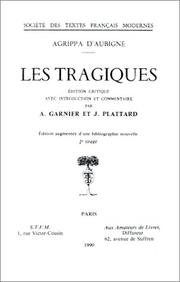
Les tragiques
La douloureuse histoire des guerres de religion, Agrippa d'Aubigné l'a vécue, jour après jour, dans le camp protestant, dès sa plus tendre enfance. Très tôt, il fut le témoin de scènes de massacre et il participa tout jeune aux combats. Ecuyer d'Henri de Navarre, il partagea avec lui une vie d'aventures et, immobilisé par une blessure, composa le long poème des Tragiques. Cette œuvre de colère…
Shares: Continental european drama, Poetry