18 books like Philosophie der symbolischen Formen

Aspects du mythe
First published in English in 1954, this founding work of the history of religions secured the North American reputation of the Romanian émigré-scholar Mircea Eliade. Making reference to an astonishing number of cultures and drawing on scholarship published in no fewer than half a dozen European languages, The Myth of the Eternal Return illuminates the religious beliefs and rituals of a wide…
Shares: Symbolism, Myth, Mythology

Language, thought, and reality
Writings by the pioneering linguist Benjamin Whorf, including his famous work on the Hopi language as well as general reflections on language and meaning.
The pioneering linguist Benjamin Whorf (1897–1941) grasped the relationship between human language and human thinking: how language can shape our innermost thoughts. His basic thesis is that our perception of the world and our ways of…
Shares: Langage et langues, Language, Language and languages
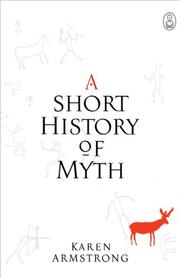
A Short History of Myth
The history of myth is the history of humanity; our stories and beliefs, our curiosity and attempts to understand the world, link us to our ancestors and each other. Myths help us make sense of the universe. Armstrong takes us from the Palaeolithic period and the myths of the hunters right up to the 'Great Western Transformation' of the last 500 years and the discrediting of myth by science.…
Shares: Myth, Mythologie, Mythology

Language
An expert, accessible study, this book asks and answers fundamental questions about how language works, its regional variations, and its cultural and historical roles. The author relates linguistic issues to a broad spectrum of other areas, including the part played by language in the nature of thought and in artistic expression. No finer introduction to the subject exists, and this work's direct…
Shares: Langage et langues, Language, Language and languages, Philosophy
Tractatus logico-philosophicus
Wittgenstein's book about the problems of language and his attempt of describing the world and an philosophical accurate and most of all logical language.
Shares: Langage et langues, Language, Language and languages, Philosophie
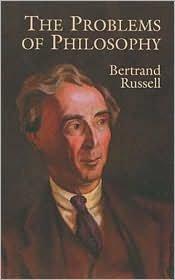
The Problems of Philosophy
In the following pages I have confined myself in the main to those problems of philosophy in regard to which I thought it possible to say something positive and constructive, since merely negative criticism seemed out of place. For this reason, theory of knowledge occupies a larger space than metaphysics in the present volume, and some topics much discussed by philosophers are treated very…
Shares: Metaphysics, Theory of Knowledge, Knowledge, Philosophie
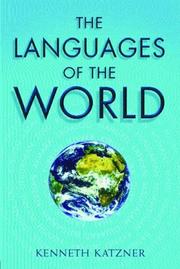
The languages of the world
An excellent overview of how all the world's main languages interconnect where they do. It also gives samples of the language with translation for a large number of languages.
Shares: Langage et langues, Language, Language and languages

Κρατύλος
Με τη λογοτεχνία αιώνων, είναι αναπόφευκτο ότι κάποιοι θα πέσουν στα σκαλιά. Κυνηγάμε έργα δημόσιου τομέα και τα αποκαθιστούμε για να μην χαθούν στον κόσμο.
Ποιοι είμαστε; Είμαστε η Cairn Press. Το υπόβαθρό μας είναι στο σχέδιο, τις εκδόσεις, την τυπογραφία και την τεχνολογία. Αυτές οι δεξιότητες τροφοδοτούν την αποστολή μας να δημιουργήσουμε τα υψηλότερης ποιότητας ηλεκτρονικά βιβλία δημόσιου…
Shares: Language and languages, Philosophy

Conjectures and refutations
Conjectures and Refutations is one of Karl Popper's most comprehensive and well-known books, distinguished not only for its sharp analysis of the development of scientific knowledge but also for extending those insights to politics and history. It offers a clear and accessible explanation of the core principle that shaped his work: both our knowledge and our objectives and standards evolve…
Shares: Connaissance, Theory of Knowledge, Knowledge, Philosophy
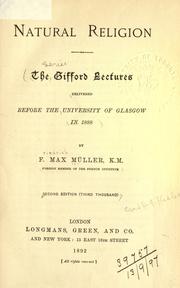
Natural religion
Natural religion most frequently means the "religion of nature", in which God, the soul, spirits, and all objects of the supernatural are considered as part of nature and not separate from it. Sometimes "natural religion" is taken to mean a pantheistic belief that nature itself is divine; conversely, the term is also used in philosophy to describe some aspects of religion that are said to be…
Shares: Langage et langues, Language and languages, Philosophy, Mythology
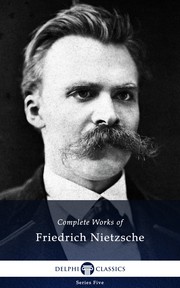
The Complete Works of Friedrich Nietzsche
"The Complete Works of Friedrich Nietzsche" is an indispensable philosophical collection encompassing the full scope of one of history’s most groundbreaking and provocative thinkers, whose insights dramatically reshaped modern intellectual thought. Nietzsche, known for his penetrating critique of traditional morality, religion, and philosophical ideals, challenged foundational assumptions about…
Shares: Philosophie, Philosophy

Le sacré et le profane
Famed historian of religion Mircea Eliade observes that even moderns who proclaim themselves residents of a completely profane world are still unconsciously nourished by the memory of the sacred. Eliade traces manifestations of the sacred from primitive to modern times in terms of space, time, nature, and the cosmos. In doing so he shows how the total human experience of the religious man…
Shares: Philosophie, Mythologie, Philosophy, Mythology
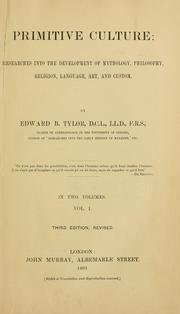
Primitive culture
Edward Burnett Tylor (1832–1917) was an English anthropologist who is widely considered the founder of anthropology as a scientific discipline. He was the first Professor of Anthropology at the University of Oxford from 1896 to 1909, and developed a broad definition of culture which is still used by scholars. First published in 1871, this classic work explains Tylor's idea of cultural evolution…
Shares: Langage et langues, Language and languages, Mythologie, Mythology
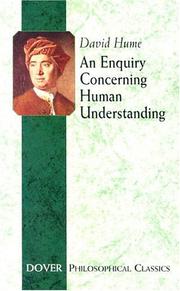
Philosophical essays concerning human understanding
"Over a series of elegantly written, engaging essays, the Enquiry examines the experiential and psychological sources of meaning and knowledge, the foundations of reasoning about matters that lie beyond the scope of our sensory experience and memory, the nature of belief, and the limitations of our knowledge. The positions Hume takes on these topics have been described as paradigmatically…
Shares: Connaissance, Theory of Knowledge, Knowledge, Philosophy
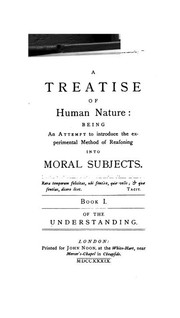
A treatise of human nature
The eighteenth-century Scottish philosopher's classic work on human understanding and morals.
Shares: Connaissance, Theory of Knowledge, Knowledge, Philosophy
Phänomenologie des Geistes
At head of title: Hegel.Translations by Josiah Royce, J.B. Baillie, W. Wallace and others. "Short bibliography": [1] p. following p. xliii.
Shares: Metaphysics, Theory of Knowledge, Philosophie, Philosophy
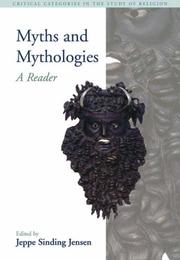
Myths And Mythologies
In all cultures and at all times, humans have told stories about where they came from, who they are and how they should live their lives. 'Myths and Mythologies' brings together the key classic and contemporary writings - philosophical, psychological, sociological, semiological and cognitivist - on myth. To the insider, myths contain truth, revelation and a 'history of ourselves'; to the…
Shares: Myth, Mythologie, Mythology

The myth of the state
"The Philosophy of Symbolic Forms is one of the landmarks of twentieth century philosophy. Drawing from the influential work of Wilhelm Dilthey, it transformed neo-Kantianism into a new robust philosophy of culture. The second volume, on Mythical Thinking, analyzes the fundamental layers of perception and expression as well as the articulations with religion and the dialectic with other forms,…
Shares: Myth, Mythologie, Philosophy, Mythology