18 books like Physico-theology
The Shaver's new sermon for the fast day
Shares: English Sermons, Sermons, Church of England, Early works to 1800
Dialogues Concerning Natural Religion
Dialogues Concerning Natural Religion is a philosophical work by the Scottish philosopher David Hume. Through dialogue, three fictional characters named Demea, Philo, and Cleanthes debate the nature of God's existence. While all three agree that a god exists, they differ sharply in opinion on God's nature or attributes and how, or if, humankind can come to knowledge of a deity.
In the Dialogues,…
Shares: Natural theology, Early works to 1900, Early works to 1800, Religion
Essays and treatises on several subjects
Essays and treatises: on several subjects. By David Hume, Esq; In four volumes. ... [pt.3], David Hume. Essays and treatises: on several subjects. By David Hume, Esq; In four volumes. ... Hume, David, 1711-1776. A new edition. 4v. ; 12⁰. London : printed for A. Millar; and A. Kincaid and A. Donaldson, at Edinburgh, 1760. Reproduction of original from the British Library. English Short Title…
Shares: Natural theology, Early works to 1900, Early works to 1800, Philosophy
Poems
It is a poetry book. Francis Thompson, a poet of high thinking, 'of celestial vision', and of imaginings that found literary images of answering splendour, died in London in the winter of 1907. His life—always a fragile one—doubtless owed its prolongation to 'man's unconquerable mind', in him so invincible through all vicissitude that he seemed to add a new significance to Wordsworth's phrase. To…
Shares: God, Theology, Religion
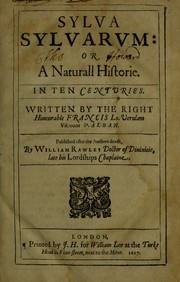
Sylva sylvarvm
The father of Empiricism, the Elizabethan philosopher Francis Bacon was an advocate and practitioner of the scientific method during the scientific revolution. His pioneering works argued for the possibility of scientific knowledge based only upon inductive reasoning and careful observation of events in nature. This comprehensive eBook presents Bacon’s collected works, with numerous…
Shares: Pre-Linnean works, Natural history, Early works to 1800
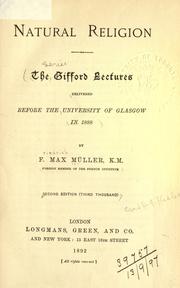
Natural religion
Natural religion most frequently means the "religion of nature", in which God, the soul, spirits, and all objects of the supernatural are considered as part of nature and not separate from it. Sometimes "natural religion" is taken to mean a pantheistic belief that nature itself is divine; conversely, the term is also used in philosophy to describe some aspects of religion that are said to be…
Shares: Natural theology, Early works to 1900, Religion, Philosophy
The Origins of Biblical Monotheism
One of the leading scholars of ancient West Semitic religion discusses polytheism vs. monotheism by covering the fluidity of those categories in the ancient Near East. He argues that Israel's social history is key to the development of monotheism.
Shares: God, Theology, Religion
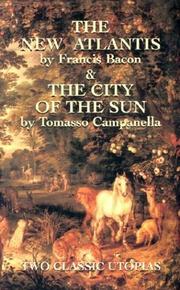
Nova Atlantis
New Atlantis is an incomplete utopian novel by Sir Francis Bacon, published posthumously in 1626. It appeared unheralded and tucked into the back of a longer work of natural history, Sylva sylvarum (forest of materials). In New Atlantis, Bacon portrayed a vision of the future of human discovery and knowledge, expressing his aspirations and ideals for humankind. The novel depicts the creation of a…
Shares: Pre-Linnean works, Natural history, Early works to 1800, Philosophy
De Natura deorum
De Natura deorum (The Nature of the Gods) is a philosophical dialogue by Roman orator Cicero written in 45 BC. It is laid out in three books, each of which discuss the theology of different Roman and Greek philosophers. The dialogue uses a discussion of Stoic, Epicurean, and skeptical theories to examine fundamental questions of theology.
The dialogue is on the whole narrated by Cicero himself,…
Shares: God, Theology, Early works to 1800, Religion
A treatise of human nature
The eighteenth-century Scottish philosopher's classic work on human understanding and morals.
Shares: Natural theology, Early works to 1900, Early works to 1800, Philosophy
Herders sämmtliche Werke
Shares: Theology, Philosophy
Histoire naturelle
THEORIEDE LATERREPREMIER DISCOURSDE LA MANIERE D'ETUDIER ET DE TRAITER L'HISTOIRE NATURELLEl'histoire naturelle, prise dans toute son etendue, est une histoire immense ; elle embrasse tous les objets que nous presente l'univers. Cette multitude prodigieuse de quadrupedes, d'oiseaux, de poissons, d'insectes, de plantes, de mineraux, etc.., offre a la curiosite de l'esprit humain un vaste spectacle…
Shares: Pre-Linnean works, Natural history, Early works to 1800
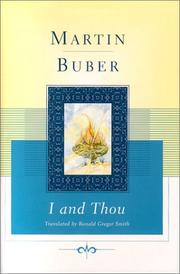
Ich und du
"Martin Buber, heavily influenced by the writings of Friedrich Nietzsche, unites the proto-Existentialist currents of modern German thought with the Judeo-Christian tradition, powerfully updating faith for modern times.".
"This work is the centerpiece of Buber's philosophy. It lays out a view of the world in which human beings can enter into relationships using their innermost and whole being to…
Shares: God, Theology, Religion, Philosophy
Captivity and Restoration
In February 1676, during King Philip's War, the frontier village of Lancaster, Massachusetts, was attacked by a party of Nipmuck Indians and completely destroyed. As relief from Concord approached, the attackers withdrew, taking with them 24 captives, including Mrs. Mary Rowlandson and her three children.
For almost three months the little family was forced to live with their captors and endure…
Shares: Sermons, Early works to 1800
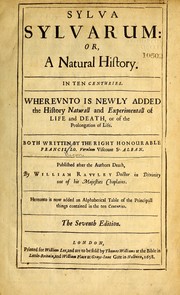
Sylva sylvarum
This landmark work by English philosopher, scientist and author Francis Bacon examines the science of natural history as it existed in the 1670s.
This book was created from a scan of the original artifact, and as such the text of the book is not selectable or searchable.
Shares: Pre-Linnean works, Natural history, Early works to 1800
De mysteriis
The third century philosopher Iamblichus of Chalcis was a major figure in the school of Neoplatonism and the founder of its Syrian branch. He was also a notable biographer of the Greek philosopher and mathematician Pythagoras. Aside from Iamblichus’ own philosophical contribution, the ‘Protrepticus’ is of importance for the study of the Sophists, owing to its preservation of several pages of an…
Shares: Early works to 1900, Early works to 1800, Religion, Philosophy
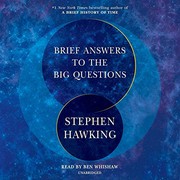
Brief Answers to the Big Questions
Stephen Hawking was recognized as one of the greatest minds of our time and a figure of inspiration after defying his ALS diagnosis at age twenty-one. He is known for both his breakthroughs in theoretical physics as well as his ability to make complex concepts accessible for all, and was beloved for his mischievous sense of humor. At the time of his death, Hawking was working on a final project:…
Shares: Religion and science, Philosophy
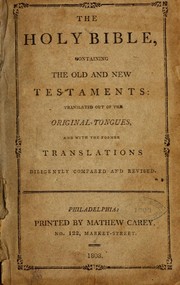
Bible
The purpose of The Original African Heritage Study Bible is to interpret the Bible as it relates specifically to persons of African descent and thereby to foster an appreciation of the multiculturalism inherent in the Bible. The Original African Heritage Study Bible offers a number of unique features which reveal the African/Edenic contribution to Judaism and Christianity, including: 1)…
Shares: Theology, Religion