18 books like Pythian odes
The Olympian and Pythian odes
The Going of the White Swan
Pindar , ancient Greek lyric poet from Thebes (422-443B.C.)
This ebook presents «The Going of the White Swan», from Pindar . A dynamic table of contents enables to jump directly to the chapter selected.
Table of Contents
-01- About this book
-02- INTRODUCTION
-03- PREFATORY NOTE
-04- OLYMPIAN ODES
-05- THE PYTHIAN ODES
-06- THE NEMEAN ODES
-07- THE ISTHMIAN ODES
-08-…
Shares: Greek Laudatory poetry, Athletics, Olympic games, Games

The extant odes of Pindar
This collection of extant odes by the Greek poet Pindar (c. 581-438 BC) presents a comprehensive look at the odes that define his poetic career. Along with Sappho, Pindar is one of the esteemed nine lyric poets of Ancient Greece. These extant odes are also representative of Greece's cultural and artistic trends at the beginning of the dynamic classical period (5th cen. – 4th cen. BC). Primarily…
Shares: Greek Laudatory poetry, Athletics, Olympic games, Games
Pindari Carmina
Shares: Athletics, Greek poetry, Olympic games, Games
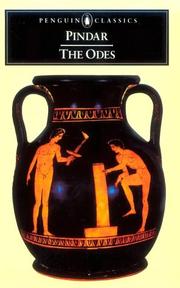
The odes of Pindar
The odes of Pindar (518-438 B.C.), the most renowned of the ancient Greek poets, were choral songs extolling victories at the Games at Olympia, Delphi, Nemea, and Corinth, that covered the specturm of Greek mythological and moral belief.
Shares: Greek Laudatory poetry, Athletics, Olympic games, Games
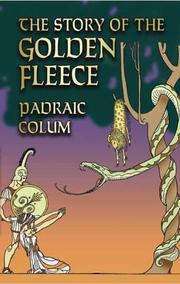
The story of the Golden Fleece
"Still unequaled as an introduction to the classic myths."—Publishers WeeklyGeared toward young readers, the classic retellings of stories from ancient myth presented in this volume center on the Argonauts' quest for the golden fleece. Generations have thrilled to compelling renditions of the adventures of heroic Jason and the sorceress Medea, mighty Heracles, the minstrel Orpheus, and other…
Shares: Argonauts, Greek Mythology
Agamemnon
The Classical Department produced the play Agamemon, performed in the stadium on June 16 and 19, 1906
Shares: Agamemnon, Greek poetry

For the Winner
Atalanta, the abandoned daughter of the king of Pagasae, disguises herself as a man to win a place on the journey to search for the Golden Fleece, but once she is discovered, she is left in the land of Colchis and forced to make a terrible choice.
Shares: Argonauts, Greek Mythology
Helen of Troy, and other poems
This book is a collection of poems by Sara Tesdale beautiful poems which are simpler and related to general topics beautiful songs about the city she loved so much and later made her home. Read this anthology and swoon.
Shares: Greek Mythology, Poetry
Helen of Troy
Helen (; ), commonly known as Helen of Troy and sometimes as Helen of Sparta, is a figure in Greek mythology said to have been the most beautiful woman in the world. She was believed to have been the daughter of Zeus by Leda or Nemesis, and the sister of Clytemnestra, Castor, Pollux, Philonoe, Phoebe and Timandra. She was first married to King Menelaus of Sparta "who became by her the father of…
Shares: In literature, Greek Mythology, Poetry
Apollonius Rhodius
"Apollonius Rhodius's Argonautica, composed in the third century B.C.E., is the epic retelling of Jason's quest for the golden fleece. Along with his contemporaries Callimachus and Theocritus, Apollonius refashioned Greek poetry to meet the interests and aesthetics of a Hellenistic audience, especially that of Alexandria in the Ptolemaic period following Alexander's death. In this carefully…
Shares: Greek poetry, Argonauts, Poetry
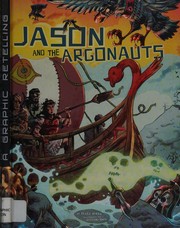
Jason and the Argonauts
Jason and the Argonauts are characters from Greek mythology. This title may also refer to:
Shares: Argonauts, Greek Mythology

Theogony
Hesiod's straightforward account of family conflict among the gods is the best and earliest evidence of what the ancient Greeks believed about the beginning of the world. Includes Hesiod's "Works and Days", lines 1-201, and material from the Library of Apollodorus.
Shares: Greek poetry, Greek Mythology, Poetry
Oresteia
The Oresteia -- Agamemnon, Choephori, and The Eumenides -- depicts the downfall of the house of Atreus: after King Agamemnon is murdered by Clytemnestra, their son, Orestes, is commanded by Apollo to avenge the crime by killing his mother, and he does so, bringing on himself the wrath of the Furies and the judgment of Athens. Together, the three plays are one of the major achievements of Greek…
Shares: Agamemnon, Greek Mythology, Poetry
De sapientia veterum
The father of Empiricism, the Elizabethan philosopher Francis Bacon was an advocate and practitioner of the scientific method during the scientific revolution. His pioneering works argued for the possibility of scientific knowledge based only upon inductive reasoning and careful observation of events in nature. This comprehensive eBook presents Bacon’s collected works, with numerous…
Shares: Greek Mythology, Early works to 1800
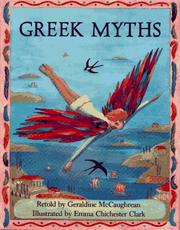
Greek myths
Presents retellings of sixteen Greek myths, including the stories of Pandora, Daedalus and Icarus, King Midas, Jason, and Odysseus.
Shares: Argonauts, Greek Mythology
Aeschylus
““A world of wealth is trash if men are wanting…"
As Charles Isherwood noted in The New York Times, “the ruler of a rich and powerful empire leads his countrymen into a disastrous war on foreign soil in “The Persians,” a play Aeschylus wrote in the fifth century B.C. It seems the guy was acting on advice from bad counselors. And trying to finish some business started by papa, who ruled before…
Shares: Agamemnon, Greek Mythology
The Greek myths
Robert Graves, classicist, poet, and unorthodox critic, retells the Greek legends of gods and heroes for a modern audience And, in the two volumes of The Greek Myths, he demonstrates with a dazzling display of relevant knowledge that Greek Mythology is “no more mysterious in content than are modern election cartoons.” His work covers, in nearly two hundred sections, the creation myths; the…
Shares: Argonauts, Greek Mythology
Artemis The Loyal
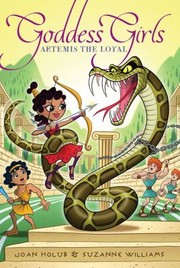
"It's time for the annual Olympic Games, and the four goddessgirls are not happy! It's boys only--and the girls at MOA are not pleased. Led by Artemis, Athena, Persphone and Aphrodite, the ladies of Mount Olympus hatch a plan to get Zeus to open up the games to everyone. Will they succeed--or end up watching from the sidelines again?"--Publisher.
Shares: Olympic games, Greek Mythology