18 books like Selections
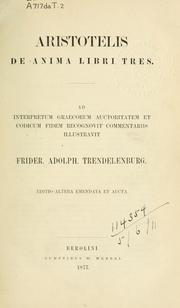
De anima
For the Pre-Socratic philosophers the soul was the source of movement and sensation, while for Plato it was the seat of being, metaphysically distinct from the body that it was forced temporarily to inhabit. Plato's student Aristotle was determined to test the truth of both these beliefs against the emerging sciences of logic and biology. His examination of the huge variety of living organisms -…
Shares: Early works to 1850, Philosophy of mind, Soul, Theory of Knowledge
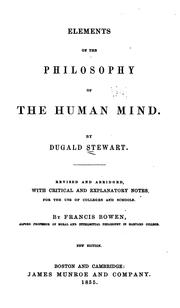
Elements of the philosophy of the human mind
The HISTORY OF PHILOSOPHY & ETHICS collection includes books from the British Library digitised by Microsoft. The works in this collection include expositions and scholarly analyses of philosophy and ethics for the earliest recorded Western religious and secular works. Documents concern prehistoric, medieval, and modern times, with background and historical narratives on Western thought. The…
Shares: Early works to 1850, Philosophy of mind, Early works to 1800, Philosophy
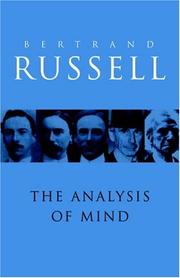
The analysis of mind
The book is mind blowing. It gives you insight of how mind works. You will know the more about how we understand, remember, dream, recollect and worry. You can't read fast as it is a mind stretching subject !!!.
Shares: Philosophy of mind, Theory of Knowledge, Philosophy, Psychology

Φαίδων
After an interval of some months or years, and at Phlius, a town of Peloponnesus, the tale of the last hours of Socrates is narrated to Echecrates and other Phliasians by Phaedo the 'beloved disciple.' The Dialogue necessarily takes the form of a narrative, because Socrates has to be described acting as well as speaking. The minutest particulars of the event are interesting to distant friends,…
Shares: Soul, Ancient Philosophy, Early works to 1800, Philosophy
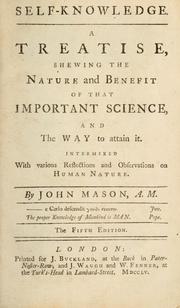
Self-knowledge
published 1813. covered in brown (leather or paper?) Hardbound, abt 51/2 by 31/2" written in old fashioned type; f's look like s's
Shares: Early works to 1850, Early works to 1800, Psychology
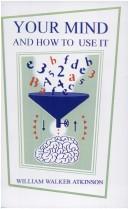
Your Mind and How to Use It
Psychology is generally considered to be the science of mind, although
more properly it is the science of mental states—thoughts,
feelings, and acts of volition. It was formerly the custom of writers
on the subject of psychology to begin by an attempt to define and
describe the nature of mind, before proceeding to a consideration
of the subject of the various mental spates and activities. But…
Shares: Psychologie, Psychology

Psychology
50 Great Myths of Popular Psychology uses popular myths as a vehicle for helping students and laypersons to distinguish science from pseudoscience. Uses common myths as a vehicle for exploring how to distinguish factual from fictional claims in popular psychology Explores topics that readers will relate to, but often misunderstand, such as 'opposites attract', 'people use only 10% of their…
Shares: Psychologie, Psychology

Psychology
First published in 1922, this popular title by R. S Woodworth was revised several times. This twentieth edition from 1949 brought D.G. Marquis on board and was thoroughly revised again, originally published in its current form in 1963. One of the most famous and successful introductions to psychology ever published, this book was very popular in universities and training colleges at the time. Now…
Shares: Psychologie, Psychology
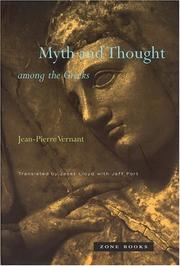
Mythe et pensée chez les Grecs
When Jean-Pierre Vernant first published Myth and Thought among the Greeks in 1965, it transformed the field of ancient Greek scholarship, calling forth a new way to think about Greek myth and thought. In eighteen essays--three of which, along with a new preface, are translated into English for the first time--Vernant freed the subject of ancient Greece from its philological chains and reread the…
Shares: Ancient Philosophy, Philosophy, Psychology
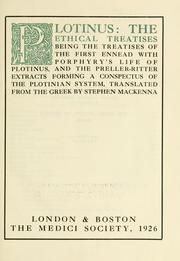
Enneads
The Six Enneads Plotinus - The Six Enneads is the collection of writings of Plotinus, edited and compiled by his student Porphyry. After correcting and naming each treatise, Porphyry wrote a biography of his master, Life of Plotinus, intended to be an Introduction to the Enneads. Porphyry's edition does not follow the chronological order in which Enneads were written, but responds to a plan of…
Shares: Soul, Ancient Philosophy, Early works to 1800, Philosophy

Histoire naturelle
THEORIEDE LATERREPREMIER DISCOURSDE LA MANIERE D'ETUDIER ET DE TRAITER L'HISTOIRE NATURELLEl'histoire naturelle, prise dans toute son etendue, est une histoire immense ; elle embrasse tous les objets que nous presente l'univers. Cette multitude prodigieuse de quadrupedes, d'oiseaux, de poissons, d'insectes, de plantes, de mineraux, etc.., offre a la curiosite de l'esprit humain un vaste spectacle…
Shares: Pre-Linnean works, Zoology, Early works to 1800

Θεαίτητος
Some dialogues of Plato are of so various a character that their relation to the other dialogues cannot be determined with any degree of certainty. The Theaetetus, like the Parmenides, has points of similarity both with his earlier and his later writings. The perfection of style, the humour, the dramatic interest, the complexity of structure, the fertility of illustration, the shifting of the…
Shares: Ancient Philosophy, Theory of Knowledge, Early works to 1800, Philosophy
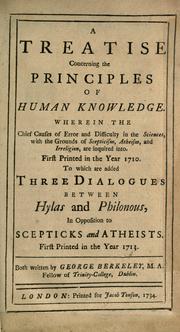
A Treatise Concerning the Principles of Human Knowledge
In this exceptional work, Berkeley makes the striking claim that physical things consist of nothing but ideas and therefore do not exist outside the mind. This claim establishes him as the founder of the idealist tradition in philosophy. The text printed in the volume is the 1734 edition of the Principles, which represents Berkeley's mature thought. Also included are four important letters…
Shares: Soul, Theory of Knowledge, Philosophy

Inquiries concerning the intellectual powers, and the investigation of truth
Book digitized by Google from the library of Harvard University and uploaded to the Internet Archive by user tpb.
Shares: Early works to 1850, Theory of Knowledge, Philosophy, Psychology

Συμπόσιον
One of the most famous works of literature in the Western world, Plato's Symposium is also one of the most entertaining. The scene is a dinner party in Athens in 416 B.C. at which the guests - including the comic poet Aristophanes and Plato's mentor, Socrates - playfully discuss the nature of eros, or love. By turns earthly and sublime, the dialogue culminates with Socrates's famous account of…
Shares: Soul, Theory of Knowledge, Early works to 1800, Philosophy
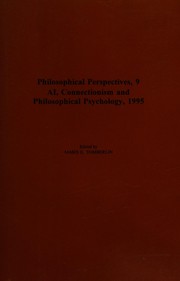
Philosophical Perspectives
Philosophical Perspectives is an annual peer-reviewed academic journal of philosophy. Each annual volume is dedicated to a specific theme addressing philosophical problems. The founding editor-in-chief was James E. Tomberlin, who edited the series from 1987 to 2002. Philosophical Perspectives became a supplement to Noûs in 1996 and is currently published by Wiley-Blackwell.
Shares: Philosophy of mind, Theory of Knowledge, Philosophy

The science of living
The Science of Living (Published in 1930) looks at Individual Psychology as a science. Adler discusses the various elements of Individual Psychology and its application to everyday life. This book includes sections on the inferiority complex, the superiority complex, and other related aspects like love, marriage, sex and sexuality, and the education of children. Concrete, particular, unique…
Shares: Philosophy of mind, Psychology

De caelo
Page one of Aristotle's ''On the Heavens'', from an edition published in 1837
Shares: Ancient Philosophy, Early works to 1800, Philosophy