18 books like Sylva sylvarum
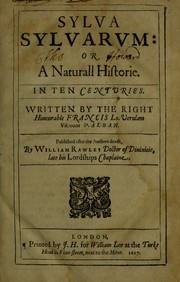
Sylva sylvarvm
The father of Empiricism, the Elizabethan philosopher Francis Bacon was an advocate and practitioner of the scientific method during the scientific revolution. His pioneering works argued for the possibility of scientific knowledge based only upon inductive reasoning and careful observation of events in nature. This comprehensive eBook presents Bacon’s collected works, with numerous…
Shares: Pre-Linnean works, Experiments, Natural history, Utopias
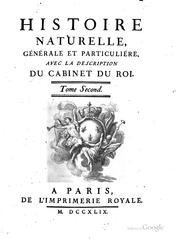
Histoire naturelle
THEORIEDE LATERREPREMIER DISCOURSDE LA MANIERE D'ETUDIER ET DE TRAITER L'HISTOIRE NATURELLEl'histoire naturelle, prise dans toute son etendue, est une histoire immense ; elle embrasse tous les objets que nous presente l'univers. Cette multitude prodigieuse de quadrupedes, d'oiseaux, de poissons, d'insectes, de plantes, de mineraux, etc.., offre a la curiosite de l'esprit humain un vaste spectacle…
Shares: Sciences naturelles, Pre-Linnean works, Natural history, Early works to 1800
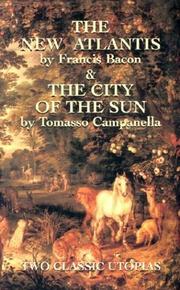
Nova Atlantis
New Atlantis is an incomplete utopian novel by Sir Francis Bacon, published posthumously in 1626. It appeared unheralded and tucked into the back of a longer work of natural history, Sylva sylvarum (forest of materials). In New Atlantis, Bacon portrayed a vision of the future of human discovery and knowledge, expressing his aspirations and ideals for humankind. The novel depicts the creation of a…
Shares: Pre-Linnean works, Natural history, Utopias, Early works to 1800
The natural history of Selborne
The Natural History and Antiquities of Selborne, or just The Natural History of Selborne is a book by English naturalist and ornithologist Gilbert White. It was first published in 1789 by his brother Benjamin. It has been continuously in print since then, with nearly 300 editions up to 2007.
Shares: Sciences naturelles, Natural history, Early works to 1800, Science
Rocks and Minerals (Tasks Cards)
DK's Smithsonian Handbook of Rocks and Minerals combines 600 vivid full-color photos with descriptions of more than 500 specimens. This authoritative, systematic, and clear photographic approach marks a new generation of identification guides. Book jacket.
Shares: Experiments, Sciences, Science
The advancement of learning
The Advancement of Learning (full title: Of the Proficience and Advancement of Learning, Divine and Human) is a 1605 book by Francis Bacon. It inspired the taxonomic structure of the highly influential Encyclopédie by Jean le Rond d'Alembert and Denis Diderot, and is credited by Bacon's biographer-essayist Catherine Drinker Bowen with being a pioneering essay in support of empirical philosophy.
Shares: Ouvrages avant 1800, Sciences, Utopias, Early works to 1800
The Fairyland of Science
The present volume is chiefly intended for those of my young friends who have read, and been interested in, the Fairyland of Science. It travels over a wide field, pointing out a few of the marvellous facts which can be studied and enjoyed by the help of optical instruments. It will be seen at a glance that any one of the subjects dealt with might be made the study of a lifetime, and that the…
Shares: Sciences, Science
Physico-theology
With centuries of literature, it's inevitable that some will fall through the cracks. We hunt down public domain works and restore them so they're not lost to the world.
Who are we? We're Cairn Press. Our background is in design, publishing, typography, and technology. These skills fuel our mission to create the highest quality Public Domain eBooks available online, at an affordable price. We…
Shares: Pre-Linnean works, Natural history, Early works to 1800
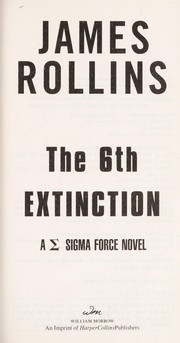
The 6th Extinction
A remote military research station in Utah sends out a frantic distress call, ending with a chilling final command: Kill us all! Personnel from the neighbouring base rush in to discover everyone already dead - and not just the scientists, but every living thing for fifty square miles has been annihilated. The land is entirely sterile-and the blight is spreading. To halt the inevitable, Commander…
Shares: Experiments, Science
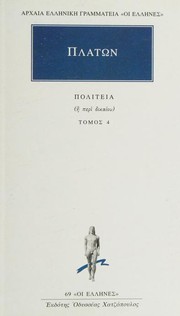
πολιτεία
The Republic is Plato's most famous work and one of the seminal texts of Western philosophy and politics. The characters in this Socratic dialogue - including Socrates himself - discuss whether the just or unjust man is happier. They are the philosopher-kings of imagined cities and they also discuss the nature of philosophy and the soul among other things.
Shares: Ouvrages avant 1800, Utopias, Early works to 1800
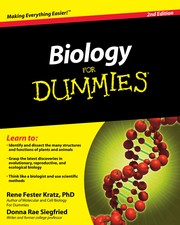
Biology
An updated edition of the ultimate guide to understanding biology. Ever wondered how the food you eat becomes the energy your body needs to keep going? The theory of evolution says that humans and chimps descended from a common ancestor, but does it tell us how and why? We humans are insatiably curious creatures who can't help wondering how things work starting with our own bodies. Wouldn't it be…
Shares: Natural history, Science
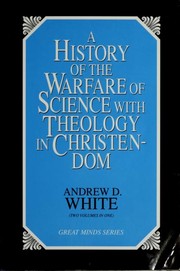
A history of the warfare of science with theology in Christendom
In this important work, which spawned a great deal of controversy at its appearance, White exhaustively documents the battle between science and religion in matters of creation versus evolution, the geocentric versus the heliocentric universe, and the "fall of man" versus anthropology. The struggle of science over outmoded medieval concepts is still emerging.
Shares: Sciences, Science
The life and letters of Charles Darwin
The Life and Letters of Charles Darwin is a book published in 1887 edited by Francis Darwin about his father Charles Darwin. It contains a selection of 87 letters from the correspondence of Charles Darwin , an autobiographical chapter written by Charles Darwin for his family, and an essay by Thomas Huxley "On the reception of the 'Origin of Species'".
Shares: Natural history, Science
Northern Lights
In a landmark epic of fantasy and storytelling, Philip Pullman invites readers into a world as convincing and thoroughly realized as Narnia, Earthsea, or Redwall. Here lives an orphaned ward named Lyra Belacqua, whose carefree life among the scholars at Oxford's Jordan College is shattered by the arrival of two powerful visitors. First, her fearsome uncle, Lord Asriel, appears with evidence of…
Shares: Experiments, Science
Emile or Education
Rousseau wrote about the difficulty of being a good individual within an inherently corrupting collectivity: society. Emile deals specifically with education, and outlines a system which would allow for human goodness. He uses the fictional story of Emile and his tutor to outline his ideas. The book was banned and publicly burned on its publication, but became a European bestseller and provided a…
Shares: Ouvrages avant 1800, Early works to 1800
The botanic garden
One of the first popular science books, the intent of The Botanic Garden is to pique readers' interest in science while educating them at the same time. By embracing Linnaeus's sexualized language, which anthropomorphizes plants, Darwin makes botany interesting and relevant to his readers, but his reliance on conventional images of women when describing plants and flowers reinforces traditional…
Shares: Natural history, Early works to 1800, Science

Φαίδων
After an interval of some months or years, and at Phlius, a town of Peloponnesus, the tale of the last hours of Socrates is narrated to Echecrates and other Phliasians by Phaedo the 'beloved disciple.' The Dialogue necessarily takes the form of a narrative, because Socrates has to be described acting as well as speaking. The minutest particulars of the event are interesting to distant friends,…
Shares: Ouvrages avant 1800, Early works to 1800

An deux mille quatre cent quarante
à l' année deux mille quatre cent quarante.Auguste et respectable année,qui dois amener la félicité sur laterre ; toi, hélas ? Que je n' ai vue qu' ensonge, quand tu viendras à jaillir du seinde l' éternité, ceux qui verront ton soleilfouleront aux pieds mes cendres etcelles de trente générations, successivementéteintes et disparues dans le profondabîme de la mort. Les rois qui
Shares: Utopias, Early works to 1800