18 books like The collected works of C.G. Jung
Change Your Mind
Everyone wants to be more creative. Being creative makes life more fun and interesting. But many believe the common misconception that creativity is something you are born with and others can only envy.In Change Your Mind, Rod Judkins reveals that ‘creative’ people are no more creative than the rest of us. Rather, their gift is that they believe they are creative, and because of this, they are.…
Shares: Creative ability, Creation, Art
Aion
Aion: Researches into the Phenomenology of the Self , originally published in German in 1951, is one of the major works of Jung's later years. The central theme of the volume is the symbolic representation of the psychic totality through the concept of the Self, whose traditional historical equivalent is the figure of Christ.
Jung demonstrates his thesis by an investigation of the Allegoria…
Shares: Religious Psychology, Self, Symbolism, Psychology
Youth and the bright Medusa
Youth and the bright Medusa is a collection of eight short stories about artists and the arts.
Shares: Creative ability, Creation

Sygdommen til døden
The 'sickness' which Kierkegaard's book refers to as 'unto death' is resistance to this belief. It is the inclination to accept that as far as the individual is concerned, death is indeed the end. Now why should Kierkegaard want to call that a sickness? After all, even in his own time there must have been people strong both in might and body who rejected the Christian teaching of sin and…
Shares: Religious Psychology, Self, Psychology
The Dogma of Christ
"Fromm's developing thought merits the critical attention of all concerned with the human condition and its future." —The Washington Post
The essays in this fascinating volume examine present-day psychological and cultural problems with the keen insight and humanistic sympathies characteristic of Erich Fromm's work.
The Dogma of Christ provides some of the sharpest critical insights into how the…
Shares: Psychoanalysis and religion, Psychoanalysis, Psychology
The Rainbow
(Brangwen Family #1)
Lush with imagery, this is the story of three generations of Brangwen women living during the decline of English rural life. Banned upon publication, it explores the most taboo subjects of its time: marriage, physical love, and one family's sexual mores.
Shares: Religious Psychology, Psychoanalysis
Psychanalysis, its theories and practical application
Shares: Pathological Psychology, Psychoanalysis, Psychology
Dream Psychology
The Interpretation of Dreams is a book by Sigmund Freud. The first edition was first published in German in November 1899 as Die Traumdeutung (though post-dated as 1900 by the publisher). The publication inaugurated the theory of Freudian dream analysis, which activity Freud famously described as "the royal road to the understanding of unconscious mental processes".
Shares: Symbolism, Psychoanalysis, Psychology
The creative mind
The Second edition of The Creative Mind has been updated to include recent developments in artificial intelligence, with a new preface, introduction and conclusion by the author.
Shares: Creative ability, Creation, Psychology
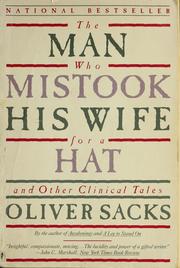
The Man Who Mistook His Wife for a Hat
In his most extraordinary book, “one of the great clinical writers of the twentieth century” (The New York Times) recounts the case histories of patients lost in the bizarre, apparently inescapable world of neurological disorders.
Oliver Sacks’s The Man Who Mistook His Wife for a Hat tells the stories of individuals afflicted with fantastic perceptual and intellectual aberrations: patients who…
Shares: Pathological Psychology, Psychoanalysis, Psychology

Psychology and morals
Originally published in 1923, this book had enjoyed constant and wide success, being reprinted fourteen times. In this new and thoroughly revised edition, published in 1964, the author has reconsidered his conclusions in the light of modern psychology of the time, and includes many case histories from his long experience as a psychiatrist. The book was important for its insistence that there is…
Shares: Pathological Psychology, Psychoanalysis, Psychology
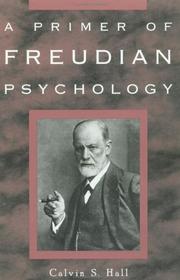
A Primer of Freudian Psychology
The purpose of this primer is to present clearly, briefly, and systematically the psychological theories advanced by Sigmund Freud. Freud's contributions in the areas of abnormal psychology, psychopathology, psychotherapy, and psychiatry have been summarized by a number of writers, but his work as a psychological theorist in the area of general psychology has not been presented in a systematic…
Shares: Freud, Psychoanalysis, Psychology
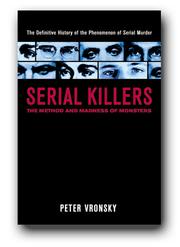
Serial Killers
A comprehensive examination into the frightening true crime history of serial homicide—including information on America’s most prolific serial killers such as:Jeffrey Dahmer • Ted Bundy • “Co-ed Killer” Ed Kemper • The BTK Killer • “Highway Stalker” Henry Lee Lucas • Monte Ralph Rissell • “Shoe Fetish Slayer” Jerry Brudos • “Night Stalker” Richard Ramirez • “Unabomber”…
Shares: Pathological Psychology, Psychology
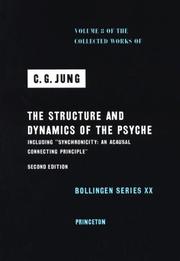
Critique of psychoanalysis
Extracted from Volumes 1, 8, and 18. Includes Jung's Foreword to Phenomènes Occultes (1939), "On the Psychology and Pathology of So-called Occult Phenomena," "The Psychological Foundations of Belief in Spirits," "The Soul and Death," "Psychology and Spiritualism," "On Spooks: Heresy or Truth?" and Foreword to Jaffé: Apparitions and Precognition.
Shares: Religious Psychology, Psychoanalysis, Psychology
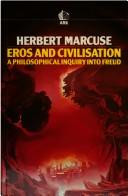
Eros and Civilization
This is Herbert Marcuse's masterpiece which transfixed youth in the 1960s, convincing the New Left there was hope in revolutionary activity. It's also Marcuse encounter with Signmund Freud, well worth the time to decipher it. Narcuse is optimistic, in that if we tame or transform capitalism, we can fix ourselves. It's a far cry from Freud's pessimistic outlook.
Shares: Freud, Psychoanalysis, Psychology
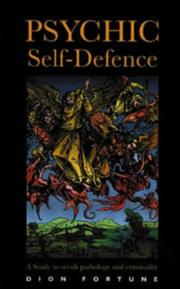
Psychic self-defence
Shares: Pathological Psychology, Psychology
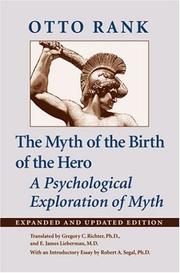
Mythus von der Geburt des Helden
Originally published in German in 1909, Otto Rank's The Myth of the Birth of the Hero offered psychoanalytical interpretations of mythological stories as a means of understanding the human psyche. Like his mentor Freud, Rank compared the myths of such figures as Oedipus, Moses, and Sargon with common dreams, seeing in both a symbolic fulfillment of repressed desire. Thirteen years later, Rank…
Shares: Pathological Psychology, Psychoanalysis, Psychology
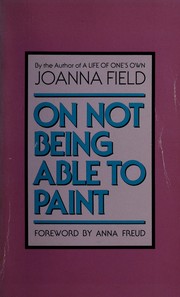
On not being able to paint
This author wrote the great book."A life of one's own."She was the sister of the scientist P.B.Blackett who won the Nobel Prize for physics.
She became a psychoanalyst and this book is an original and creative effort to understand the blocks preventing her from creativity.
She had always wished to be a painter but was unsatisfied with how her work felt dead and meaningless when she simply…
Shares: Creation, Art, Psychology