18 books like The dawn of history
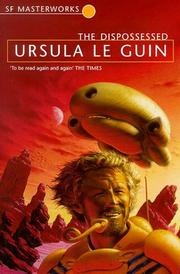
The Dispossessed
Shevek, a brilliant physicist, decides to take action. He will seek answers, question the unquestionable, and attempt to tear down the walls of hatred that have isolated his planet of anarchists from the rest of the civilized universe. To do this dangerous task will mean giving up his family and possibly his life. Shevek must make the unprecedented journey to the planet, Anarres, to challenge…
Shares: Community pick
Primitive culture
Edward Burnett Tylor (1832–1917) was an English anthropologist who is widely considered the founder of anthropology as a scientific discipline. He was the first Professor of Anthropology at the University of Oxford from 1896 to 1909, and developed a broad definition of culture which is still used by scholars. First published in 1871, this classic work explains Tylor's idea of cultural evolution…
Shares: Prehistoric peoples, Language and languages, Mythologie, Mythology
Introduction to mythology
What mythology is and how it has been explained - the solar theory, the ghost theory, the ritual theory - set out by a working folklorist for readers who wanted the arguments before the stories.
Shares: Mythologie, Mythology

Eine aegyptische Königstochter
It is now four years since this book first appeared before the public, and I feel it my duty not to let a second edition go forth into the world without a few words of accompaniment. It hardly seems necessary to assure my readers that I have endeavored to earn for the following pages the title of a "corrected edition." An author is the father of his book, and what father could see his child…
Shares: Ancient History, History

Primitive Culture
The first Professor of Anthropology at the University of Oxford, Edward B. Tylor, defined the term "culture" for modern readers in this groundbreaking work. Initially published in 1871, this classic two-volume study explores the full range of learned human behavior patterns in terms of the beliefs, wisdom, laws, artistic achievements, and mores that constitute a society. The formation of…
Shares: Prehistoric peoples, Language and languages, Mythology, History
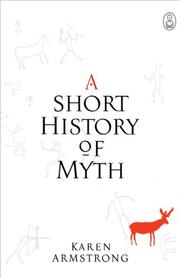
A Short History of Myth
The history of myth is the history of humanity; our stories and beliefs, our curiosity and attempts to understand the world, link us to our ancestors and each other. Myths help us make sense of the universe. Armstrong takes us from the Palaeolithic period and the myths of the hunters right up to the 'Great Western Transformation' of the last 500 years and the discrediting of myth by science.…
Shares: Mythologie, Mythology, History
The history of Atlantis
The History of Atlantis may, in the light of our present knowledge of Plato 's sunken island, appear as a somewhat presumptuous title for a work, the object of which is to present a general outline of what is known concerning Atlantean civilisation. Yet the author placed this study upon a scientific basis, and in so doing he has attached the description of "history" to this work in the…
Shares: Archaeology, Mythology
Imhotep
Imhotep (; "(the one who) comes in peace"; ) was an Egyptian chancellor to the King Djoser, possible architect of Djoser's step pyramid, and high priest of the sun god Ra at Heliopolis. Very little is known of Imhotep as a historical figure, but in the 3,000 years following his death, he was gradually glorified and deified.
Shares: Ancient History, Mythology, History
Deutsche Mythologie
Deutsche Mythologie (, Teutonic Mythology) is a treatise on Germanic mythology by Jacob Grimm. First published in Germany in 1835, the work is an exhaustive treatment of the subject, tracing the mythology and beliefs of the ancient Germanic peoples from their earliest attestations to their survivals in modern traditions, folktales and popular expressions.
Shares: Mythologie, Mythology
Ἱστορίαι
One of the earliest histories of the western world still extant, this gives a contemporary account of the Greco-Persian wars of the fifth century BCE with the rise of the Achaemenid Empire under Cyrus the Great.
Shares: Ancient History, History
Einführung in das Wesen der Mythologie
_Essays on a Science of Mythology_ is a cooperative work between C. Kerényi, who has been called “the most psychological of mythologists,” and C. G. Jung, who has been called “the most mythological of psychologists.” Kerényi contributes an essay on the Divine Child and one on the _Kore_ (the Maiden), together with a substantial introduction and conclusion. Jung contributes a psychological…
Shares: Mythologie, Mythology
Classical Mythology
An excellent primer on classical mythology for readers who have little or no background of classical knowledge.
Shares: Mythologie, Mythology
Ancient Medicine
"The book takes a broad view, exploring the place of medicine in ancient society on many different levels. There is a particular focus on the life and work of doctors - the diseases they faced, how they obtained their knowledge, and their relationship with local communities. Vivian Nutton also investigates the connections between medicine and the religious beliefs of Antiquity, asking if there…
Shares: Ancient History, History

History of the Wars
History of the Wars by the Byzantine historian Procopius (late fifth century to after 558 CE) consists largely of sixth century CE military history, with much information about peoples, places, and special events. Powerful description complements careful narration. Procopius is just to the empire's enemies and boldly criticises emperor Justinian.
Shares: Ancient History, History

Philosophie der symbolischen Formen
Ernst Cassirer war ein deutscher Philosoph. Ausgebildet in der neokantianischen Marburger Schule, folgte er zunächst seinem Mentor Hermann Cohen in dem Versuch, eine idealistische Wissenschaftsphilosophie darzustellen. Nach Cohens Tod im Jahr 1918 entwickelte Cassirer eine Theorie des Symbolismus und nutzte sie, um die Phänomenologie des Wissens zu einer allgemeineren Philosophie der Kultur zu…
Shares: Language and languages, Mythologie, Mythology

Cours d'études historiques
Shares: Ancient History, Mythology, History

Le sacré et le profane
Famed historian of religion Mircea Eliade observes that even moderns who proclaim themselves residents of a completely profane world are still unconsciously nourished by the memory of the sacred. Eliade traces manifestations of the sacred from primitive to modern times in terms of space, time, nature, and the cosmos. In doing so he shows how the total human experience of the religious man…
Shares: Mythologie, Mythology, History
Myths and myth-makers
The book features 34 fascinating stories of both famous and not-so-well-known mythical entities – Pygmalion, Adonis, Lorelei, Beowulf, Echo Johann Wolfgang.
Shares: Mythologie, Mythology