18 books like The Evolution of Man
The Dark Half
The Dark Half is a horror novel by American writer Stephen King, published in 1989. Publishers Weekly listed The Dark Half as the second best-selling book of 1989 behind Tom Clancy's Clear and Present Danger. The novel was adapted into a feature film of the same name in 1993.
Shares: Community pick
On the origin of species by means of natural selection
Charles Darwin's seminal work laying the foundations for the principles of evolutionary biology via natural selection, based on evidence that he collected during his expedition on HMS Beagle in the 1830s.
Shares: Man, Biological Evolution, Human evolution, Origin
Darker than you think
Who is the Child of Night? That's what small-town reporter Will Barbee must find out. Inexorably drawn into investigating a rash of grisly deaths, he soon finds himself embroiled in something far beyond mortal understanding.
Doggedly pursuing his investigations, he meets the mysterious and seductive April Bell and starts having disturbing, tantalizing dreams in which he does terrible things --…
Shares: Human evolution, Origin, Human beings
Climbing Mount Improbable
In this book, Richard Dawkins urges us to put aside superstitions and wake up to a universe far more wondrous than those in any myths, by describing the difference between accident and design in evolution.
Shares: Biological Evolution, Human evolution, Evolution, Science
Mendel's principles of heredity
Bateson named the science "genetics" in 1905-1906. This is the first textbook in English on the subject of genetics.
Shares: Biological Evolution, Evolution, Science
How the Mind Works
"Presented with extraordinary lucidity, cogency and panache...Powerful and gripping...To have read [the book] is to have consulted a first draft of the structural plan of the human psyche...a glittering tour de force" - Spectator "Why do memories fade? Why do we lose our tempers? Why do fools fall in love? Pinker's objective in this erudite account is to explore the nature and history of the…
Shares: Human evolution, Evolution, Science
Human anatomy and physiology laboratory manual
Shares: Comparative Anatomy, Anatomy, Science
Lay sermons, addresses, and reviews
Which describes some of the things which were said by Charles Darwin. Author became known as 'Darwin's bulldog' because of his forceful and energetic support for Darwin's theory, especially at the notorious British Association meeting in Oxford in 1860. In fact, Huxley had some reservations about aspects of the theory, especially the element of gradual, continuous progress, but in public he was…
Shares: Evolution, Science
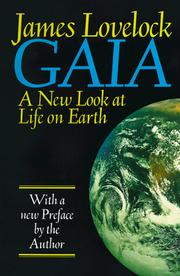
Gaia
Uiteenzetting van de theorie dat de aarde, zee en atmosfeer één groot organisme zijn dat zichzelf door een feedback-mechanisme in stand houdt, en een beoordeling van de huidige 'gezondheidstoestand' van het mechanisme.
Shares: Evolution, Science
First principles
Herbert Spencer was an English philosopher, biologist, anthropologist, sociologist, and prominent classical liberal political theorist of the Victorian era. Spencer developed an all-embracing conception of evolution as the progressive development of the physical world, biological organisms, the human mind, and human culture and societies. As a polymath, he contributed to a wide range of subjects,…
Shares: Biological Evolution, Evolution
L'Évolution créatrice
French philosopher Henri Bergson's Creative Evolution was published in 1907 and translated into English in 1911. Very popular at the time, it gives an alternate mechanism for evolution - that it is motivated by an "elan vital" a vital impetus, also graspable as our natural creative urge. It also looks at Bergson's conception of time, a subjective "duration" (rather than the quantifiable time of a…
Shares: Biological Evolution, Evolution, Science
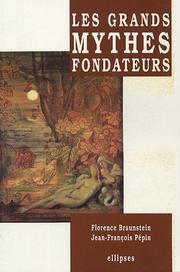
Les grands mythes fondateurs
Shares: Origin, Human beings
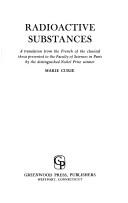
Recherches sur les substances radioactives
"Pioneering scientist and winner of two Nobel Prizes Marie Curie (1867-1934) describes in this interesting firsthand account the painstaking laboratory research that led to her discovery of radium and other radioactive substances. This groundbreaking work in the area of natural radioactivity, done in partnership with her husband, Pierre Curie, proved to be an important milestone in understanding…
Shares: Human beings, Science
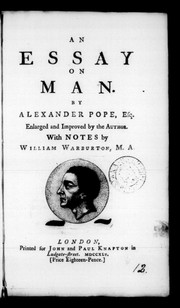
An essay on man
"Voltaire called it "the most sublime didactic poem ever written in any language." Rousseau rhapsodized about its intellectual consolations. Kant recited long passages of it from memory during his lectures. And Adam Smith and David Hume drew inspiration from it in their writings. This was Alexander Pope's Essay on Man (1733-34), a masterpiece of philosophical poetry, one of the most important and…
Shares: Man, Human beings
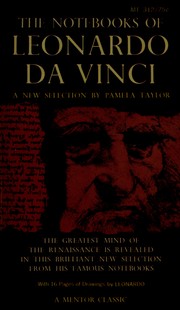
Literary works of Leonardo da Vinci
this fantastic reproduction of the Italian written work of Leonardo da vinci with accompanying English translation organizes his disjointed notes and pages by subject and literary genre.
here is my original contribution. the author was the son of an Italian father and an Arabic mother. the mother was not married
to his father, but was probably a servant in the household. Leonardo was taught to…
Shares: Comparative Anatomy, Science
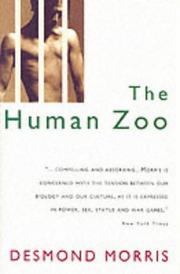
The Human Zoo
Morris looks closely at the human species under the stresses and pressures of urban living.This study concerns the city dweller. Morris finds remarkable similarities with captive zoo animals and looks closely at the aggressive, sexual and parental behaviour of the human species under the stresses and pressures of urban living.
Shares: Human evolution, Science
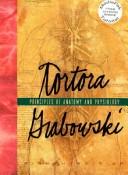
Principles of Anatomy and Physiology
This is a classic text book sought after by nurses at all stages of their careers. The manual guides nurses in the clinical application of the latest research findings, ensuring that theory and practice are integrated
Shares: Anatomy, Science
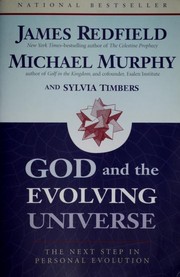
God and the evolving universe
In a world racked by violence and conflict, James Redfield and Michael Murphy-leading cocreators of today's spiritual boom-present a message of hope and a vision for the future.It is no accident, they argue, that the twentieth and early twenty-first centuries have witnessed a revolution in new human capacities. Daily we hear and read about supernormal athletic feats; clairvoyant perception; lives…
Shares: Human beings, Evolution