18 books like The variation of animals and plants under domestication

The diversity of green plants
"Green Plants is a totally revised edition of the earlier Diversity of Green Plants by P. R. Bell and C. L. F. Woodcock. The revisions document the latest information on the most exciting advances in the relevant areas of botanical science."--BOOK JACKET. "The central theme of this book is the remarkable diversity of forms evolution has fashioned in geological time from the carbon continually…
Shares: Botany, Plants, Evolution, Science
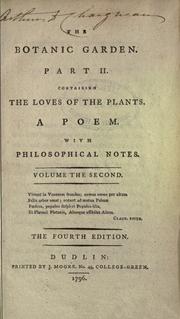
The botanic garden
One of the first popular science books, the intent of The Botanic Garden is to pique readers' interest in science while educating them at the same time. By embracing Linnaeus's sexualized language, which anthropomorphizes plants, Darwin makes botany interesting and relevant to his readers, but his reliance on conventional images of women when describing plants and flowers reinforces traditional…
Shares: Botany, Plants, Natural history, Science
Botanic Garden by Erasmus Darwin
The career of Erasmus Darwin (1731-1802) affords an extraordinary glimpse into the intellectual ferment of late-eighteenth- and early-nineteenth-century Britain. As a popular poet, practicing physician, inventor of speaking machines and mechanical birds, essayer of natural history from geology to meteorology, and proponent of an evolutionary theory that inspired his famous grandson Charles, he…
Shares: Darwin, Botany, Plants
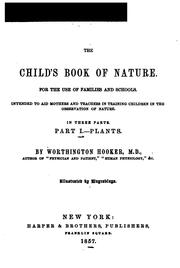
The Child's Book of Nature: for the use of families and schools : intended to aid mothers and ..
In "The Child's Book of Nature," Worthington Hooker presents an engaging introduction to the natural world, skillfully designed to ignite curiosity in young minds. Written in a style that balances accessibility and depth, the book employs vivid descriptions and captivating illustrations, making complex scientific concepts graspable for children. Hooker situates his work within the broader…
Shares: Plants, Natural history, Nature, Science
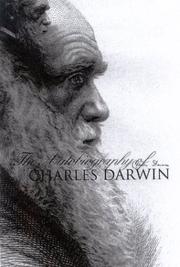
The Autobiography of Charles Darwin
Darwin wrote the book, which he entitled Recollections of the Development of my Mind and Character, for his family. He still stands as the leading figure of that revolution in scientific thought which followed the publication of the Origin of Species in the middle of the 19th century, a revolution soon involving all realms of knowledge. But posterity must continually reassess the past,…
Shares: Darwin, Evolution
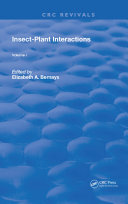
Insect-Plant Interactions
First Published in 1989, this book explores the relationship between plants and insects and the ways in which they interact with each other. Carefully compiled and filled with a vast repertoire of notes, diagrams, and references this book serves as a useful reference for students of oncology, and other practitioners in their respective fields.
Shares: Botany, Science
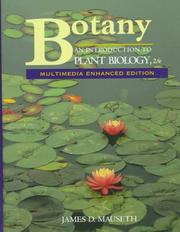
Botany
This text covers the fundamentals of plant science, including structure, genetics and evolution, physiology and development, and ecology. The text also contains information on molecular biology, plant biotechnology, and coverage of taxonomy and phylogeny of plants.--adapted from back cover.
Shares: Botany, Science

The expression of emotions in man and animals
Many works have been written on Expression, but a greater number on Physiognomy, - that is, on the recognition of character through the study of the permanent form of the features. With this latter subject I am not here concerned. The older treatises,[1] which I have consulted, have been of little or no service to me. The famous Conferences'[2] of the painter Le Brun, published in 1667, is the…
Shares: Evolution, Nature, Science

Lay sermons, addresses, and reviews
Which describes some of the things which were said by Charles Darwin. Author became known as 'Darwin's bulldog' because of his forceful and energetic support for Darwin's theory, especially at the notorious British Association meeting in Oxford in 1860. In fact, Huxley had some reservations about aspects of the theory, especially the element of gradual, continuous progress, but in public he was…
Shares: Evolution, Science
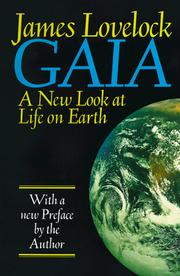
Gaia
Uiteenzetting van de theorie dat de aarde, zee en atmosfeer één groot organisme zijn dat zichzelf door een feedback-mechanisme in stand houdt, en een beoordeling van de huidige 'gezondheidstoestand' van het mechanisme.
Shares: Evolution, Science
A dictionary of scientific terms
Shares: Botany, Natural history, Science
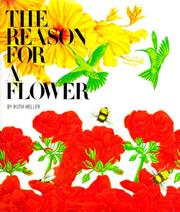
The reason for a flower
Brief text and lavish illustrations explain plant reproduction and the purpose of a flower and present some plants which don't seem to be flowers but are.
Shares: Botany, Plants, Science
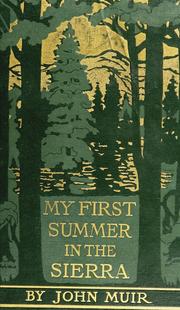
My first summer in the Sierra
Introduction by Mike Davis; Illustrated with photographs by Herbert W. Gleason and drawings by the author
Shares: Natural history, Nature
A short history of natural science and of the progress of discovery
Introduction to the wonders of the physical world: sunbeams and the work they do, the aerial ocean in which we live, a drop of water on its travels, the two great sculptors-water and ice, the voices of nature and how we hear them, the life of a primrose, the history of a piece of coal, bees in the hive, and bees and flowers.
Shares: Plants, Natural history, Science
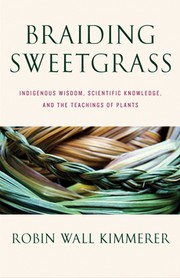
Braiding Sweetgrass
As a botanist, Robin Wall Kimmerer has been trained to ask questions of nature with the tools of science. As a member of the Citizen Potawatomi Nation, she embraces the notion that plants and animals are our oldest teachers. In Braiding Sweetgrass, Kimmerer brings these lenses of knowledge together to show that the awakening of a wider ecological consciousness requires the acknowledgment and…
Shares: Botany, Nature, Science
The Life of the Spider
The Life of the Spider is a volume in Jean-Henri Fabre's "Souvenirs Entomologiques", in which he shares fifty years of careful observation. He re-acquaints us with the most everyday insects, inspiring a new interest, awareness and understanding in the reader. This volume concerns spiders.
Shares: Nature, Science
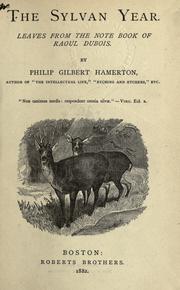
The sylvan year
Shares: Natural history, Nature

The flamingo's smile
"THE FLAMINGO'S SMILE is about history," writes the author in this volume of essays, "...and about what it means to say that life is the product of a contingent past, not the inevitable and predictable result of simple, timeless laws of nature. Quirkiness and meaning are my two not-so-contradictory themes."
Flamingos that feed upside down; flowers and snails that change from male to female; the…
Shares: Evolution, Natural history, Science
About the book The variation of animals and plants under domestication →