18 books like Пётр Первый
Fifty Famous Stories Retold
There is an introduce younger kids to stories that every child should know. Includes the stories of Horatius Cocles, the 300 Spartans, King Alfred and the Cakes, the Wise Men of Gotham and more.
Shares: Biographical fiction, History
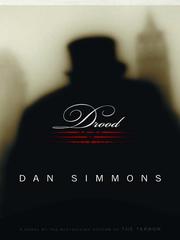
Drood
On June 9, 1865, while traveling by train to London with his secret mistress, 53-year-old Charles Dickens--at the height of his powers and popularity, the most famous and successful novelist in the world and perhaps in the history of the world--hurtled into a disaster that changed his life forever. Did Dickens begin living a dark double life after the accident? Were his nightly forays into the…
Shares: Biographical fiction, Historical Fiction, History
The Agony and the Ecstasy
Mr. Stone gives his signature style and thought to this story of Michelangelo. He points out often in this book that Michelangelo, before beginning a work, asks what it is he is trying to capture in the moment of his painting, sculpture, or poem. So it is with Mr. Stone. He wants to portray, as close as he can find, the moments of the life of this artist. What shaped him, what he loved, what (and…
Shares: Biographical fiction, History
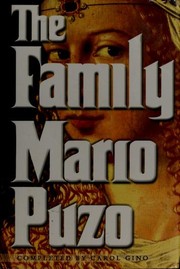
The Family
What is a family? Mario Puzo first answered that question, unforgettably, in his landmark bestseller The Godfather; with the creation of the Corleones he forever redefined the concept of blood loyalty. Now, thirty years later, Puzo enriches us further with his ultimate vision of the subject, in a masterpiece that crowns his remarkable career: the story of the greatest crime family in Italian…
Shares: Biographical fiction, Historical Fiction, History
Казаки (Kazaki)
The Cossacks (Russian: Казаки [Kazaki]) is a short novel by Leo Tolstoy, published in 1863 in the popular literary magazine The Russian Messenger. It was originally called Young Manhood. Both Ivan Turgenev and the Nobel prize-winning Russian writer Ivan Bunin gave the work great praise, with Turgenev calling it his favourite work by Tolstoy. Tolstoy began work on the story in August 1853. In…
Shares: Russian literature, History

Pan Michael An historical novel
The third and final book of Henryk Sienkiewicz’s Trilogy takes a closer and more intimate look at one of the series’ protagonists: Pan Michael Volodyovski. The Polish Commonwealth has been through intense periods of war, and the peace that follows leaves one of its greatest heroes, Pan Michael, finally free to marry his beloved Panna Anusia. But in a twist of fate, she falls ill and dies, leaving…
Shares: Historical Fiction, History
St. George and St. Michael
It was the middle of autumn, and had rained all day. Through the lozenge-panes of the wide oriel window the world appeared in the slowly gathering dusk not a little dismal. The drops that clung trickling to the dim glass added rain and gloom to the landscape beyond, whither the eye passed, as if vaguely seeking that help in the distance, which the dripping hollyhocks and sodden sunflowers…
Shares: Historical Fiction, History
Wolf Hall
Wolf Hall (2009) is a historical novel by English author Hilary Mantel, published by Fourth Estate, named after the Seymour family's seat of Wolfhall, or Wulfhall, in Wiltshire. Set in the period from 1500 to 1535, Wolf Hall is a sympathetic fictionalised biography documenting the rapid rise to power of Thomas Cromwell in the court of Henry VIII through to the death of Sir Thomas More. The novel…
Shares: Biographical fiction, Historical Fiction, History
Иванов
"In Ivanov, Anton Chekhov's first full-length play, Chekhov created a portrait of a man plagued with self-doubt and despair. Considered one of Chekhov's most elusive characters, he seeks more in life than the self-absorption and ennui he sees in his contemporaries. Tormented by falling out of love with his dying Jewish wife, Ivanov, on her death, proposes to the young daughter of a neighbor, but,…
Shares: Russian literature, History
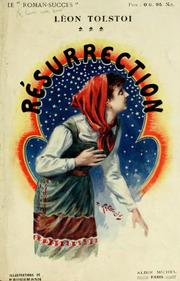
Voskresenīe
Resurrection, the last full-length novel written by Leo Tolstoy, was published in 1899 after ten years in the making. A humanitarian cause—the pacifist Doukhobor sect, persecuted by the Russian government, needed funds to emigrate to Canada—prompted Tolstoy to finish the novel and dedicate its ensuing revenues to alleviate their plight. Ultimately, Tolstoy’s actions were credited with helping…
Shares: Russian literature, Historical Fiction
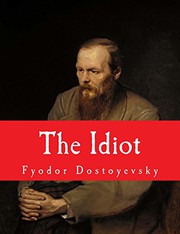
Идиот
Inspired by an image of Christ's suffering, Fyodor Dostoyevsky set out to portray "a truly beautiful soul" colliding with the brutal reality of contemporary society. Returning to St. Petersburg from a Swiss sanatorium, the gentle and naive Prince Myshkin—known as "the idiot"—pays a visit to his distant relative General Yepanchin and proceeds to charm the General and his circle. But after becoming…
Shares: Russian literature, Historical Fiction, History
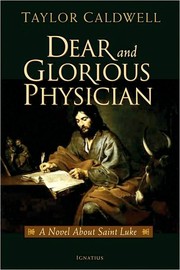
Dear and glorious physician
The world-famous novel about the triumphant story of St. Luke, man of science, and Gospel writer Today St. Luke is known as the author of the third Gospel of the New Testament, but two thousand years ago he was Lucanus, a Greek, a man who loved, knew the emptiness of bereavement, and later traveled through the hills and wastes of Judea asking, "What manner of man was my Lord?" And it is of this…
Shares: Biographical fiction, History
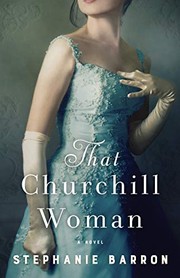
That Churchill Woman
The Paris Wife meets PBS’s Victoria in this enthralling novel of the life and loves of one of history’s most remarkable women: Winston Churchill’s scandalous American mother, Jennie Jerome. Wealthy, privileged, and fiercely independent New Yorker Jennie Jerome took Victorian England by storm when she landed on its shores. As Lady Randolph Churchill, she gave birth to a man who defined the…
Shares: Biographical fiction, Historical Fiction
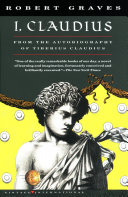
I, Claudius
Tiberius Claudius Drusus Nero Germanicus lived from 10 B.C. to 54 A.D. Despised as a weakling and considered an idiot because of his physical infirmities, Claudius survived the intrigues and poisonings of the reigns of Augustus, Tiberius, and the mad Calgula to become emperor in 41 A.D. I, Claudius is written in the form of Claudius' autobiography and is one of the classics of modern fiction, the…
Shares: Biographical fiction, History
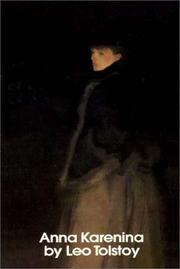
Анна Каренина
Described by William Faulkner as the best novel ever written and by Fyodor Dostoevsky as “flawless,” Anna Karenina tells of the doomed love affair between the sensuous and rebellious Anna and the dashing officer, Count Vronsky. Tragedy unfolds as Anna rejects her passionless marriage and thereby exposes herself to the hypocrisies of society. Set against a vast and richly textured canvas of…
Shares: Russian literature, History
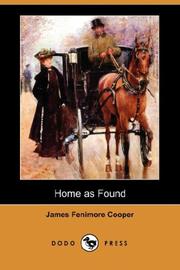
Home as found
"No society, dear!--Why you were at the Henderson's, and the Morgan's, and the Drewett's; three of the greatest _réunions_ that we have had in two winters!"'
"I did not know that you meant those unpleasant crowds, by society".
"Unpleasant crowds! Why, child, that is society, is it not?'
"Not what I have been taught to consider such; I rather think it would be better to call it company".
"And is…
Shares: Historical Fiction
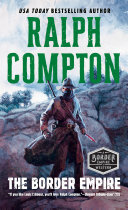
The Border Empire
Wes Stone was a lawman—until the Sandlin gang gunned down his legendary father. Now, he's giving up his badge for vengeance...
Shares: Historical Fiction
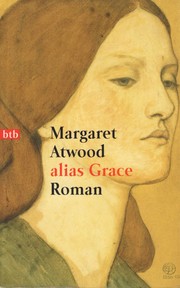
Alias Grace
In 'Alias, Grace, ' bestselling author Margaret Atwood has written her most captivating, disturbing, and ultimately satisfying work since 'The Handmaid's Tale.' She takes us back in time and into the life of one of the most enigmatic and notorious women of the nineteenth century. Grace Marks has been convicted for her involvement in the vicious murders of her employer, Thomas Kinnear, and Nancy…
Shares: Biographical fiction, History