18 books like Χαρμίδης
Θεαίτητος
Some dialogues of Plato are of so various a character that their relation to the other dialogues cannot be determined with any degree of certainty. The Theaetetus, like the Parmenides, has points of similarity both with his earlier and his later writings. The perfection of style, the humour, the dramatic interest, the complexity of structure, the fertility of illustration, the shifting of the…
Shares: Theory of Knowledge, Knowledge, Early works to 1800, Philosophy
Philosophical essays concerning human understanding
"Over a series of elegantly written, engaging essays, the Enquiry examines the experiential and psychological sources of meaning and knowledge, the foundations of reasoning about matters that lie beyond the scope of our sensory experience and memory, the nature of belief, and the limitations of our knowledge. The positions Hume takes on these topics have been described as paradigmatically…
Shares: Theory of Knowledge, Knowledge, Ethics, Early works to 1800
A treatise of human nature
The eighteenth-century Scottish philosopher's classic work on human understanding and morals.
Shares: Theory of Knowledge, Knowledge, Ethics, Early works to 1800
Die Welt als Wille und Vorstellung
The German philosopher explains his thoughts about intellectual perception and abstract representation and critically analyzes Kant's ideas and teachings. Bibliogs.
Shares: Theory of Knowledge, Knowledge, Philosophy
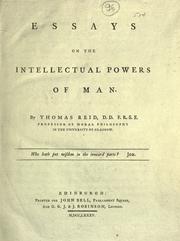
Essays on the intellectual powers of man
Shares: Theory of Knowledge, Knowledge
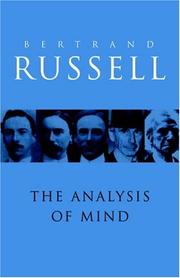
The analysis of mind
The book is mind blowing. It gives you insight of how mind works. You will know the more about how we understand, remember, dream, recollect and worry. You can't read fast as it is a mind stretching subject !!!.
Shares: Theory of Knowledge, Knowledge, Philosophy
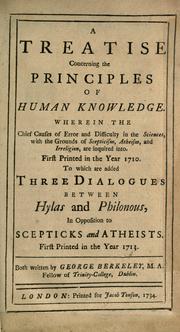
A Treatise Concerning the Principles of Human Knowledge
In this exceptional work, Berkeley makes the striking claim that physical things consist of nothing but ideas and therefore do not exist outside the mind. This claim establishes him as the founder of the idealist tradition in philosophy. The text printed in the volume is the 1734 edition of the Principles, which represents Berkeley's mature thought. Also included are four important letters…
Shares: Theory of Knowledge, Knowledge, Philosophy
Gli eroici furori
The second part of The Heroic Enthusiasts which I am now sending to the press is on the same subject as the first, namely the struggles of the soul in its upward progress towards purification and freedom, and the author makes use of lower things to picture and suggest the higher. It is interesting to note that in the first part of The Heroic Enthusiasts (page 122), Bruno makes a distinct allusion…
Shares: Ethics, Early works to 1800, Philosophy
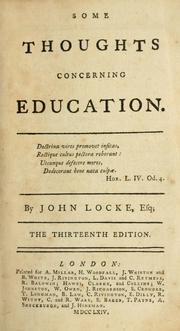
Some thoughts concerning education
This volume offers two complementary works by John Locke, unabridged, in modernized, annotated texts - the only available edition priced for classroom use. Of interest to students and instructors of philosophy, political theory, and education, these important works shed light on conceptions of reason and freedom essential for understanding Locke's philosophy. With renewed interest in the…
Shares: Theory of Knowledge, Knowledge, Early works to 1800, Philosophy
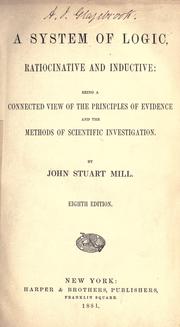
A System of Logic, Ratiocinative and Inductive
This book deals on self-belief that social planning and political action should rely primarily on scientific knowledge, not on authority, custom, revelation, or prescription.
Shares: Theory of Knowledge, Knowledge, Ethics
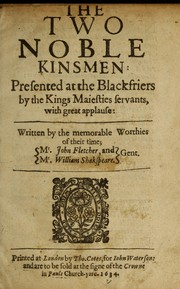
The Two Noble Kinsmen
When Theseus, Duke of Athens, learns that the ruler of Thebes has killed three noble kings he swears to take revenge. But after Athens triumphs over the rival city, Theseus is struck by the bravery of two Theban cousins and orders his surgeons to attend to them. Soon, the cousins' lifelong friendship is threatened, as both become overwhelmed with love for the duke's beautiful sister.
Shares: Spurious and doubtful works, Early works to 1800
An inquiry into the original of our ideas of beauty and virtue
"The Inquiry was written as a critical response to the work of Bernard Mandeville and as a defense of the ideas of Anthony Ashley Cooper, Lord Shaftesbury. It consists of two treatises exploring our aesthetic and our moral abilities. The first treatise argues that human beings possess a natural internal sense of beauty, whereas the second focuses on the "moral sense" that enables us to…
Shares: Ethics, Early works to 1800, Philosophy
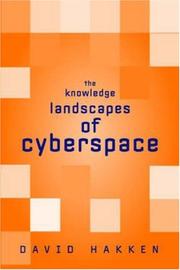
The Knowledge Landscapes of Cyberspace
How is knowledge produced and used in cyberspace? David Hakken - a key figure in the anthropology of science and technology studies - approaches the study of cyberculture through the venue of knowledge production, drawing on critical theory from anthropology, philosophy and informatics (computer science) to examine how the character and social functions of knowledge change profoundly in…
Shares: Theory of Knowledge, Knowledge, Philosophy
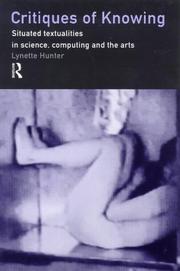
Critiques of knowing
Critiques of Knowing explores what happens to science and computing when we think of them as texts. Lynette Hunter elegantly weaves together vast areas of thought: rhetoric, politics, AI, computing, feminism, science studies, aesthetics and epistemology. Critiques of Knowing shows us that what we need is a radical shake-up of approaches to the arts if the critiques of science and computing are to…
Shares: Theory of Knowledge, Knowledge, Philosophy
The concept of nature
Originally published in 1920 and based on the Tarner Lectures in the philosophy of science, this early work by Alfred North Whitehead made an important contribution to the development of philosophic naturalism. It also featured his assessment of the impact of Einstein's theories and the new findings of modern physics on the concept of nature. Whitehead begins with a critique of generally accepted…
Shares: Theory of Knowledge, Knowledge, Philosophy
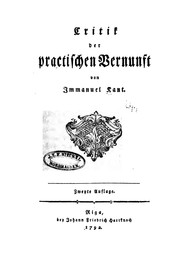
Kritik der praktischen Vernunft
"Kant's Critique of Practical Reason is an acknowledged masterpiece of Western philosophy. The way H. W. Cassirer's translation uncoils Kant's attempt at reconciling determinism with moral freedom will enable serious students of philosophy - and theology - to engage anew not only with this theme but also with Kant's whole treatment of God, freedom, and immortality."--BOOK JACKET.
Shares: Theory of Knowledge, Ethics, Early works to 1800, Philosophy
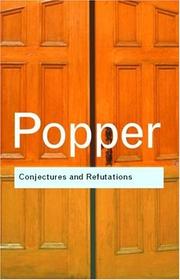
Conjectures and refutations
Conjectures and Refutations is one of Karl Popper's most comprehensive and well-known books, distinguished not only for its sharp analysis of the development of scientific knowledge but also for extending those insights to politics and history. It offers a clear and accessible explanation of the core principle that shaped his work: both our knowledge and our objectives and standards evolve…
Shares: Theory of Knowledge, Knowledge, Philosophy
Этика
Ethics: Origin and Development is a book by Peter Kropotkin, published posthumously in 1921. It continues the argument of Mutual Aid, that sociable morality is essential to human survival. It was translated into English by Louis S. Friedland and Joseph R. Piroshnikoff in 1924.
(Source: Wikipedia)
Shares: Ethics, Philosophy