18 books like Voskresenīe
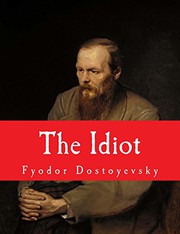
Идиот
Inspired by an image of Christ's suffering, Fyodor Dostoyevsky set out to portray "a truly beautiful soul" colliding with the brutal reality of contemporary society. Returning to St. Petersburg from a Swiss sanatorium, the gentle and naive Prince Myshkin—known as "the idiot"—pays a visit to his distant relative General Yepanchin and proceeds to charm the General and his circle. But after becoming…
Shares: Russian fiction, Russian literature, Russia, Continental european fiction
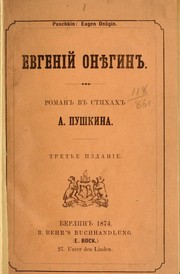
Evgeniĭ Onegin
Eugene Onegin (Russian: Евге́ний Оне́гин, BGN/PCGN: Yevgeniy Onegin) is a novel in verse written by Alexander Pushkin.
It is a classic of Russian literature, and its eponymous protagonist has served as the model for a number of Russian literary heroes (so-called superfluous men). It was published in serial form between 1825 and 1832. The first complete edition was published in 1833, and the…
Shares: Russian fiction, Russian literature, Russia, Social conditions
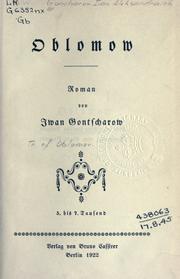
Обломов
A comedic story about a member of the landed gentry of nineteenth-century Russia whose indolence destroys his life.
Shares: Russian fiction, Russia, Aristocracy, Continental european fiction
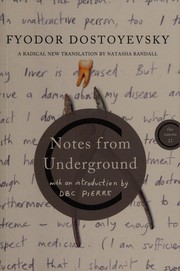
Записки изъ подполья
Its nameless hero is a profoundly alienated individual in whose brooding self-analysis there is a search for the true and the good in a world of relative values and few absolutes. Moreover, the novel introduces themes — moral, religious, political and social — that dominated Dostoyevsky's later works.
Shares: Russian fiction, Russia, Continental european fiction
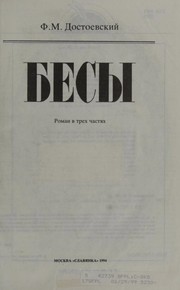
Бѣсы
Also known as Demons or The Devils, this is Dostoyevsky’s most political novel. Though critical of the left-wing revolutionaries, split as they often were into disparate factions and cells the author also tacitly rebukes the conservative elite for failing to come to terms with the high levels of disaffection in the country, a stance that would ultimately lead to their downfall.
Shares: Russian fiction, Russia, Continental european fiction
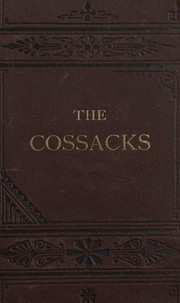
Казаки (Kazaki)
The Cossacks (Russian: Казаки [Kazaki]) is a short novel by Leo Tolstoy, published in 1863 in the popular literary magazine The Russian Messenger. It was originally called Young Manhood. Both Ivan Turgenev and the Nobel prize-winning Russian writer Ivan Bunin gave the work great praise, with Turgenev calling it his favourite work by Tolstoy. Tolstoy began work on the story in August 1853. In…
Shares: Russian literature, Continental european fiction
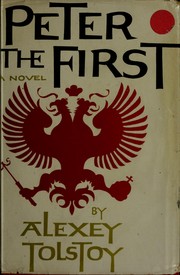
Пётр Первый
Shares: Russian literature, Historical Fiction
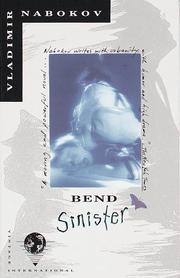
Bend sinister
Book Source: Digital Library of India Item 2015.65702dc.contributor.author: Nabokov Vladimirdc.date.accessioned: 2015-06-29T23:30:58Zdc.date.available: 2015-06-29T23:30:58Zdc.date.copyrightexpirydate: 0000-00-00dc.date.digitalpublicationdate: 2010-10-00dc.date.citation: 1947dc.identifier.barcode: 99999990278106dc.identifier.origpath: /data6/upload/0130/908dc.identifier.copyno: 1dc.identifier.uri:…
Shares: Russian literature, Continental european fiction
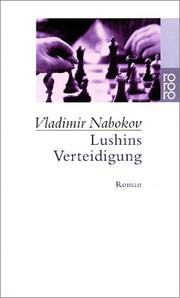
Защита Лужина
Originally published in Russian in 1930. Nabokov released an English translation in 1964. The novel is a fictionalized account of chess master, Curt von Bardeleben. The book was made into the movie, The Luzhin Defense in 2000.
Shares: Russian fiction, Continental european fiction
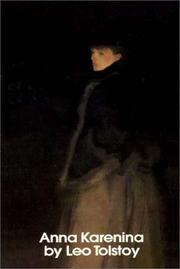
Анна Каренина
Described by William Faulkner as the best novel ever written and by Fyodor Dostoevsky as “flawless,” Anna Karenina tells of the doomed love affair between the sensuous and rebellious Anna and the dashing officer, Count Vronsky. Tragedy unfolds as Anna rejects her passionless marriage and thereby exposes herself to the hypocrisies of society. Set against a vast and richly textured canvas of…
Shares: Russian literature, Social conditions

The bravo
Originally published in 1831, this novel is set in Venice in the bygone days of the Doges. It was inspired by Cooper's travels in Italy. The author has intended to give his countrymen, writes Cooper in his preface, "a picture of the social system of the soi-disant republics of the other hemisphere." Cooper aims to show, William Cullen Bryant said, that all systems which reserve power for the…
Shares: Social conditions, Historical Fiction
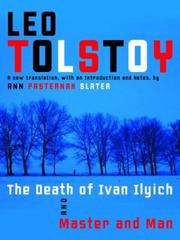
Смерть Ивана Ильича
This satirical novella tells the story of the life and early death of a high court judge. Ivan Ilych is proud of his achievements and his status in society, despite his poor relations with his wife which renders his home life bleak and joyless. When he becomes hopelessly ill he begins to realize that he has not after all lived the good life he had supposed he was enjoying.
Shares: Russian fiction, Continental european fiction, Historical Fiction
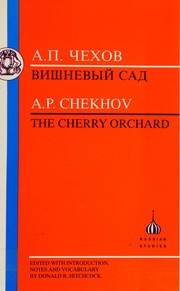
Вишневый сад
""Pevear and Volokhonsky are at once scrupulous translators and vivid stylists of English."-The New YorkerThere have always been two versions of Chekhov's heartrending and humorous masterwork: the one with which we are all familiar, staged by Konstatine Stanislavski at the Moscow Art Theatre in 1904, and the one Chekhov had originally envisioned. Now, for the first time, both are available and…
Shares: Russian literature, Continental european fiction, Social conditions

The scapegoat
Someone jolted my elbow as I drank and said, 'Je vous demande pardon, ' and as I moved to give him space he turned and stared at me and I at him, and I realized, with a strange sense of shock and fear and nausea all combined, that his face and voice were known to me too well.I was looking at myself."Two men--one English, the other French--meet by chance in a provincial railway station and are…
Shares: Aristocracy, Continental european fiction

The Gadfly
The Gadfly was published in 1897, and its original publishers feared a hostile public reaction to its theme of revolution. Instead, it quickly became a classic of socialism, one of the very first politically aware novels. A story of love and conspiracy, it was based in part on the early life of Sidney Rosenblum, better known as "Reilly Ace of Spies" -- Voynich's boyfriend at the time.
Shares: Continental european fiction, Historical Fiction
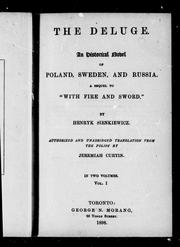
The deluge
This is Volume 2 of the Curtin translation, first published in 1898. This is NOT the more modern Kuniczak translation of 1991 that many people prefer, despite what you can see as the book cover on the screen.
Shares: Continental european fiction, Historical Fiction
Les Misérables
In this story of the trials of the peasant Jean Valjean--a man unjustly imprisoned, baffled by destiny, and hounded by his nemesis, the magnificently realized, ambiguously malevolent police detective Javert--Hugo achieves the sort of rare imaginative resonance that allows a work of art to transcend its genre.
Shares: Continental european fiction, Social conditions, Historical Fiction
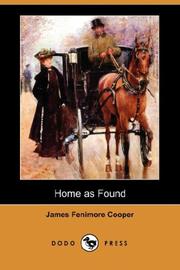
Home as found
"No society, dear!--Why you were at the Henderson's, and the Morgan's, and the Drewett's; three of the greatest _réunions_ that we have had in two winters!"'
"I did not know that you meant those unpleasant crowds, by society".
"Unpleasant crowds! Why, child, that is society, is it not?'
"Not what I have been taught to consider such; I rather think it would be better to call it company".
"And is…
Shares: Historical Fiction