18 books like Who's who in classical mythology
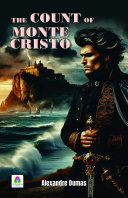
The Count of Monte Cristo
Thrown in prison for a crime he has not committed, Edmond Dantès is confined to the grim fortress of If. There he learns of a great hoard of treasure hidden on the Isle of Monte Cristo and he becomes determined not only to escape, but also to use the treasure to plot the destruction of the three men responsible for his incarceration.
Shares: Community pick
Classical Mythology
An excellent primer on classical mythology for readers who have little or no background of classical knowledge.
Shares: Klassieke oudheid, Mythologie, Classical Mythology, Mythology
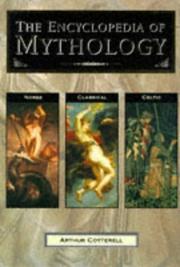
The Encyclopedia of Mythology
Over 500 alphabetical entries describing the central mythical figures of each culture (classical, Celtic, and Norse) and over 550 illustrations spanning fifteen centuries of fine art from the ancient world to the present day, including both classic masterpieces and commissioned artwork.
Shares: Encyclopedias, Classical Mythology, Mythology
The Greek myths
Robert Graves, classicist, poet, and unorthodox critic, retells the Greek legends of gods and heroes for a modern audience And, in the two volumes of The Greek Myths, he demonstrates with a dazzling display of relevant knowledge that Greek Mythology is “no more mysterious in content than are modern election cartoons.” His work covers, in nearly two hundred sections, the creation myths; the…
Shares: Klassieke oudheid, Mythologie, Classical Mythology, Mythology
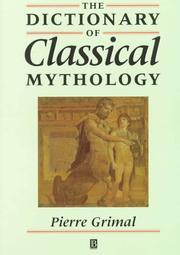
Dictionnaire de la mythologie grecque et romaine
Identifies gods, goddesses, naiads, dryads, nymphs, fauns, satyrs, centaurs, and heroes, as well as legendary places, such as Olympus.
Shares: Klassieke oudheid, Mythologie, Dictionaries, Classical Mythology
The encyclopedia of mythology
From one of the world's leading historians?a comprehensive narrative of the 3,000 years that have formed Asia's people, culture, and global destiny Tracing its origins in Mesopotamia to its modern role on the global geopolitical stage, historian Arthur Cotterell offers a compelling, lively, and readable account of one of the most culturally diverse, and often misunderstood, parts of the world.…
Shares: Encyclopedias, Mythologie, Classical Mythology, Mythology
Introduction to mythology
What mythology is and how it has been explained - the solar theory, the ghost theory, the ritual theory - set out by a working folklorist for readers who wanted the arguments before the stories.
Shares: Mythologie, Mythology
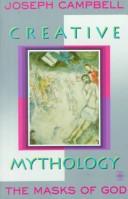
The masks of God
The author of such acclaimed books as Hero With a Thousand Faces and The Power of Myth discusses the primitive roots of mythology, examining them in light of the most recent discoveries in archaeology, anthropology, and psychology
Shares: Mythologie, Classical Mythology, Religion, Mythology
Lexikon der germanischen Mythologie
Shares: Mythologie, Dictionaries, Mythology
A dictionary of non-classical mythology
FEATURES:
     •     Includes beautiful artworks and illustrations
     •     A link of an audiobook to download at the end of the book
     •     Active Table of Contents for an easy navigation within the book
     •     Manually coded and crafted by professionals for highest formatting quality…
Shares: Dictionaries, Mythology
The nine worlds
The Magnus Chase and the Gods of Asgard trilogy may have concluded, but we haven't heard the last of our favorite peeps from the Nine Worlds. Join Hearthstone, Blitzen, Samirah, Alex, Jack, T.J., Mallory, Halfborn, and more on a hilarious and unforgettable journey through Rick Riordan's unique take on Norse mythology. While Magnus is off visiting his cousin, Annabeth, his friends find themselves…
Shares: Dictionaries, Mythology
Norse mythology A to Z
More than 400 alphabetically listed entries identify and explain the characters, events, and important places of Norse mythology.
Shares: Dictionaries, Mythology
The legend of good women
The Legend of Good Women is a poem in the form of a dream vision by Geoffrey Chaucer.
The poem is the third longest of Chaucer's works, after The Canterbury Tales and Troilus and Criseyde, and is possibly the first significant work in English to use the iambic pentameter or decasyllabic couplets which he later used throughout The Canterbury Tales. This form of the heroic couplet would become a…
Shares: Mythologie, Classical Mythology, Mythology
A story of the golden age
You have heard of Homer, and of the two wonderful poems, the Iliad and the Odyssey, which bear his name. No one knows whether these poems were composed by Homer, or whether they are the work of many different poets. And, in fact, it matters very little about their authorship. Everybody agrees that they are the grandest poems ever sung or written or read in this world; and yet, how few persons,…
Shares: Classical Mythology, Mythology
Everyman's dictionary of non-classical mythology
Shares: Mythologie, Dictionaries, Mythology
Encyclopedia of Norse and Germanic folklore, mythology, and magic
A thorough reference to the many deities, magical beings, mythical places, and ancient customs of the Norse and Germanic regions of Europe • Explores the legends and origins of well-known gods and figures such as Odin, Thor, Krampus, and the Valkyries, as well as a broad range of magical beings such as the Elf King, the Lorelei, the Perchten, dwarves, trolls, and giants • Draws upon a wealth of…
Shares: Dictionaries, Religion, Mythology
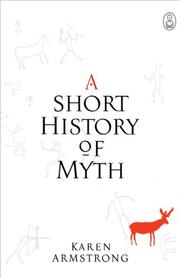
A Short History of Myth
The history of myth is the history of humanity; our stories and beliefs, our curiosity and attempts to understand the world, link us to our ancestors and each other. Myths help us make sense of the universe. Armstrong takes us from the Palaeolithic period and the myths of the hunters right up to the 'Great Western Transformation' of the last 500 years and the discrediting of myth by science.…
Shares: Mythologie, Mythology
The age of fable
The Age of Fable is a Mythological type of book. It contains many Greek and Roman myths, including simplified versions of The Iliad and The Odyssey, as well as a selection of Norse and “eastern” myths. Thomas Bulfinch’s goal was to make the ancient myths accessible to a wide audience, and so it is suitable for children.
Shares: Mythologie, Classical Mythology, Mythology