18 books like Writing Fiction
Narration
Newly famous in the wake of the publication of her groundbreaking Autobiography of Alice B. Toklas, Gertrude Stein delivered her Narration lectures to packed audiences at the University of Chicago in 1935. Stein had not been back to her home country since departing for France in 1903, and her remarks reflect on the changes in American culture after thirty years abroad.In Stein's trademark…
Shares: Narration, Literary Criticism
Drawing from life
Meet Jerry Mathers, who, though resembling the middle-aged “Beaver,” bears no other relation, having been born in the 1970s when that illusion of American life was almost a decade dead. His mother, widowed by the Vietnam War, endured many years as a Woolworth’s clerk to bring Jerry up in a “nice neighborhood,” enabling him to go to college and fulfill his dreams of being an artist... at least…
Shares: Technique, Authorship
Reading Like a Writer
Long before there were creative-writing workshops and degrees, how did aspiring writers learn to write? By reading the work of their predecessors and contemporaries, says Francine Prose.
In Reading Like a Writer, Prose invites you to sit by her side and take a guided tour of the tools and the tricks of the masters. She reads the work of the very best writers—[Dostoyevsky][1], [Flaubert][2],…
Shares: Creative writing, Literary Criticism
Talking about detective fiction
In a perfect marriage of author and subject, P. D. James--one of the most widely admired writers of detective fiction at work today--gives us a personal, lively, illuminating exploration of the human appetite for mystery and mayhem, and of those writers who have satisfied it.P. D. James examines the genre from top to bottom, beginning with the mysteries at the hearts of such novels as Charles…
Shares: Technique, Authorship, Literary Criticism
Writing Life Writing
Why do we endlessly tell the stories of our lives? And why do others pay attention when we do? The essays collected here address these questions, focusing on three different but interrelated dimensions of life writing. The first section, "Narrative," argues that narrative is not only a literary form but also a social and cultural practice, and finally a mode of cognition and an expression of our…
Shares: Authorship, Literary Criticism
Wilhelmine
The Wilhelmine period or Wilhelmian era () comprises the period of German history between 1888 and 1918, embracing the reign of Kaiser Wilhelm II in the German Empire from the death of Kaiser Friedrich III until the end of World War I and Wilhelms abdication during the November Revolution.
Shares: Literary Criticism & Collections, Literary Criticism
The Joyce paradox
First published in 1966. By pursuing a group of cognate themes, the author relates major critical approaches to the fiction of James Joyce. One of the major issues explored is that of the existence of ‘symbols’ in his fiction, and of the quality of Joyce’s feelings shown through an examination of the extent of his human sympathies. This title will be of interest to students of literature.
Shares: Technique, Literary Criticism
Writing for your life
In the tradition of Annie Dillard and Natalie Goldberg, this resource for writers and non-writers alike shows the act of writing to be a dynamic means of knowing, healing, and creating the body, mind, and spirit.
Shares: Authorship, Literary Criticism
L'art du Roman
"Le monde des théories n'est pas le mien. Ces réflexions sont celles d'un praticien. L'œuvre de chaque romancier contient une vision implicite de l'histoire du roman, une idée de ce qu'est le roman. C'est cette idée du roman, inhérente à mes romans, que j'ai fait parler."
Milan Kundera.
Shares: Technique, Literary Criticism
Literature
This eagerly awaited fifth book in John Maddox Roberts's Edgar-nominated historical mystery series once again takes the reader back to the Rome of Julius Caesar and the Roman Senator Decius Caecilius Metellus the Younger. Decius has won himself a reputation as both an investigator and, most unfortunately, a bit of a playboy. Having been banished by his family for sometimes embarrassing activities…
Shares: Literary Criticism & Collections, Literary Criticism
Expressive Writing
Expressive writing is life-based writing that focuses on authentic expression of lived experience, with resultant insight, growth and skill-building. For decades, it has been the province of journals, memoirs, poets, and language arts classrooms. Social science research now provides indisputable evidence that expressive writing is also healing.
In this remarkable collection, eight leading…
Shares: Creative writing, Authorship
The prelude
Selected sonnets and poems with bibliography and chronology of the life of Wordsworth.
Shares: Authorship, Literary Criticism
The growth of literature
"A comparative study of the literary genres found in various countries and languages and in different periods of history."--Pref., v. 1.
Shares: Literary Criticism & Collections, Literary Criticism
The faraway nearby
A companion to "A Field Guide for Getting Lost" explores the ways that people construct lives from stories and connect to each other through empathy, narrative, and imagination, sharing anecdotes about historical figures and members of the author's own family.
Shares: Narration, Authorship
Faerie queene
The Faerie Queene was one of the most influential poems in the English language. Dedicating his work to Elizabeth I, Spenser brilliantly united Arthurian romance and Italian renaissance epic to celebrate the glory of the Virgin Queen. Each book of the poem recounts the quest of a knight to achieve a virtue: the Red Crosse Knight of Holinesse, who must slay a dragon and free himself from the witch…
Shares: Literary Criticism & Collections, Literary Criticism
Narrative fiction
What is a narrative? What is narrative fiction? How does it differ from other kinds of narrative? Shlomith Rimmon-Kenan provides a synthesis of contemporary approaches to narrative fiction, considering in particular Anglo-American New Criticism, Russian Formalism and French Structuralism.
Shares: Narration, Literary Criticism
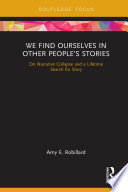
We Find Ourselves in Other People's Stories
We Find Ourselves in Other People’s Stories: On Narrative Collapse and a Lifetime Search for Story is a collection of five essays that dissolves the boundary between personal writing and academic writing, a longstanding binary construct in the discipline of composition and writing studies, in order to examine the rhetorical effects of narrative collapse on the stories we tell about ourselves and…
Shares: Narration, Literary Criticism
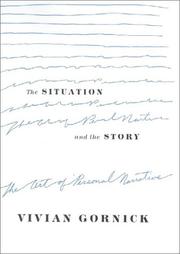
The situation and the story
"All narrative writing must pull from the raw material of life a tale that will shape experience, transform event, deliver a bit of wisdom. In a story or a novel the "I" who tells this tale can be, and often is, an unreliable narrator, but in nonfiction the reader must always be persuaded that the narrator is speaking truth.".
"How does one pull from one's own boring, agitated self the reliable…
Shares: Narration, Authorship