18 类似书籍: 大卫·科伯菲尔德
No Thoroughfare
Shares Orphans, British and irish fiction, Drama, Social life and customs with this book.
Pan Michael An historical novel
The third and final book of Henryk Sienkiewicz’s Trilogy takes a closer and more intimate look at one of the series’ protagonists: Pan Michael Volodyovski. The Polish Commonwealth has been through intense periods of war, and the peace that follows leaves one of its greatest heroes, Pan Michael, finally free to marry his beloved Panna Anusia. But in a twist of fate, she falls ill and dies, leaving…
Shares Historical Fiction, History
St. George and St. Michael
It was the middle of autumn, and had rained all day. Through the lozenge-panes of the wide oriel window the world appeared in the slowly gathering dusk not a little dismal. The drops that clung trickling to the dim glass added rain and gloom to the landscape beyond, whither the eye passed, as if vaguely seeking that help in the distance, which the dripping hollyhocks and sodden sunflowers…
Shares Historical Fiction, History
Candida
The Reverend James Mavor Morell, a respectable socialist clergyman, spends his days giving lectures and sermons while his wife, Candida, sees to his comfortable London home. That home is disrupted by the arrival of the poet Eugene Marchbanks, who is in love with Candida and determined to rescue her from what he sees as an unromantic life. Shaw wrote Candida as a reaction to Henrik Ibsen’s social…
Shares British and irish drama, Drama, Social life and customs
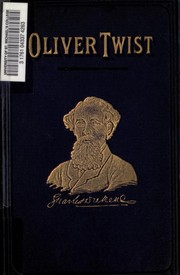
Oliver Twist
Oliver Twist; or, The Parish Boy's Progress, is the second novel by English author Charles Dickens. It was originally published as a serial from 1837 to 1839, and as a three-volume book in 1838. The story follows the titular orphan, who, after being raised in a workhouse, escapes to London, where he meets a gang of juvenile pickpockets led by the elderly criminal Fagin, discovers the secrets of…
Shares Boys, British and irish fiction, Drama, Historical Fiction
No name
No Name is a 19th-century novel by the master of sensation fiction, Wilkie Collins. A country gentleman is killed in an accident and his wife dies shortly after him. The blow is double for their daughters, who discover that they were born before their parents were married. Their sudden illegitimacy robs them of their inheritance and their accustomed place in society.
Shares Orphans, British and irish fiction, England, Social life and customs
A Little Princess
This is a story about a different kind of princess than one might imagine; a princess that is an orphan - lonely, cold, hungry and abused. Sara Crewe begins life as the beloved, pampered daughter of a rich man. When he dies a pauper, she is thrown on the non-existent mercy of her small-minded, mercenary boarding school mistress. Stripped of all her belongings but for one set of clothes and a…
Shares Orphans, England, Social life and customs, Historical Fiction
Shirley
Shirley, published in 1849, was Charlotte Brontë’s second novel after Jane Eyre. Published under her pseudonym of “Currer Bell,” it differs in several respects from that earlier work. It is written in the third person with an omniscient narrator, rather than the first-person of Jane Eyre, and incorporates the themes of industrial change and the plight of unemployed workers. It also features…
Shares British and irish fiction, England, Social life and customs, Historical Fiction
Friends Though Divided
My dear lads: Although so long a time has elapsed since the great civil war in England, men are still almost as much divided as they were then as to the merits of the quarrel, almost as warm partisans of the one side or the other. Most of you will probably have formed an opinion as to the rights of the case, either from your own reading, or from hearing the views of your elders.
Shares England, Historical Fiction, History
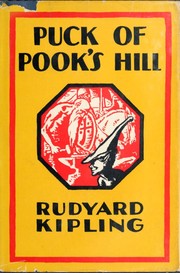
Puck of Pook's Hill
The children were at the Theatre, acting to Three Cows as much as they could remember of Midsummer Night's Dream. Their father had made them a small play out of the big Shakespeare one, and they had rehearsed it with him and with their mother till they could say it by heart. They began when Nick Bottom the weaver comes out of the bushes with a donkey's head on his shoulders, and finds Titania, …
Shares British and irish fiction, England, History, Children's fiction
The Newcomes
The Newcomes is Thackeray's most essentially 'Victorian' novel, generous in its proportions, sharp in its criticism of the moral convolutions of the age, and encyclopaedic in its reference. Set in the 1830s and 1840s, a period of rapid change and of political and economic development, the novel considers the fortunes and misfortunes of a 'most respectable' extended middle-class family. The action…
Shares British and irish fiction, England, Social life and customs
David Copperfield [adaptation]
A simplified edition of the autobiographical novel whose hero, an orphan boy in nineteenth-century England, successfully overcomes an unhappy childhood.
Shares Young men, Orphans, Social life and customs, History
Martin Chuzzlewit
The greed of his family has led wealthy old Martin Chuzzlewit to become suspicious and misanthropic, leaving his grandson and namesake to make his own way in the world. And so young Martin sets out from the Wiltshire home of his supposed champion, the scheming architect Pecksniff, to seek his fortune in America. In depicting Martin's journey – an experience that teaches him to question his…
Shares Young men, British and irish fiction, England, Social life and customs
Clayhanger
This coming-of-age story set in the Midlands of Victorian England follows Edwin Clayhanger as he leaves school, takes over the family business and falls in love. Bennett wrote it in 1910 at the Royal Albion Hotel, Brighton, and in Lausanne. Edwin Clayhanger's father, Darius, has risen from an extremely poor background, which Bennett repeatedly returns to, to become a prominent printer in Bursley.…
Shares British and irish fiction, England, Social life and customs
The uncommercial traveller
A collection of seventeen sketches which grew out of Dickens' insomnia. He took long walks through London at night and his observations resulted in these sketches.
Shares British and irish fiction, Social life and customs, History
The school for scandal, 1780
The School for Scandal debuted at Drury Lane Theater in London in 1777. The play is still popular and regularly performed today. It is a comedy of manners about "the deceptive nature of appearances, the fickleness of reputation, [and] the often disreputable guises behind which goodness and honesty can conceal itself."
Shares British and irish drama, Drama, Social life and customs, History
The black arrow
Richard Shelton is a young knight during the Wars of the Roses. We see him ascend and rescue his lady love. He then seeks revenge against his father's murderer, but when the evidence points towards his guardian he is forced to go into hiding. He joins the band of outlaws known as the Black Arrow.
Shares Young men, British and irish fiction, Historical Fiction, History
Mike and Psmith
Gloomy when his poor scholastic record forces him to change schools just as he is about to become captain of the cricket team, an English boy cheers up when he discovers another new boy in similar circumstances.
Shares Boys, British and irish fiction, England