CHAPTER V / CHAPTER VII
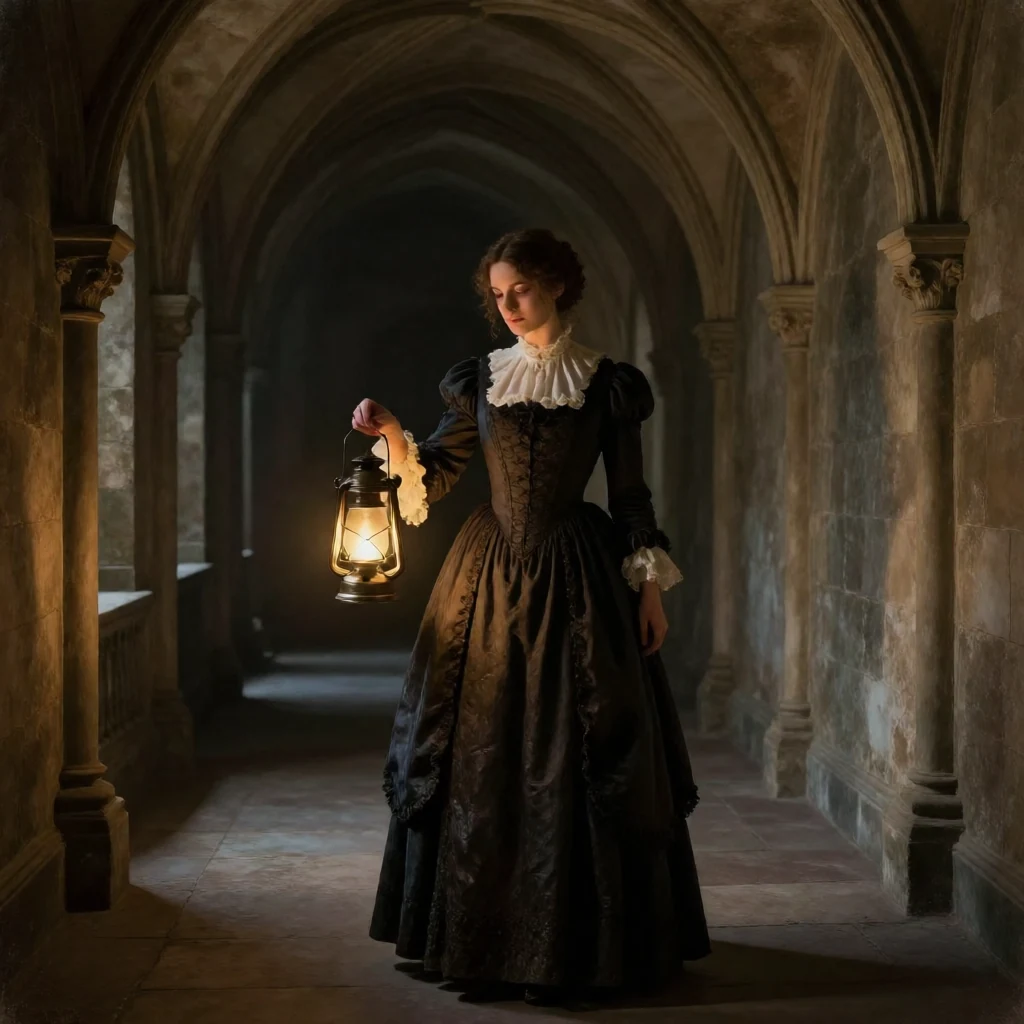
The frigid predawn of 19 January found Jane Eyre already dressed, the last of the moon’s pale light slanting through her nursery window at Gateshead as she slipped out of bed half an hour before Bessie arrived with a candle. She had no appetite for the boiled milk and bread Bessie pressed on her, so the maid tucked biscuits into her bag, helped her into her pelisse and bonnet, and walked her out to the waiting coach. When Bessie urged her to bid Mrs. Reed goodbye, Jane shook her head, recalling the housekeeper’s cold dismissal the night before: “She has been my foe, not my friend,” she told Bessie, as they passed the lodge gates where her trunk already waited. The coach pulled up just after six, its lamps glowing through the fog of a thaw, and with a final hug from Bessie, Jane was lifted inside, watching the lodge lights fade as the coach rattled away toward the fifty-mile journey to Lowood.
The ride felt endless to the excited, hungry girl. She stopped once at a bustling inn for dinner but could barely swallow a bite, her mind racing with Bessie’s old stories of kidnappers. She drifted in and out of sleep as the coach climbed through grey, windswept hills, until it finally ground to a halt in the dark, rainy valley where Lowood sat. A servant led her through a locked gate, up a pebbly path, into a warm if plain parlour where Miss Temple, the school’s superintendent, greeted her. The tall, fair woman asked gentle questions about Jane’s age, her parents, her studies, before sending her off with the ruddy, overworked under-teacher Miss Miller to the dormitory, where she collapsed into a shared bed in the long, cold room full of sleeping girls.
The next morning dawned bitter, the water in the ewers frozen solid, and the hour and a half of prayers left Jane shivering. Breakfast was a burnt, nauseous porridge that no one could eat, until Miss Temple ordered bread and cheese for lunch, a small mercy that made the whole school glow. During the midday recess in the walled, wintry garden, Jane spotted a girl sitting alone on a stone bench, absorbed in a copy of Rasselas. The girl, Helen Burns, explained that Lowood was a charity school for orphans, run by the stern clergyman Mr. Brocklehurst, who controlled all its funds and rules. That afternoon, Jane watched in stunned silence as Miss Scatcherd punished Helen for inattention and unkempt nails, rapping her neck a dozen times with a bundle of twigs; Helen did not cry, did not flinch, and that night by the fire, when Jane railed against the cruelty of the punishment, Helen shook her head, quoting the New Testament’s call to love one’s enemies, and speaking of the immortal soul that outlasted earthly suffering. Jane could not yet understand her quiet fortitude, but she felt the pull of the other girl’s strange, steady calm. The next day, Miss Scatcherd pinned a paper sign reading “Slattern” to Helen’s forehead for her messy drawers, and Jane, furious at the injustice, tore it off and threw it in the fire the second the teacher left.
The first quarter at Lowood was a relentless trial. Snow blocked the roads for months, the girls’ thin clothes and worn shoes left them numb with chilblains, and meals were so meager that older girls often stole food from the youngest. Sunday walks to Brocklebridge Church were two miles of bitter wind that “flayed the skin from our faces,” and the only treat of the week was a whole slice of bread with a thin scrape of butter at tea. Jane had long dreaded the arrival of Mr. Brocklehurst, who Mrs. Reed had warned would be told of her “vicious nature,” and when he finally appeared, she cowered as he lectured Miss Temple for the “luxury” of the bread and cheese lunch, ranted about cutting off the girls’ curly hair to “mortify the lusts of the flesh,” and then spotted Jane’s dropped slate. He called her forward, branded her a liar in front of the assembled school, and ordered her to stand on a high stool for half an hour, no one allowed to speak to her. Mr. Brocklehurst’s wife and daughters, resplendent in velvet, fur, and elaborate curled wigs, watched the whole scene with feigned horror, their hypocrisy not lost on Jane. Humiliation burned through her until Helen walked past, lifting her eyes to give Jane a small, radiant smile that filled her with unexpected strength: Jane held her head high, thinking of how even Helen, punished that same day for slovenly habits, had a luminous inner light that cruel eyes like Miss Scatcherd’s could never see.
After school, Jane collapsed on the floor sobbing until Helen brought her tea and bread, and insisted most of the school pitied her, that Mr. Brocklehurst was no god, and that a clear conscience was worth more than the world’s approval. Miss Temple found them soon after, brought them to her warm parlour, and gave them seed cake and tea while Jane poured out her story of Mrs. Reed’s cruelty. Miss Temple believed her, and a week later, when Mr. Lloyd’s letter confirmed Jane’s account, she cleared Jane publicly in front of the whole school. From that day, Jane threw herself into her work, moved up a class, and began studying French and drawing. Even with Lowood’s hardships, she would not trade it for the luxury of Gateshead: for the first time, she had a friend in Helen, a mentor in Miss Temple, and a chance to build a life of her own.
The original text of this work is in the public domain. This page offers a compressed quick-read summary for educational purposes.