Basic Mathematics for Economists vs Freakonomics: Which Should You Read?
Both live on shelves: Economics, Finance, Nonfiction, Business
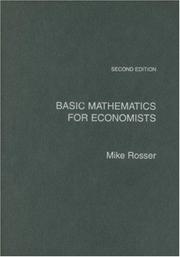 Basic Mathematics for Economists
More
Economics students will welcome the new edition of this excellent textbook. Mathematics is an integral part of economics and understanding basic concepts is vital. Given that many students come into economics courses…
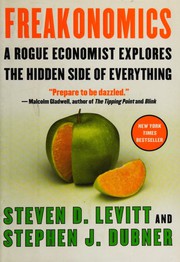 Freakonomics
More
A Rogue Economist Explores the Hidden Side of Everything Which is more dangerous, a gun or a swimming pool? What do schoolteachers and sumo wrestlers have in common? Why do drug dealers still live with their moms? How…
Side by side
The verdict
- Ratings are close across the board — any is a safe pick by score.
- Freakonomics is the quickest read — about 6 hours vs 9 for Basic Mathematics for Economists.
- Freakonomics has the widest readership — 910173 ratings behind its score.
Affiliate links: we may earn a commission on purchases.
How to choose
Scores by source
| Basic Mathematics for Economists | Freakonomics | |
|---|---|---|
| Goodreads | 3.9 (19) | 4.0 (910173) |
| Hardcover | — | 3.8 (308) |
| Google Books | — | 5.0 (1) |
| Apple Books | — | 4.0 (77) |
| Check price → | Check price → |
Reception
| Basic Mathematics for Economists | Freakonomics | |
|---|---|---|
| Ratings | 19 | 910173 |
| Editions | 13 | 63 |
| Citations | 14 | — |
| Film adaptations | — | 1 |
| Want to read | — | 606125 |
| Reading it now | — | 18366 |
| Written reviews | — | 21068 |
| Wikipedia attention | — | 7029 |
| Pages | 514 | 336 |
| Check price → | Check price → |
Questions readers ask
Which is rated higher: Basic Mathematics for Economists or Freakonomics?
Freakonomics has the higher combined reader rating across sources (Freakonomics 4.0/5, Basic Mathematics for Economists 3.8/5).
Which is shorter to read: Basic Mathematics for Economists or Freakonomics?
Freakonomics is the quickest read. Estimated at 225 words per minute: Freakonomics (336 pages, ≈ 6 h 13 m); Basic Mathematics for Economists (514 pages, ≈ 9 h 31 m).
Which is harder to read: Basic Mathematics for Economists or Freakonomics?
Estimated difficulty, based on era, reader shelves and length — Basic Mathematics for Economists: Moderate; Freakonomics: Light.