Digital Forensics and Watermarking vs Programming in Prolog: Which Should You Read?
Both live on shelves: Data structures, Computer science, Artificial Intelligence
 Digital Forensics and Watermarking
More
This book constitutes the thoroughly refereed post-proceedings of the 12th International Workshop on Digital-Forensics and Watermarking, IWDW 2013, held in Auckland, New Zealand, during October 2013. The 24 full and 13…
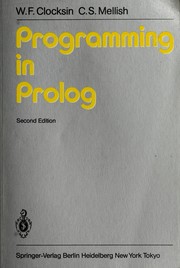 Programming in Prolog
More
Since the first edition of this book in 1981, Prolog has continued to attract an unexpectedly great deal of interest in the computer science community and has turned out to be a basis for an important new family of…
Side by side
The verdict
- Programming in Prolog is the quickest read — about 5 hours vs 8 for Digital Forensics and Watermarking.
Affiliate links: we may earn a commission on purchases.
How to choose
Scores by source
| Digital Forensics and Watermarking | Programming in Prolog | |
|---|---|---|
| Goodreads | — | 4.0 (3) |
| Hardcover | — | 3.0 (1) |
| Check price → | Check price → |
Reception
| Digital Forensics and Watermarking | Programming in Prolog | |
|---|---|---|
| Ratings | — | 3 |
| Editions | 11 | 12 |
| Citations | — | 1760 |
| Pages | 441 | 281 |
| Check price → | Check price → |
Questions readers ask
Which is shorter to read: Digital Forensics and Watermarking or Programming in Prolog?
Programming in Prolog is the quickest read. Estimated at 225 words per minute: Programming in Prolog (281 pages, ≈ 5 h 12 m); Digital Forensics and Watermarking (441 pages, ≈ 8 h 10 m).
Which is harder to read: Digital Forensics and Watermarking or Programming in Prolog?
Estimated difficulty, based on era, reader shelves and length — Digital Forensics and Watermarking: Moderate; Programming in Prolog: Moderate.