Logic for programming artificial intelligence and reasoning vs Programming in Prolog: Which Should You Read?
Both live on shelves: Logic design, Computer science, Artificial Intelligence
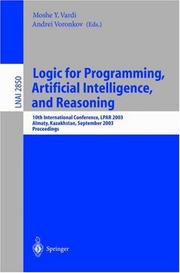 Logic for programming artificial intelligence and reasoning
More
ThisvolumecontainsthepaperspresentedattheTenthInternationalConference on Logic for Programming, Arti?cial Intelligence, and Reasoning (LPAR 2003), heldonSeptember22–26,2003,inAlmaty,Kazakhstan,togetherwiththeFourth…
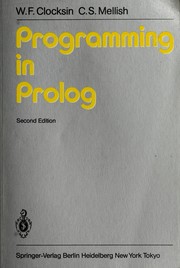 Programming in Prolog
More
Since the first edition of this book in 1981, Prolog has continued to attract an unexpectedly great deal of interest in the computer science community and has turned out to be a basis for an important new family of…
Side by side
The verdict
- Programming in Prolog is the quickest read — about 5 hours vs 8 for Logic for programming artificial intelligence and reasoning.
Affiliate links: we may earn a commission on purchases.
How to choose
Scores by source
| Logic for programming artificial intelligence and reasoning | Programming in Prolog | |
|---|---|---|
| Goodreads | — | 4.0 (3) |
| Hardcover | — | 3.0 (1) |
| Check price → | Check price → |
Reception
| Logic for programming artificial intelligence and reasoning | Programming in Prolog | |
|---|---|---|
| Ratings | — | 3 |
| Editions | 10 | 12 |
| Citations | — | 1760 |
| Pages | 437 | 281 |
| Check price → | Check price → |
Questions readers ask
Which is shorter to read: Logic for programming artificial intelligence and reasoning or Programming in Prolog?
Programming in Prolog is the quickest read. Estimated at 225 words per minute: Programming in Prolog (281 pages, ≈ 5 h 12 m); Logic for programming artificial intelligence and reasoning (437 pages, ≈ 8 h 06 m).
Which is harder to read: Logic for programming artificial intelligence and reasoning or Programming in Prolog?
Estimated difficulty, based on era, reader shelves and length — Logic for programming artificial intelligence and reasoning: Moderate; Programming in Prolog: Moderate.