Particles, Fields, Space-Time vs Progress in optics: Which Should You Read?
Both live on shelves: Physics, Science
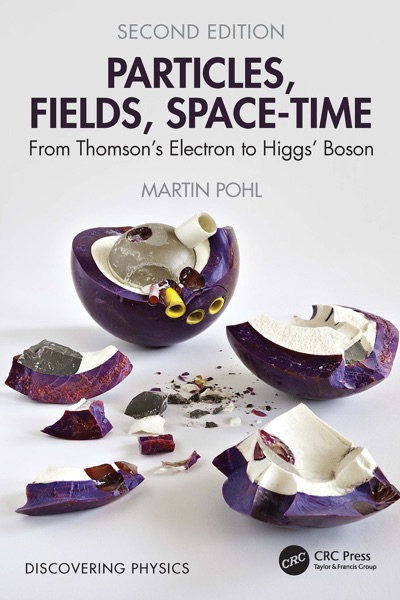 Particles, Fields, Space-Time
More
Particles, Fields, Space-Time: From Thomson’s Electron to Higgs’ Boson explores the concepts, ideas, and experimental results that brought us from the discovery of the first elementary particle in the end of the 19th…
 Progress in optics
More
Principles of Optics is one of the most highly cited and most influential physics books ever published, and one of the classic science books of the twentieth century. To celebrate the 60th anniversary of this remarkable…
Side by side
The verdict
- Particles, Fields, Space-Time is the quickest read — about 5 hours vs 8 for Progress in optics.
Affiliate links: we may earn a commission on purchases.
How to choose
Reception
| Particles, Fields, Space-Time | Progress in optics | |
|---|---|---|
| Ratings | — | 1 |
| Editions | 7 | 62 |
| Film adaptations | — | 1 |
| Wikipedia attention | — | 59 |
| Pages | 302 | 449 |
| Check price → | Check price → |
Questions readers ask
Which is shorter to read: Particles, Fields, Space-Time or Progress in optics?
Particles, Fields, Space-Time is the quickest read. Estimated at 225 words per minute: Particles, Fields, Space-Time (302 pages, ≈ 5 h 36 m); Progress in optics (449 pages, ≈ 8 h 19 m).
Which is harder to read: Particles, Fields, Space-Time or Progress in optics?
Estimated difficulty, based on era, reader shelves and length — Particles, Fields, Space-Time: Moderate; Progress in optics: Moderate.