18 books like Vitae excellentium imperatorum
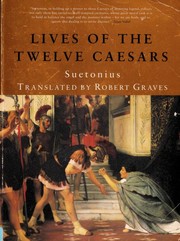
Dē vītā Caesarum
De vita Caesarum, known as The Twelve Caesars, is a set of twelve biographies, each about one of the Roman emperors, including one on Julius Caesar. It was written by Gaius Suetonius Tranquillus, commonly referred to as Suetonius, in 121. Considered highly significant in antiquity, The Twelve Caesars has remained a major source of Roman history.
Shares: Emperors, Latin literature, Rome, Early works to 1800
Satyricon
An incomplete Roman novel believed to have been written by Gaius Petronius Arbiter. What remains of the novel is a picaresque story concerning the narrator’s battle to keep his lover, a handsome sixteen year old boy, away from his many rivals.
Shares: Latin literature, Latin language materials, Latin language, Rome
Plutarchi Vitae parallelae
This story is set in the mid-fourth century B.C., in the city-state of Syracuse on the island of Sicily. It's the story of two father-and-son tyrant rulers who called themselves kings, both named Dionysius (pronounced Die-oh-nee-see-us). But the main character is Dion (pronounced Dion as in Lion), who was a relative, mentor, and finally mortal enemy to the second Dionysius. It has been pointed…
Shares: Classical biography, Rome, Early works to 1800, Biography & Memoir
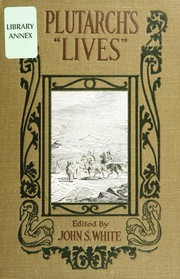
Lives
Character studies comparing statesmen and generals of pre-Christian Greece and Rome.
Shares: Classical biography, Rome, Early works to 1800, Biography & Memoir
History of Alexander the Great
A complete biography of the ancient Macedonian king and one of history's greatest military leaders.Alexander the Great, son of King Philip II of Macedonia, and his fourth wife, Olympias, seemed destined for success. He had Aristotle for a tutor until he was sixteen. He took interest in his father's military efforts abroad, and worried there would be nothing left to conquer when he became king.…
Shares: Generals, Biography & Memoir, History
Odes
This groundbreaking new translation of Horace's most widely read collection of poetry is rendered in modern, metrical English verse rather than the more common free verse found in many other translations. Jeffrey H. Kaimowitz adapts the Roman poet's rich and metrically varied poetry to English formal verse, reproducing the works in a way that maintains fidelity to the tone, timbre, and style of…
Shares: Latin literature, Latin language materials, Latin language
I, Claudius
Tiberius Claudius Drusus Nero Germanicus lived from 10 B.C. to 54 A.D. Despised as a weakling and considered an idiot because of his physical infirmities, Claudius survived the intrigues and poisonings of the reigns of Augustus, Tiberius, and the mad Calgula to become emperor in 41 A.D. I, Claudius is written in the form of Claudius' autobiography and is one of the classics of modern fiction, the…
Shares: Emperors, Rome, History
Satirae
The Roman philosopher and dramatic critic Quintus Horatius Flaccus (65-3 B.C.), known in English as Horace, was also the most famous lyric poet of his age. Written in the troubled decade ending with the establishment of Augustus's regime, his Satires provide trenchant social commentary on men's perennial enslavement to money, power, fame, and sex. Not as frequently translated as his Odes, in…
Shares: Latin literature, Latin language materials, Latin language, Biography & Memoir
Ab urbe condita
"Romulus and Remus, the rape of Lucretia, Horatius at the bridge, the saga of Coriolanus, Cincinnatus called from his farm to save the state - these and many more stories immortalized by Livy in his history of Rome have become part of our cultural heritage." "The historian's huge work consisted of 142 books which trace Rome's history from its foundation in 753 BC to events in Livy's own lifetime…
Shares: Latin language, Bibliography, Early works to 1800, Biography & Memoir
Historia Alexandri Magni
The Roman historian's account of the conquests of Alexander the Great is one of the primary sources of our knowledge of the Macedonian conquest and its leader.
Shares: Generals, Latin language, Early works to 1800, Biography & Memoir
Lays of ancient Rome
Lays of Ancient Rome is an 1842 collection of narrative poems, or lays, by Thomas Babington Macaulay. Four of these recount heroic episodes from early Roman history with strong dramatic and tragic themes, giving the collection its name. Macaulay also included two poems inspired by recent history: Ivry (1824) and The Armada (1832).
Shares: Rome, History
The scholemaster
With centuries of literature, it's inevitable that some will fall through the cracks. We hunt down public domain works and restore them so they're not lost to the world.
Who are we? We're Cairn Press. Our background is in design, publishing, typography, and technology. These skills fuel our mission to create the highest quality Public Domain eBooks available online, at an affordable price. We…
Shares: Grammar, Latin language, Early works to 1800
Apocolocyntosis
13 works of Seneca the Younger
Roman Stoic philosopher, statesman and dramatist (4 BC - 65 AD)
This ebook presents a collection of 13 works of Seneca the Younger. A dynamic table of contents allows you to jump directly to the work selected.
Table of Contents:
Apocolocyntosis
L. Annaeus Seneca On Benefits
Of a Happy Life
Of Anger
Of Clemency
Of Consolation to Helvia
Of Consolation To Marcia
Of…
Shares: Latin language materials, Latin language, History
Colloquia
A Book of Colloquies had appeared, the material of which was collected partly from domestic talks, partly from my papers; but with a mixture of certain trivialities, not only without sense, but also in bad Latin,—perfect solecisms. This trash was received with wonderful applause; for in these matters too Fortune has her sport. I was compelled therefore to lay hands on these trumperies. At length,…
Shares: Latin language materials, Latin language, Early works to 1800
Julius Caesar
Presents the original text of Shakespeare's play side by side with a modern version, discusses the author and the theater of his time, and provides quizzes and other study activities.
Shares: Generals, Bibliography, Biography & Memoir, History
De Natura deorum
De Natura deorum (The Nature of the Gods) is a philosophical dialogue by Roman orator Cicero written in 45 BC. It is laid out in three books, each of which discuss the theology of different Roman and Greek philosophers. The dialogue uses a discussion of Stoic, Epicurean, and skeptical theories to examine fundamental questions of theology.
The dialogue is on the whole narrated by Cicero himself,…
Shares: Latin literature, Latin language materials, Early works to 1800
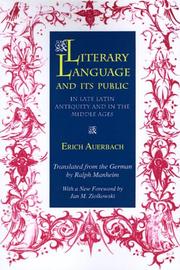
Literatursprache und Publikum in der lateinischen Spätantike und im Mittelalter
Shares: Latin literature, Latin language
Jōzan kidanJōzan Yuasa
Jōzan kidan
Shares: Generals, Biography & Memoir, History