18 books like What is history?
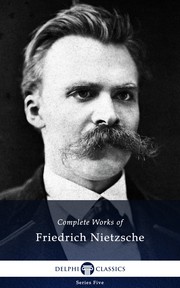
The Complete Works of Friedrich Nietzsche
"The Complete Works of Friedrich Nietzsche" is an indispensable philosophical collection encompassing the full scope of one of history’s most groundbreaking and provocative thinkers, whose insights dramatically reshaped modern intellectual thought. Nietzsche, known for his penetrating critique of traditional morality, religion, and philosophical ideals, challenged foundational assumptions about…
Shares: Philosophie, Philosophy

Der Untergang des Abendlandes
Spengler's work describes how we have entered into a centuries-long "world-historical" phase comparable to late antiquity, and his controversial ideas spark debate over the meaning of historiography.
Shares: Geschichte, Histoire, Philosophy, History

A Study of History
A masterful attempt to describe a universal history. Staggering depth of scholarship and breath of thought.
Shares: Historiography, Philosophie, Histoire, Philosophy

Le Mythe de l'éternel retour
"This founding work of the history of religions, first published in English in 1954, secured the North American reputation of the Romanian emigre-scholar Mircea Eliade (1907-1986). Making reference to an astonishing number of cultures and drawing on scholarship published in no less than half a dozen European languages, Eliade's The Myth of the Eternal Return makes both intelligible and compelling…
Shares: Historiography, Philosophie, Histoire, Philosophy

Pour Your Heart Into It
A must-read for every entrepreneur and Starbucks lover. Howard Schultz shares the Starbucks story in a heart-felt way.
Shares: Geschichte, Histoire, History

Le sacré et le profane
Famed historian of religion Mircea Eliade observes that even moderns who proclaim themselves residents of a completely profane world are still unconsciously nourished by the memory of the sacred. Eliade traces manifestations of the sacred from primitive to modern times in terms of space, time, nature, and the cosmos. In doing so he shows how the total human experience of the religious man…
Shares: Philosophie, Histoire, Philosophy, History
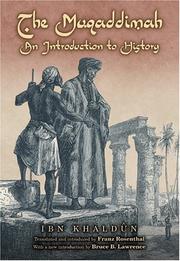
The Muqaddimah, an introduction to history
This prolegomenon was written in the 14th century by the Arab scholar Ibn Khaldūn, & laid the intellectual foundations for philosophy of history, sociology, ethnography & economics. This translation was first published in 1958 in three volumes.
Shares: Historiography, Political science, Philosophy, History
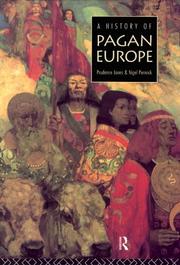
A history of pagan Europe
The first comprehensive study of its kind, this fully illustrated book establishes Paganism as a persistent force in European history with a profound influence on modern thinking. From the serpent goddesses of ancient Crete to modern nature-worship and the restoration of the indigenous religions of eastern Europe, this wide-ranging book offers a rewarding new perspective of European history. In…
Shares: Geschichte, Histoire, History
Food in history
Surveys the evolution of man's diverse gastronomic habits, customs, and traditions against their cultural and historical background.
Shares: Geschichte, Histoire, History

Coach
Now, for the first time, the complete story of A.L. Williams, told by the Coach himself!
Art Williams shares the inspirational story of what it took to build a tiny "peanut" of a company into an industry giant. Full of heroes and villains, amazing victories and dashing defeats, this book is a must-read for anyone who's ever dreamed of building a team, of winning big, of doing what others said…
Shares: Histoire, History
Illustrations of universal progress
15 works of Herbert Spencer
English philosopher, biologist, sociologist, and prominent classical liberal political theorist of the Victorian era (1820-1903)
This ebook presents a collection of 15 works of Herbert Spencer. A dynamic table of contents allows you to jump directly to the work selected.
Table of Contents:
Essays on Education and Kindred Subjects
Illustrations of Universal Progress - A…
Shares: Political science, Philosophy
The Structure of Scientific Revolutions
Thomas S. Kuhn's classic book is now available with a new index.
Shares: Philosophie, Histoire, Philosophy, History
Discourses on Livy
A very different work from his well-known The Prince, and posthumously published a year prior to it, Machiavelli’s Discourses on Livy is one of his most debated works. Some critics see it as presenting a counterpoint or refutation of The Prince, calling it a key founding document of modern liberal republicanism. Others maintain that it is complementary, arguing that leaders of republics must act…
Shares: Historiography, Political science, Philosophy, History
Ab urbe condita
"Romulus and Remus, the rape of Lucretia, Horatius at the bridge, the saga of Coriolanus, Cincinnatus called from his farm to save the state - these and many more stories immortalized by Livy in his history of Rome have become part of our cultural heritage." "The historian's huge work consisted of 142 books which trace Rome's history from its foundation in 753 BC to events in Livy's own lifetime…
Shares: Historiography, Histoire, History
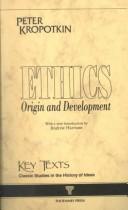
Этика
Ethics: Origin and Development is a book by Peter Kropotkin, published posthumously in 1921. It continues the argument of Mutual Aid, that sociable morality is essential to human survival. It was translated into English by Louis S. Friedland and Joseph R. Piroshnikoff in 1924.
(Source: Wikipedia)
Shares: Political science, Philosophy, History

Homo Ludens
A unique philosophical perspective regarding the topic of play and it's impact and necessity in human culture.
Shares: Philosophie, Political science, Philosophy
Journey through Utopia
In this title, originally published in 1950, the author has set out to give a description and a critical assessment of the most important (not necessarily the most famous) Utopian writings since Plato first gave, in his Republic, a literary form to the dreams of a Golden Age and of ideal societies which had doubtless been haunting man since the beginning of the conscious discussion of social…
Shares: Political science, Histoire, History
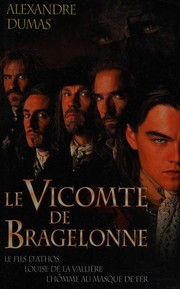
Le vicomte de Bragelonne, ou, dix ans plus tard
In the months of March-July in 1844, in the magazine Le Siecle, the first portion of a story appeared, penned by the celebrated playwright Alexandre Dumas. It was based, he claimed, on some manuscripts he had found a year earlier in the Bibliotheque Nationale while researching a history he planned to write on Louis XIV. They chronicled the adventures of a young man named D'Artagnan who, upon…
Shares: Histoire, History