Mindmaps
Mindmaps, character mindmaps, timelines, and study guides for classic books.
 conceptual
Frankenstein; or, the modern prometheus
A conceptual map of Frankenstein; or, the modern prometheus by Shelley, Mary Wollstonecraft.
 overview
Middlemarch
George Eliot's Middlemarch (1871–72) is a panoramic study of provincial English life during the Reform Act era of 1829–1832, tracing how marriage, ambition, and social change shape the interconnected lives of a Midlands community.
figures
Middlemarch
This mindmap outlines core people, places, institutions and relationships from the opening chapters of George Eliot's *Middlemarch*, a 19th century English social novel.
themes
Middlemarch
Middlemarch (1871–72), set in an English provincial town during the 1829–1832 Reform era, explores how individual moral aspirations collide with marriage, class, gender limits, and social obligation. Its central themes remain strikingly modern.
chronology
Middlemarch
Chronological overview of key events, causes, and turning points in the opening chapters of George Eliot's Middlemarch, covering character introductions, romantic tensions, and the central engagement that drives the early narrative.
conflicts
Middlemarch
George Eliot's Middlemarch (set 1829-1832 in provincial England) braids several central tensions: romantic misalliances, frustrated idealism, the narrow choices open to women, and the gap between scholarly ambition and achievement.
collections
Middlemarch
This mindmap outlines the genre groupings, bookshelf categories, and curatorial collections assigned to George Eliot's Middlemarch, a complex historical novel.
 conceptual
Wuthering Heights
A conceptual map of Wuthering Heights by Brontë, Emily.
 literary_analysis
Cranford
Elizabeth Gaskell's *Cranford* opens with a satirical portrait of a small provincial town where women have achieved complete social dominance. The men have vanished—frightened away by the prospect of being the sole male presence at evening parties in a feminine world. This opening chapter establishes the central themes of the novel: the tension between appearance and reality, the performance of gentility, class consciousness, and the ways in which community both constrains and sustains its members. The ladies of Cranford practice what they call 'elegant economy'—a philosophy that transforms financial necessity into moral virtue, dismissing expense as vulgarity while maintaining elaborate social rituals that mask their genteel poverty. Captain Brown arrives as an闯入者 who threatens this carefully constructed world with his honest acknowledgment of his circumstances, creating conflict with Miss Jenkyns over literary taste that foreshadows deeper tensions between tradition and modernity.
character_study
Cranford
Captain Brown emerges as the moral heart of Cranford society, a man whose poverty is openly acknowledged but whose infinite kindness remains largely unspoken. Unlike the secretive economies practiced by the ladies of the town, the Captain wears his threadbare military coat and dark wig without shame, treating his circumstances as simple facts rather than things to be hidden. His quiet acts of kindness—such as carrying an old woman's dinner home from the bakehouse—demonstrate a generosity that requires no audience, performed not for social advantage but from an innate sense of duty. The chapter chronicles his family's daily lives, particularly Miss Brown's painful, lingering illness that makes her irritable and accusatory toward herself, yet both her father and Miss Jessie tend to her with 'more than placidity, with absolute tenderness.' Captain Brown's devotion to Dickens over Dr. Johnson creates ongoing tension with Miss Jenkyns, yet he offers her a handmade wooden fire-shovel after hearing her complain about the grating sound of an iron one. The chapter culminates in tragedy when Captain Brown dies at the railway station, struck by a train while saving a child who had wandered onto the tracks.
romance_analysis
Cranford
This chapter centers on grief, duty, and a bittersweet reunion between former lovers. After Miss Jenkyns's death, the narrator continues visiting Cranford, now staying with both Miss Pole and the bereaved Miss Matty. The chapter opens with Miss Matty's poignant request to be called 'Matilda' instead of 'Matty'—a small tribute to her deceased sister who disapproved of the intimate nickname. Miss Pole reveals the story of Miss Matilda's rejected suitor, Thomas Holbrook, a yeoman farmer who once offered for her hand long ago. Holbrook possessed an honest pride that prevented him from pushing into squire ranks or accepting the title 'Esquire.' He rejected modern refinements, spoke the country dialect freely, and read aloud with exceptional beauty and feeling. Miss Matilda was willing enough to accept him, but her sister Deborah and the rector father discouraged the match as beneath her station—the family being distantly connected to Sir Peter Arley. During the narrator's extended visit, an unexpected reunion occurs when they encounter Mr. Holbrook in a shop. The tall, thin, Don Quixote-like old man instantly recognizes Miss Matilda across the shop, greeting her with warm, repeated handshakes.
character_study
Cranford
Chapter VI recounts the tragic life story of Peter Jenkyns, brother to Miss Matty and Deborah, through Miss Matty's poignant reminisences. Peter was the darling of his gentle mother, Molly, though his father—a proud rector—had higher academic ambitions for him. Peter's future was mapped out by kind friends: win honours at Shrewsbury School, carry them thick to Cambridge, then receive a living as a clergyman from his godfather, Sir Peter Arley. However, his lot in life proved very different. The only honour Peter brought from Shrewsbury was the reputation of being the best good fellow and captain of the school in practical joking. His fondness for hoaxing the residents of Cranford eventually led to a terrible incident when he dressed in his sister Deborah's clothing and pretended to be a baby in the garden, where his father discovered and publicly flogged him before the assembled townspeople. The shame of this public humiliation drove Peter to flee to Liverpool and enlist in the Navy. His mother died within a year of his departure, and Peter did return once as a lieutenant before disappearing during a war in India.
social_themes
Cranford
This chapter centers on the social complexities that arise when Lady Glenmire, a Scottish peeress, arrives in Cranford. The narrative opens with Miss Pole's genuine perplexity about how to properly address nobility—whether to say 'Your Ladyship' where one would say 'you' to common people, or 'My Lady' instead of 'Ma'am.' Miss Matty cannot recall how Lady Arley was addressed, as it was so long ago. The question of proper deference to nobility causes considerable agitation among the Cranford ladies. Mrs Jamieson subsequently visits Miss Matty with an unkind errand, making clear that she does not wish the Cranford ladies to call upon her sister-in-law, evidently wishing to preserve exclusive access to Lady Glenmire for herself. Miss Pole returns red with indignation upon learning of this slight, discovering from Mrs Forrester's Peerage that Lady Glenmire is merely the widow of a Scottish peer who never sat in the House of Lords and is likely quite poor. This revelation inflames Miss Pole's wounded pride. Despite their initial indignation, the ladies eventually accept Mrs Jamieson's later invitation to a party.
narrative_structure
Cranford
This chapter chronicles a period of widespread panic in the town of Cranford, sparked by a spate of confirmed robberies and unsubstantiated rumors of burglaries and highway robbery circulating among residents. While Signor Brunoni's visit seemed linked to the town's sudden wave of fear, there is no confirmed connection between the conjuror and the incidents. The chapter details the small number of verified robberies that triggered widespread anxiety, leading residents to adopt extreme nightly precautions. Miss Matty conducts strict nightly inspections of every room, kitchen, and cellar armed with a poker, followed by the narrator with a hearth-brush, and Martha with fire-irons to sound an alarm. The hour of the inspections grew earlier and earlier over time, until they were held at half-past six, with Miss Matty going to bed soon after seven to 'get the night over the sooner.' Mrs Forrester develops elaborate theories that the Cranford robberies were carried out by French spies, pointing to Signor Brunoni's broken English and turban as evidence. After braving Darkness Lane together, the ladies gather to confess their individual fears and the private precautions they take to cope with them.
plot_development
Cranford
Chapter XIII marks a devastating turning point in the novel as the Town and County Bank collapses, reducing the gentle Miss Matty Jenkyns to poverty. The chapter opens with domestic detail concerning Thomas the postman, whose holiday delivery routine on Christmas Day and Good Friday tests his patience and sobriety. The morning when two letters arrive sets the financial crisis in motion—one for the narrator from her father mentioning unpleasant rumors about the Town and County Bank, and one for Miss Matty from the bank requesting her attendance at an important shareholders' meeting. While Miss Matty examines silks at Mr Johnson's shop, a farmer presents a five-pound Town and County Bank note to pay for a shawl and groceries. The shopman, having received warnings that morning about the bank's instability, refuses the note. Miss Matty, realizing the rejected note belongs to her own bank, offers the farmer five sovereigns in exchange for his note to prevent him from losing money. When Mr Johnson privately warns her that her shares are worse than worthless and that the bank cannot pay a shilling in the pound, Miss Matty maintains a quiet composure.
plot_development
Cranford
Chapter XI marks a turning point in Cranford, shifting from the supernatural anxieties of the previous chapter to a compassionate examination of the travelling performer who has terrified the town. The mysterious Signor Brunoni is revealed to be Samuel Brown, a former sergeant in the 31st Regiment who served in India, where his wife lost six children before carrying their infant daughter Phoebe on a perilous journey from Calcutta back to England. Lady Glenmire and Miss Pole discover Samuel Brown lying injured at a wayside public-house three miles from Cranford, where he has languished for six weeks attended by his wife and their young daughter. The residents of Cranford rally to his aid with remarkable generosity: Miss Pole secures comfortable lodgings, Lady Glenmire assumes responsibility for medical expenses under Mr Hoggins's directions, Mrs Forrester sends her celebrated bread-jelly as a mark of highest favour, and Miss Matty prepares her sedan-chair for his transport. Through conversations with Mrs Brown, the narrator learns that their daughter had been saved by 'that good, kind Aga Jenkyns' at Chunderabaddad—a detail that sparks the narrator's suspicion that this benefactor might be the lost Peter Jenkyns.
character_study
Cranford
This chapter brings the central arc of Miss Matty's financial recovery to a triumphant close while reuniting her with the long-absent brother whose mysterious departure decades earlier had left such an ache in the Jenkyns household. The narrator observes with admiration how immediately Miss Matty begins implementing the retrenchment her altered circumstances require. Martha steadfastly refuses to leave her mistress's service, declaring she will never abandon her. When Mary's father arrives the next morning, he helps arrange practical solutions: Martha and Jem are to be married quickly and remain in Miss Matty's house, the ladies' annual contributions will cover most of the rent, and Miss Matty herself is to earn additional income by selling tea from her own dining parlour. The chapter culminates with Peter Jenkyns's return after decades abroad—he had been taken prisoner at Rangoon, believed dead by English authorities, and only learned his sister lived when the narrator's letter reached him in India. The brother and sister reunite over tea, Peter distributing Indian gifts throughout Cranford, and together they plan to live comfortably in their old family home, finally reunited after their long separation.
 character_desire_network
The Importance of Being Earnest: A Trivial Comedy for Serious People
Each character's deepest want creates the machinery of lies that drives the comedy. Jack and Algernon invent alter egos to escape constraint; Gwendolen and Cecily fixate on a name. The collision of these desires exposes the absurdity at the heart of Victorian propriety.
conflict_collision_map
The Importance of Being Earnest: A Trivial Comedy for Serious People
The comedy's central mechanism: two men invent the same fictional identity, then watch their lies collide when both pursue women who demand that identity be real. Each movement escalates the impossibility until only truth can resolve it.
theme_consequence_map
The Importance of Being Earnest: A Trivial Comedy for Serious People
Every fiction in the play creates consequences that cannot be controlled. The name 'Ernest'—invented for convenience—becomes the impossible requirement for love. The handbag—symbol of obscure origin—becomes the key to legitimacy. Wilde's comedy reveals that truth and fiction are not opposites but collaborators.
 book_overview
Pride and Prejudice
Pride and Prejudice by Jane Austen, published in 1813, follows Elizabeth Bennet as she navigates matters of marriage, morality, and misconceptions in Regency-era England. The novel explores the dynamic between first impressions and true character through the evolving relationship between Elizabeth and the proud Mr. Darcy.
 conceptual
The Count of Monte Cristo
A conceptual map of The Count of Monte Cristo by Dumas, Alexandre.
 comprehensive-novel-overview
Jane Eyre: An Autobiography
This comprehensive mindmap traces Jane Eyre's journey from oppressed orphan at Gateshead Hall through her years at Lowood School to governess at Thornfield Hall, culminating in her spiritual awakening and reunion with Mr. Rochester at Ferndean. The structure follows Charlotte Brontë's bildungsroman form, tracking the protagonist's growth through trials that forge her character and clarify her values.
 character_force
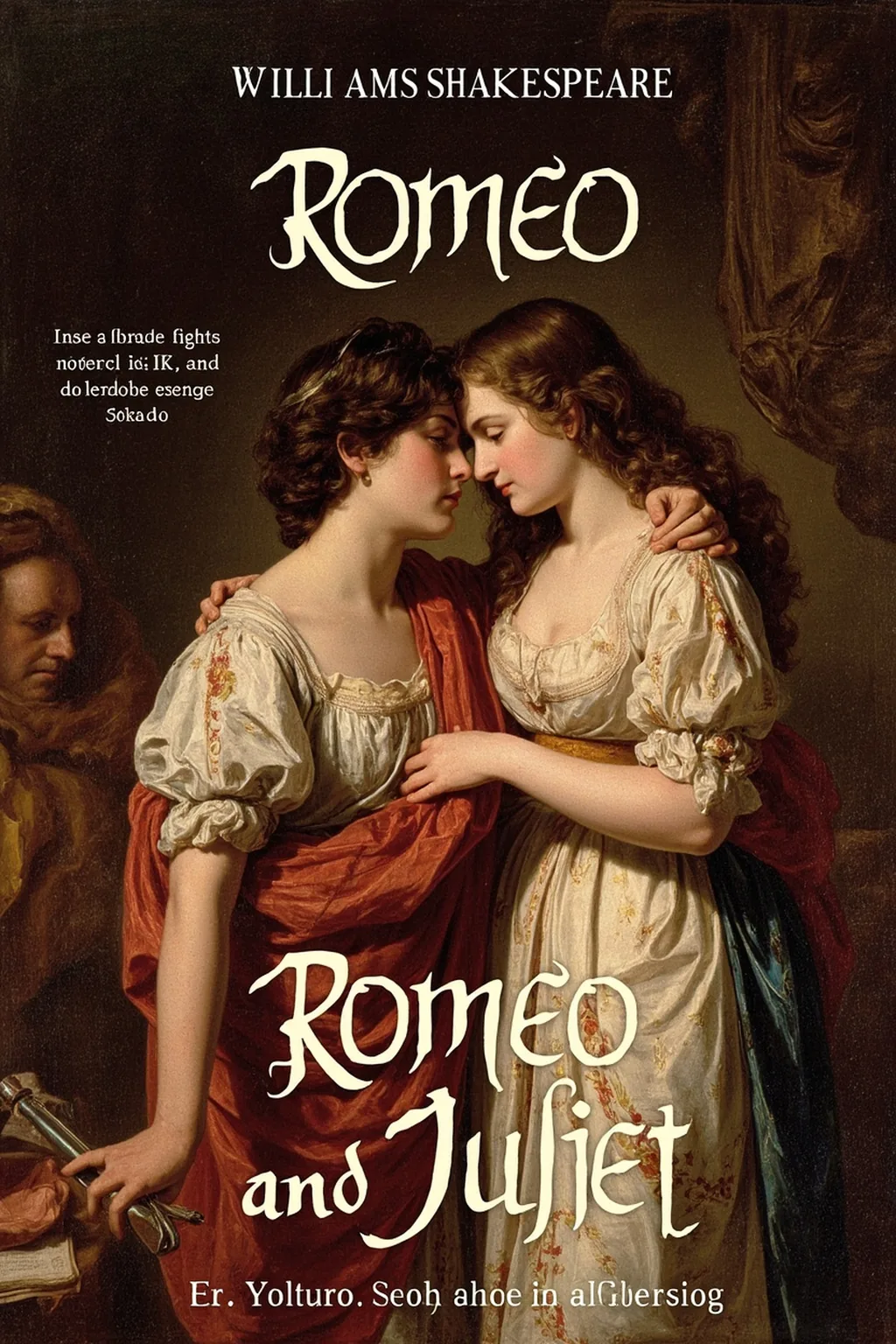
Romeo and Juliet
A mindmap exploring the driving forces behind the tragedy: the intensity of new love clashing with the rigidity of ancestral hatred.