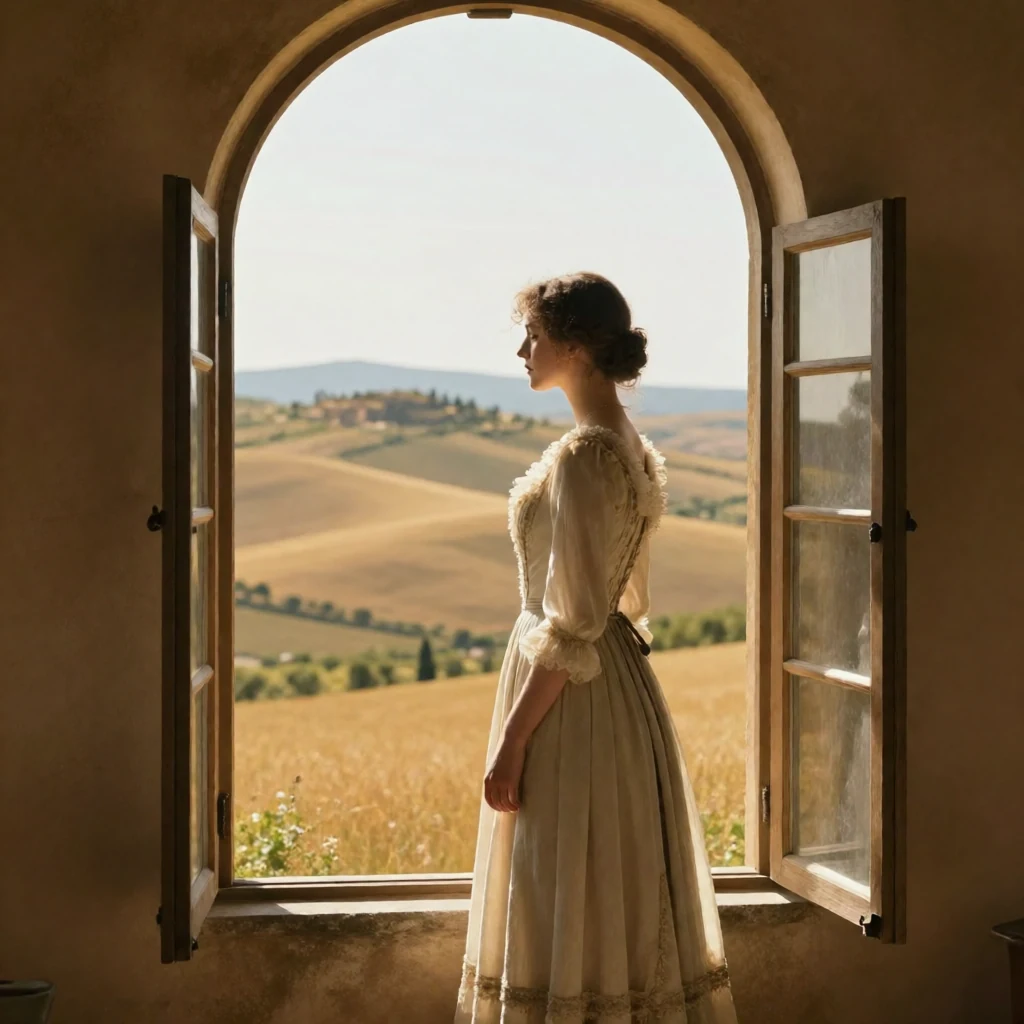
Life in London
Lucy and Cecil spend ten days in the “deserted Metropolis,” exploring scenes that will become familiar to them. Cecil believes this exposure to London’s social framework benefits Lucy, even though proper society itself is absent, having decamped to golf links and moors. The weather remains cool, and the experience proves instructive rather than harmful. Mrs. Vyse manages to assemble a dinner party from the “grandchildren of famous people,” serving poor food but impressive conversation characterized by “witty weariness.” The guests perform ennui skillfully, launching into enthusiasm only to collapse gracefully and recover amid sympathetic laughter. In this atmosphere of cultivated boredom, both the Pension Bertolini and Windy Corner seem “equally crude,” and Lucy begins to perceive how her London career will gradually separate her from everything she loved in the past.
The Piano Performance
The dinner guests request that Lucy play, and she performs Schumann’s works. When Cecil calls for Beethoven afterward, she shakes her head and returns to Schumann. The melody rises, “unprofitably magical,” breaks, and resumes in fragments that never progress smoothly “from the cradle to the grave.” The sadness of incompleteness—the sadness that characterizes life but should never appear in art—throbs through the disjointed phrases and affects the audience’s nerves. She does not play as she once did on the little draped piano at the Bertolini, and Mr. Beebe is not present to pass his earlier judgment that “too much Schumann.” After the guests depart, Mrs. Vyse and Cecil discuss the evening. Mrs. Vyse observes that Lucy is “becoming wonderful” and specifically notes that she is “purging off the Honeychurch taint”—the country family’s charming but unfashionable habits of mentioning servants and asking about recipes. Cecil defends Lucy’s musical choices, declaring she was right to play Schumann rather than Beethoven. He determines their future children will receive an education combining “honest country folks” for freshness, Italy for subtlety, and only then London for refinement, though he catches himself, remembering he received a London education himself.
Lucy’s Nightmare
As Mrs. Vyse prepares for bed, a cry of nightmare rings from Lucy’s room. Mrs. Vyse goes to her, finding the girl sitting upright, hand pressed to her cheek. Lucy apologizes and attributes the disturbance to “dreams.” Mrs. Vyse, intending kindness, shares that she and Cecil had been discussing Lucy favorably—he admires her more than ever, she reports. Lucy reciprocates the kiss while maintaining her hand over one cheek. Mrs. Vyse retreats to bed, Cecil continues sleeping undisturbed, and darkness envelops the flat. The nightmare remains unexplained but seems connected to the secret Lucy cannot share, the weight of proportion lost, and the question of whether her engagement will survive the truth about George Emerson.
Chapter XII
Chapter XII depicts a Saturday afternoon excursion that begins with Mr. Beebe and Freddy Honeychurch visiting their new neighbors at Cissie Villa. The chapter progresses through the visit with the Emersons, philosophical discussions about nature and equality, a walk through pine woods to a pond, boisterous swimming and play, and concludes with the embarrassing arrival of Mrs. Honeychurch, Cecil Vyse, and Lucy Honeychurch, who catch the men in various states of undress. The narrative explores themes of youth, nature, social conventions, and the tension between intellectual philosophy and natural impulse, ending with a lyrical meditation on the pond as a temporary sanctuary for youth and spontaneity.
A Visit to the New Neighbours
Mr. Beebe and Freddy Honeychurch cross the triangular green to visit the new occupants of Cissie Villa, recently moved in with assistance from Cecil Vyse. They encounter George Emerson descending the stairs, and Freddy awkwardly invites him swimming with the simple greeting “How d’ye do? Come and have a bathe.” The sitting room is cluttered with books—Byron, Housman, Schopenhauer, Nietzsche—and bears the inscription “Mistrust all enterprises that require new clothes” on a wardrobe cornice. Mr. Beebe examines the room’s pictures, noting a Giotto print, while Freddy reveals that Lucy has returned from London and grows closer to Cecil.
The original text of this work is in the public domain. This page focuses on a guided summary article, reading notes, selected quotes, and visual learning materials for educational purposes.