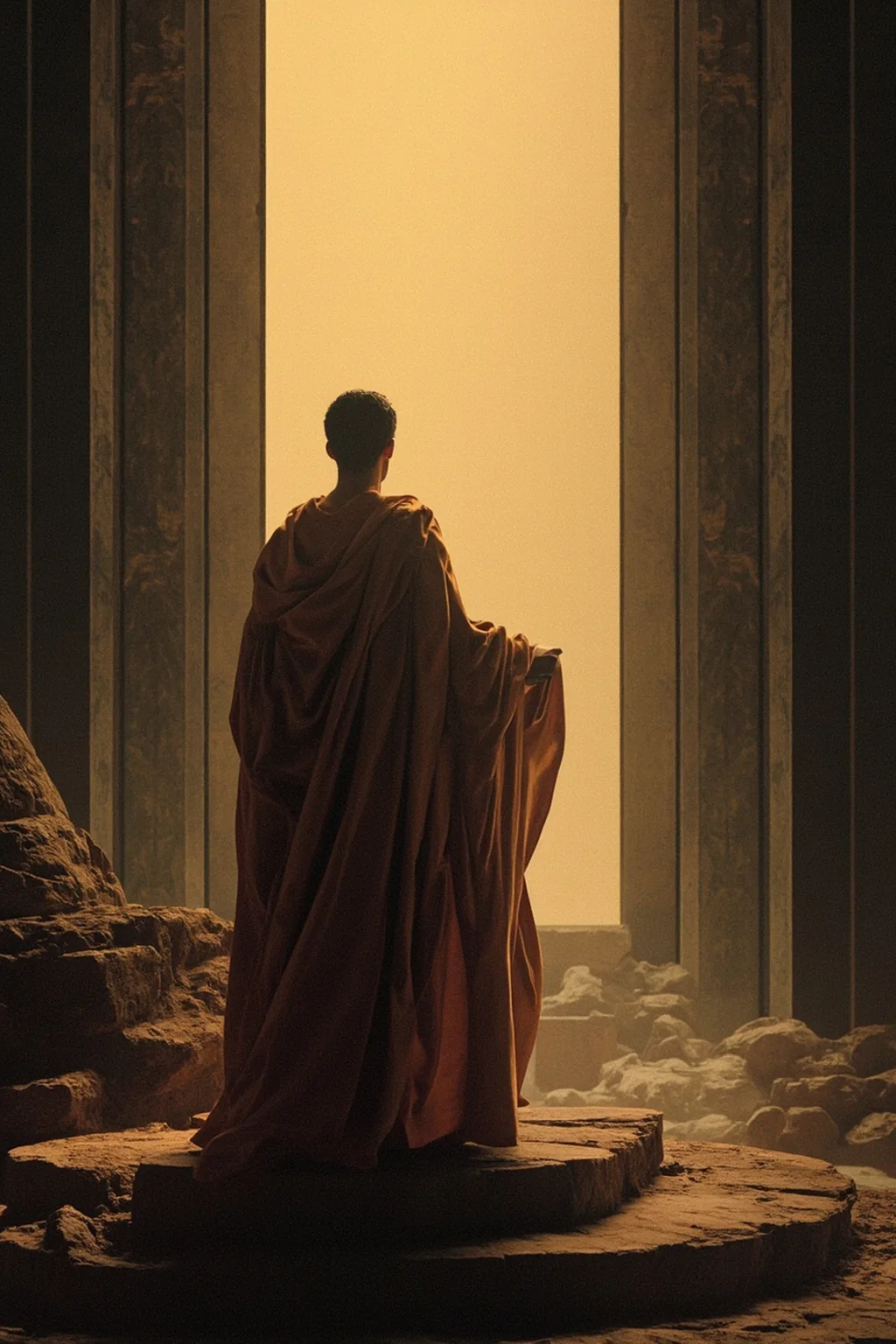
Written during military campaigns at the edges of the empire, the *Meditations* represent a private dialogue between a ruler and his conscience. Marcus Aurelius does not seek to teach a system, but to fortify his own mind against the corruption of power and the fear of death. The work moves from a catalog of gratitude to his teachers to a rigorous metaphysical examination of change, duty, and the rational soul, ultimately concluding that the good life consists in acting justly and accepting fate as a necessary part of the cosmic whole.
The book concludes with a contrast between the obedience of the elements and the rebellion of the human mind. Fire and air stay below despite their nature to rise; earth and water stand despite their nature to fall. They obey the ordinance of the universe until they are released. It is shameful that the rational mind alone disobeys, moving toward injustice or grief, which is a separation from nature and its proper place of holiness and submission to providence. To remain the same person throughout life, one must have a single, constant end that is common and sociable, rather than pursuing private, shifting goals. Aurelius closes with a series of historical remembrances and maxims from Socrates, Epictetus, and the Pythagoreans, reinforcing themes of simplicity, the naturalness of death, and the pursuit of reason. Socrates is cited for his indifference to insults and his definition of the worst kind of death—the inability to repay kindness—while Epictetus is quoted on the inviolability of free will and the need for a disciplined method of assent. The final question highlights the absurdity of men contending with one another when they all claim to desire reasonable souls, which they already possess by nature.
The Twelfth Book of the Meditations serves as the final synthesis of Marcus Aurelius’s philosophical journey, representing the culmination of his thoughts on the rational mind, the acceptance of mortality, and the unity of the human intellect with the divine. In this concluding section, the Emperor reflects with intense focus on the vanity of external pursuits, the paramount importance of living according to nature, and the profound perspective gained from viewing human life from a cosmic standpoint. The tone is one of serene resolution, offering a series of meditations designed to strip away the fear of death and the illusion of worldly importance, leaving behind only the essential truth of the rational soul aligned with the universe.
The original text of this work is in the public domain. This page focuses on a guided summary article, reading notes, selected quotes, and visual learning materials for educational purposes.