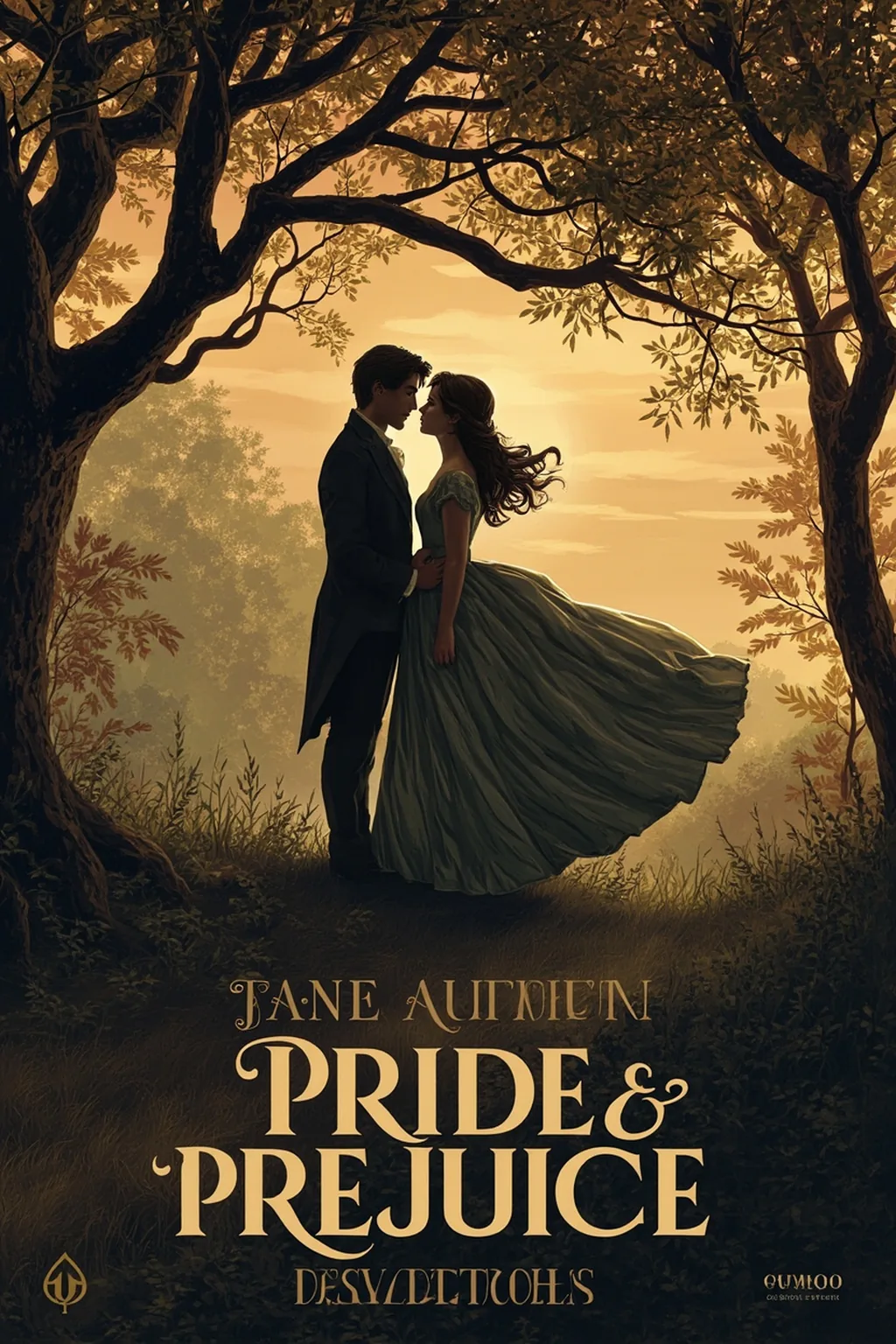
Pride and Prejudice: A Study Guide
Introduction to the Novel
Pride and Prejudice by Jane Austen, published in 1813, stands as one of the most enduring works of English literature. The novel follows Elizabeth Bennet, the second eldest of five daughters, as she navigates the complex social landscape of early nineteenth-century England. Set against the backdrop of rural English society, the story explores themes of love, class, marriage, and personal growth. The Bennet family faces financial pressure since the Longbourn estate can only pass to male heirs, creating urgency for the five daughters to make advantageous marriages. When the wealthy Mr. Darcy arrives in the neighbourhood, Elizabeth’s initial prejudice against him and his apparent pride set the stage for misunderstandings, revelations, and ultimately a transformed understanding of character and love.
Characters and Key Relationships
The Bennet Family
- Elizabeth Bennet — The novel’s protagonist, aged twenty, known for her wit, intelligence, and tendency to form quick judgments. She is the author’s primary vehicle for exploring themes of prejudice and self-awareness.
- Jane Bennet — The eldest Bennet sister, beautiful and of a gentle, generous temperament. Her openness to seeing good in everyone sometimes blinds her to others’ true characters.
- Mary Bennet — The middle sister, serious and absorbed in her studies of music and moral philosophy, though lacking her sisters’ beauty or social graces.
- Catherine (Kitty) Bennet — The fourth daughter, weak in character and much influenced by her younger sister Lydia.
- Lydia Bennet — The youngest daughter, fifteen, frivolous, and obsessed with military officers, whose reckless behavior brings scandal to the family.
- Mr. Bennet — The patriarch, a sardonic and intelligent country gentleman whose dry wit masks his frustration with his marriage and family circumstances.
- Mrs. Bennet — The mother, obsessed with marrying off her daughters, often embarrassing them with her crass social climbing and lack of decorum.
Key Figures at Netherfield
- Mr. Charles Bingley — A wealthy, good-natured young gentleman who leases Netherfield Park. He falls deeply in love with Jane Bennet but is easily influenced by those around him.
- Mr. Fitzwilliam Darcy — Bingley’s close friend, immensely wealthy (ten thousand pounds per year), and possessed of high birth and fine appearance. His proud demeanor alienates many at first.
- Miss Caroline Bingley — Bingley’s sister, who desires Darcy as a husband for herself and views the Bennet family with aristocratic contempt.
- Mrs. Hurst — Bingley’s older sister, married to Mr. Hurst, a man of fashion but little sensibility.
Important Supporting Characters
- Mr. William Collins — The Bennet family’s distant cousin and heir to the Longbourn estate under the entail. A clergyman whose pomposity, flattery, and irrational behavior provide comic relief while representing the mercenary nature of some marriages.
- Charlotte Lucas — Elizabeth’s closest friend, sensible and intelligent, who accepts Mr. Collins’s proposal despite having no romantic feelings for him, viewing marriage as economic security.
- Lady Catherine de Bourgh — Mr. Darcy’s aunt, an arrogant, imperious widow who believes she controls her nephew’s destiny and the social destinies of those around her.
- Mr. George Wickham — A handsome officer in the militia regiment stationed near Meryton. His agreeable manners initially charm everyone, but his true character proves far more sinister than Elizabeth initially believes.
- Mr. and Mrs. Gardiner — Mrs. Bennet’s brother and sister-in-law, sensible and well-educated people who provide Elizabeth with companionship and guidance throughout the novel.
Major Plot Developments
Volume One: Courtship and First Impressions
The novel opens with Mrs. Bennet’s excitement over Mr. Bingley’s arrival at Netherfield Park. Mr. Bennet, characteristic dry wit intact, reveals he has already visited Bingley despite his earlier insistence he would not do so. At the Meryton assembly ball, Bingley proves agreeable and charmed by Jane, while Mr. Darcy alienates the room with his pride, famously declaring Elizabeth “tolerable, but not handsome enough to tempt me.”
Elizabeth’s visits to Netherfield when Jane falls ill give both Darcy and Elizabeth opportunity to observe each other more closely. Elizabeth’s long walk through muddy fields to reach her sister earns the contempt of Miss Bingley and Mrs. Hurst but captures Darcy’s quiet admiration. Back at Longbourn, the family receives word that Mr. Collins intends to visit, and his eventual proposal to Elizabeth—delivered with absurd pomposity and referencing Lady Catherine de Bourgh’s approval—becomes one of the novel’s most celebrated scenes. Elizabeth’s firm refusal triggers family chaos, though Mr. Bennet famously declares that Elizabeth must choose which parent to alienate, as forcing marriage would make her a stranger to either.
The arrival of Mr. Wickham, handsome and agreeable, captures female attention in Meryton. His account of Darcy’s alleged cruelty regarding a church living deepens Elizabeth’s prejudice against Darcy. News arrives that the Netherfield party has departed for London, leaving Jane heartbroken and the family speculating about Bingley’s return.
Charlotte Lucas’s acceptance of Mr. Collins shocks Elizabeth, who struggles to reconcile her friend’s choice with her own views of marriage and happiness. Miss Bingley’s letter from London confirms the party’s departure and hints at designs to pair Bingley with Georgiana Darcy, extinguishing Jane’s remaining hopes.
Volume Two: Journeys and Revelations
Elizabeth’s visit to Charlotte at the Hunsford parsonage introduces her to Lady Catherine de Bourgh and her daughter Anne. The grand estate of Rosings, Lady Catherine’s domineering personality, and Mr. Collins’s continued servility dominate Elizabeth’s days. When Mr. Darcy and Colonel Fitzwilliam arrive for Easter, Elizabeth finds herself drawn into conversations that slowly shift her understanding of both men.
The critical moment comes when Colonel Fitzwilliam reveals that Darcy recently separated a friend from an imprudent marriage—Bingley from Jane. Elizabeth’s anger and sense of betrayal reach their peak. Later that evening, Darcy proposes to Elizabeth in a manner that offends her deeply: his speech emphasizes her inferior connections and the degradation their union would represent, rather than expressing genuine affection. Elizabeth rejects him furiously, accusing him of separating Jane from Bingley and ruining Wickham’s prospects.
Darcy’s letter, delivered the next morning, reshapes Elizabeth’s understanding. Regarding Bingley, he explains his belief that Jane did not reciprocate Bingley’s feelings and his concern about the family’s lack of propriety. Regarding Wickham, the letter reveals a devastating truth: Wickham’s father was the Pemberley steward, Wickham received three thousand pounds in lieu of a church living, and most shockingly, Wickham attempted to elope with Darcy’s fifteen-year-old sister Georgiana for her thirty thousand pounds fortune. Elizabeth’s pride and prejudice had made her a victim of Wickham’s manipulations and had blinded her to Darcy’s genuine character.
Volume Three: Resolution and Reconciliation
The Gardiners invite Elizabeth to tour Derbyshire with them. Arriving at Pemberley, Elizabeth is overwhelmed by the estate’s beauty and the housekeeper’s praises of Darcy’s character. The unexpected meeting with Darcy himself, now on familiar terms with her uncle and aunt, begins a transformation in their relationship. His introduction of her to his sister Georgiana marks a significant gesture of regard.
Disaster strikes in the form of Lydia’s elopement with Wickham. Elizabeth learns from Mrs. Gardiner that Darcy secretly located the couple and arranged their marriage, paying Wickham’s considerable debts and providing a settlement for Lydia. This secret kindness, performed out of obligation and perhaps deeper feeling, completes Elizabeth’s transformation in understanding Darcy’s true character.
Bingley’s return to Netherfield with Darcy brings renewed hope for Jane’s happiness. Bingley proposes to Jane, and the engagement is announced. Lady Catherine de Bourgh’s absurd visit to Longbourn—demanding that Elizabeth promise never to marry Darcy—only strengthens Elizabeth’s resolve. When Elizabeth and Darcy finally walk alone together, they confess their changed feelings and love, the reconciliation sealed with mutual understanding and forgiveness.
Key Themes
Pride and Prejudice
The novel’s title points directly to its central themes, embodied in the main characters. Elizabeth represents prejudice—she forms quick judgments based on first impressions and refuses to reconsider them when evidence contradicts her views. Darcy embodies pride—his high birth and great fortune have fostered a sense of his own superiority that alienates others and blinds him to the merits of those beneath his station. The novel traces how both characters must overcome these flaws to find happiness, learning that appearances deceive and that character reveals itself only through patient observation and self-reflection.
Marriage and Social Class
Austen uses marriage as both a plot device and a vehicle for social commentary. The Bennet daughters must marry well since the entail prevents them from inheriting their father’s estate. Mrs. Bennet’s desperation stems from genuine fear for her daughters’ futures. Yet Austen distinguishes between marriages based on genuine affection (Jane and Bingley, Elizabeth and Darcy) and those based on convenience or necessity (Charlotte and Collins). The novel suggests that while financial security matters, lasting happiness requires mutual respect and genuine feeling. The characters who marry for money without regard to affection (Collins, Lydia) or who refuse practical considerations entirely face different but significant difficulties.
Self-Knowledge and Growth
Elizabeth Bennet’s journey represents a profound education in self-awareness. Her rejection of Darcy’s proposal, based largely on Wickham’s account and her own vanity, becomes a moment of reckoning. Darcy’s letter forces her to confront her own prejudices and the vanity that made her susceptible to Wickham’s manipulations. Her subsequent reflection—“Till this moment, I never knew myself”—marks the crisis of her moral development. The novel argues that self-knowledge, though painful, is essential for genuine happiness and meaningful relationships.
The Power of First Impressions
Austen systematically explores how first impressions shape perception and judgment. Elizabeth’s initial negative impression of Darcy colours her view of every subsequent action, making her interpret his reserve as arrogance and his attentiveness as presumption. Similarly, Wickham’s handsome appearance and charming manner prevent Elizabeth from questioning his account of his grievances. The novel demonstrates that wisdom lies not in forming quick judgments but in remaining open to new evidence and willing to revise initial conclusions.
Important Scenes and Turning Points
The Meryton Assembly Ball
The first dance where Darcy refuses to be introduced to Elizabeth and makes his cutting remark about her being “tolerable” establishes the enmity between them. It also introduces the reader to the rigid social stratification of the world Austen depicts, where a man’s wealth and birth determine how others receive him.
Elizabeth’s Walk to Netherfield
Elizabeth’s determination to see her sister despite the weather demonstrates her loyalty and practical nature. The visit allows her to observe Netherfield’s inhabitants more closely and gives Darcy opportunity to admire her character and determination, even as her appearance scandalizes Miss Bingley and Mrs. Hurst.
Mr. Collins’s Proposal
This scene represents Austen’s comic genius at its height. Collins’s absurd pomposity, his references to Lady Catherine, his explanation of the inheritance motive as generosity, and his complete inability to understand Elizabeth’s refusal all combine to create a masterpiece of dramatic irony and character revelation.
Darcy’s First Proposal
Perhaps the novel’s most famous scene, Darcy’s proposal reveals everything wrong with his approach. His speech emphasizing her family’s inferiority rather than his love for her shows how completely pride has warped his judgment. Elizabeth’s refusal, while harsh, proves justified by his manner.
The Reading of Darcy’s Letter
This scene marks Elizabeth’s psychological turning point. As she reads and re-reads the letter, her prejudice crumbles. She recognizes how completely she has been deceived by Wickham and how unfairly she has judged Darcy. The scene demonstrates the novel’s commitment to internal moral development.
Pemberley
The visit to Pemberley and the encounter with Darcy transform Elizabeth’s feelings. The housekeeper’s praise, the estate’s beauty, and Darcy’s changed manner all contribute to her growing awareness of how wrong she has been. Meeting Georgiana provides another crucial step toward reconciliation.
Lydia’s Elopement
The scandal threatens everything—the family’s reputation, the marriage prospects of all sisters, and Elizabeth’s developing feelings for Darcy. The discovery that Darcy secretly arranged the marriage resolution transforms Elizabeth’s gratitude into something deeper.
The Final Walk at Longbourn
Elizabeth and Darcy’s conversation during this walk brings the novel to its emotional climax. They review their past misunderstandings, acknowledge their changed feelings, and commit to each other. The scene represents the perfect resolution of the novel’s themes of pride and prejudice transformed through self-knowledge into mutual love and respect.
Character Evolution
Elizabeth Bennet
Elizabeth begins the novel convinced of her own discernment, priding herself on reading character accurately. Her quick judgments of Darcy and quick acceptance of Wickham’s account reveal vanity rather than wisdom. The crisis of Darcy’s letter forces her to confront her own prejudice and recognize how her vanity has made her a dupe. Her subsequent growth involves learning humility without sacrificing her essential spirit and learning to distinguish between genuine merit and attractive appearances. By the novel’s end, she has achieved genuine self-knowledge while maintaining the lively wit that makes her distinctive.
Mr. Darcy
Darcy’s evolution from proud man to loving partner involves recognizing how his birth and fortune have corrupted his judgment. His proposal reveals how completely he has allowed pride to warp his expression of feeling. The pain of Elizabeth’s rejection and his own reflection on his conduct begin his transformation. His secret assistance with Lydia’s marriage demonstrates genuine moral growth, acting from duty and generosity rather than vanity. By the novel’s end, he has learned to balance his natural reserve with warmer expression, finding in Elizabeth a partner who helps him become more fully himself.
The Novel’s Structure
Pride and Prejudice is divided into three volumes, a common format for novels of the period. The structure reflects the gradual development of the central romance and the protagonist’s moral education.
Volume One establishes the social world, introduces the major characters, and develops the central conflict between Elizabeth and Darcy. It ends with Darcy’s proposal and rejection.
Volume Two focuses on Elizabeth’s journey toward self-knowledge, symbolized by her visit to Hunsford and then to Derbyshire. The volume traces her transformation from proud prejudice to genuine understanding, culminating in her recognition of how completely she has misjudged both Wickham and Darcy.
Volume Three resolves the various plot threads: Jane’s happiness with Bingley, Lydia’s scandal and eventual marriage, and Elizabeth’s reconciliation with Darcy. The structure demonstrates how genuine self-knowledge leads to genuine happiness.
Key Quotations and Their Significance
The novel contains many passages that illuminate Austen’s themes and characters. Darcy’s confession that he liked Elizabeth against his will and despite his judgment captures the irrational nature of love and its conflict with pride. Elizabeth’s declaration that she could never marry a man who had caused her family such unhappiness reflects both her prejudice and her genuine moral concern. The various proposals—Collins’s mercenary offer, Darcy’s proud declaration, Bingley’s simple heartfelt request—demonstrate how the manner of proposal reveals the suitor’s character.
Conclusion
Pride and Prejudice remains enduringly popular because it addresses universal themes through memorable characters and sharp social observation. Elizabeth Bennet’s journey from prejudice to self-knowledge continues to resonate with readers, as does the novel’s insistence that genuine happiness requires both self-awareness and the willingness to revise initial judgments. The central romance between Elizabeth and Darcy demonstrates that lasting love must be founded on mutual respect and genuine understanding rather than on appearances or social advantage alone.