CHAPTER II
St. Aubert buries his wife and, seeking to comfort his grieving daughter Emily, lectures her on the virtue of self-command, warning that even virtuous sorrow becomes vicious when indulged beyond reason. He receives a visit from the austere M. Barreaux, whose silent attentiveness speaks more to the heart than the hollow condolences offered by his sister Madame Cheron, who urges him to visit her estate near Thoulouse. Against his wishes to remain at home where his wife’s memory sanctifies every scene, St. Aubert feels compelled to visit his brother-in-law M. Quesnel at the family estate, now stripped of its ancestral character by its new owner, where he introduces Emily to the Italian guests Signor Montoni and Signor Cavigni over a splendid dinner. St. Aubert’s health visibly declines as weeks pass, his physician prescribing travel along the Mediterranean shores, and he dismisses all but his old housekeeper to economize, prompting Emily’s surprise at this frugal decision. On the eve of departure, Emily discovers her father weeping alone over a small portrait of a lady who is not her mother, and she watches him kneel in what appears to be silent prayer, leaving her troubled by this secret grief she never knew he carried.
Opening Shakespeare Epigraph
The chapter opens with an epigraph quoting Shakespeare: “I could a tale unfold, whose lightest word / Would harrow up thy soul.” This ominous quotation foreshadows the revelations and emotional turmoil that will unfold throughout the chapter, hinting at the mystery and distress that await Emily St. Aubert and her father.
Madame St. Aubert’s Funeral
Madame St. Aubert is interred in the neighboring village church. Her husband, St. Aubert, and daughter Emily attend the funeral, followed sincerely by the local peasantry who mourn the excellent woman. After returning from the burial, St. Aubert retreats to his chamber before emerging with a serene but sorrowful countenance. He summons his family for prayers, finding divine comfort in devotion that elevates his spirit above worldly grief.
St. Aubert’s Counsel to Emily
St. Aubert tenderly counsels his daughter Emily on the importance of self-command, teaching her that excessive grief, though amiable in origin, becomes vicious when it compromises one’s duties to oneself and others. He distinguishes between feeling and indulgence, warning that grief, like all emotions, becomes vice when extended beyond proper bounds. He promises to demonstrate his own philosophy by example and expresses confidence that Emily will prove herself worthy of his teaching.
M. Barreaux’s Condolence Visit
M. Barreaux, an austere botanist who had withdrawn from society after becoming disillusioned with mankind, arrives to condole with St. Aubert—an unprecedented visit, as he had never before accepted St. Aubert’s many invitations. Despite his rugged exterior, Barreaux displays deep sympathy through his modulated voice, softened looks, and attentive manner, revealing a heart that misfortune has softened. His presence brings comfort through actions rather than words.
Madame Cheron’s Visit and Invitation
St. Aubert’s surviving sister, Madame Cheron, a widow residing near Thoulouse, visits to offer condolences. Though her words are plentiful, she lacks the genuine emotional resonance of Barreaux’s silent sympathy. She praises the deceased Madame St. Aubert and, unaware of St. Aubert’s attachment to his home, presses them to visit her estate, suggesting that change of scene will help them overcome their grief.
Visit to Quesnel’s Château
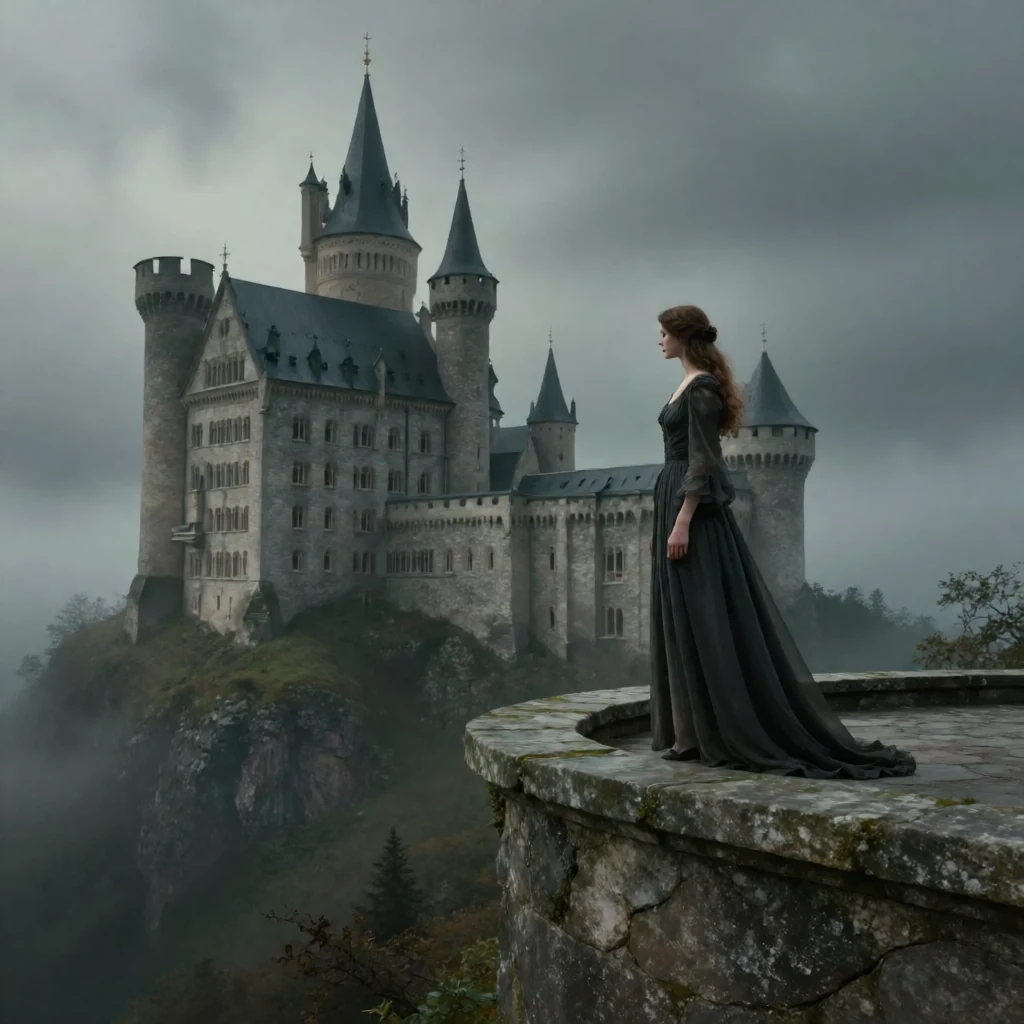
St. Aubert and Emily travel to Epourville to visit St. Aubert’s brother-in-law, M. Quesnel, whose estate once belonged to St. Aubert’s family. St. Aubert is compelled to make this visit by affairs of importance and hopes it will help rouse Emily from her dejection. As they approach through the forest, St. Aubert observes the turreted château he remembers from childhood, now owned by one who neither values nor respects its heritage.
Disappointment at the Altered Family Estate
The château has been transformed in ways that grieve St. Aubert deeply. The gothic hall no longer displays the family’s ancient arms and banners; oak paneling has been painted white; the great table and benches that once hosted laughter and hospitality have been removed. Frivolous ornaments now hang on the heavy walls, reflecting the false taste and corrupted sentiments of the new owner.
The original text of this work is in the public domain. This page offers a compressed quick-read summary for educational purposes.