Blood, Sweat, and Pixels vs Theory of Fun for Game Design: Which Should You Read?
Both live on shelves: Design, Video Games, Games
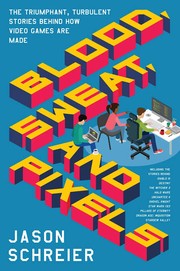 Blood, Sweat, and Pixels
More
Examines the development process of such marquee video games as Uncharted 4, Halo Wars, and Destiny, describing the challenges and demands of design.
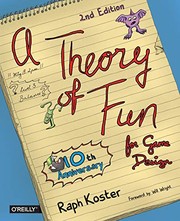 Theory of Fun for Game Design
More
It's about What fun is Why some games are fun and some games are boring How different people respond to different kinds of fun What makes a game fun or not How games fit into the wider human culture Whether games…
Side by side
The verdict
- Readers rate Blood, Sweat, and Pixels highest: Blood, Sweat, and Pixels 4.2 · Theory of Fun for Game Design 3.9.
- Blood, Sweat, and Pixels has the widest readership — 25506 ratings behind its score.
Affiliate links: we may earn a commission on purchases.
How to choose
Scores by source
| Blood, Sweat, and Pixels | Theory of Fun for Game Design | |
|---|---|---|
| Goodreads | 4.2 (25506) | 3.9 (3525) |
| Hardcover | 4.2 (395) | 3.6 (48) |
| Apple Books | 4.5 (196) | 3.5 (9) |
| Check price → | Check price → |
Reception
| Blood, Sweat, and Pixels | Theory of Fun for Game Design | |
|---|---|---|
| Ratings | 25506 | 3525 |
| Editions | 4 | 4 |
| Want to read | 21656 | 5857 |
| Reading it now | 2964 | 536 |
| Written reviews | 2384 | 309 |
| Pages | 278 | 275 |
| Check price → | Check price → |
Questions readers ask
Which is rated higher: Blood, Sweat, and Pixels or Theory of Fun for Game Design?
Blood, Sweat, and Pixels has the higher combined reader rating across sources (Blood, Sweat, and Pixels 4.2/5, Theory of Fun for Game Design 3.9/5).
Which is shorter to read: Blood, Sweat, and Pixels or Theory of Fun for Game Design?
Theory of Fun for Game Design is the quickest read. Estimated at 225 words per minute: Theory of Fun for Game Design (275 pages, ≈ 5 h 06 m); Blood, Sweat, and Pixels (278 pages, ≈ 5 h 09 m).
Which is harder to read: Blood, Sweat, and Pixels or Theory of Fun for Game Design?
Estimated difficulty, based on era, reader shelves and length — Blood, Sweat, and Pixels: Moderate; Theory of Fun for Game Design: Challenging.